


Business Sectors
Events
Contents
How WSM is tackling seafarer recruitment and why micro-learning is paying off big
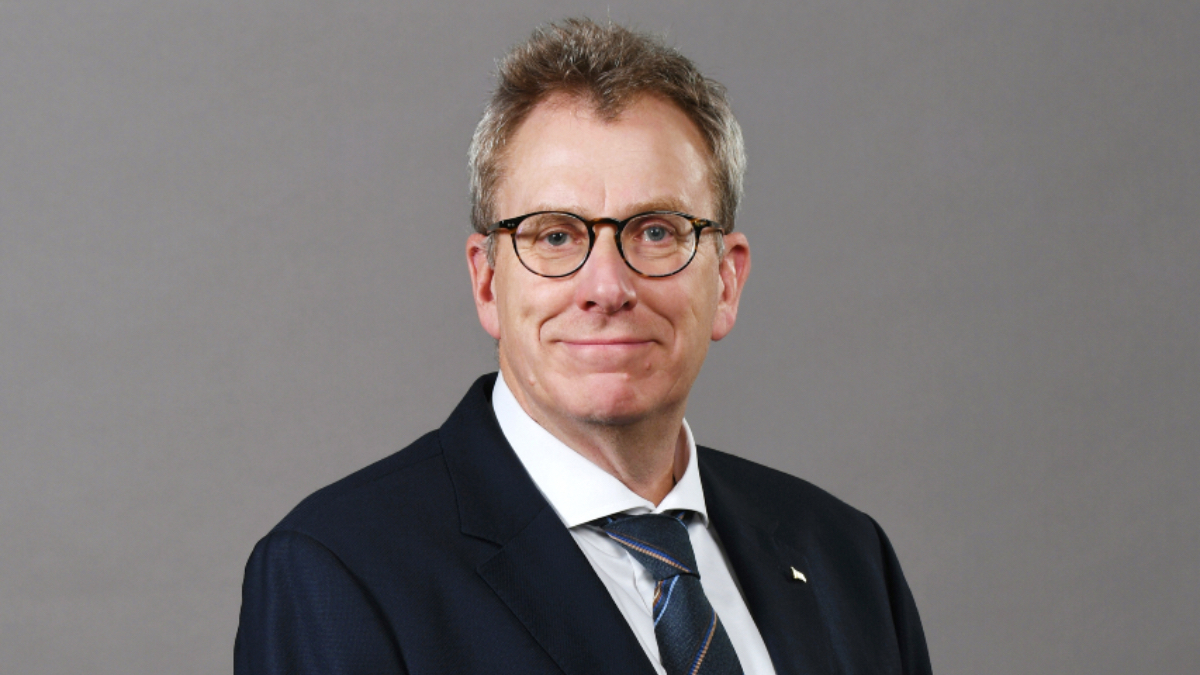
Chief executive Haakon Lenz explains how one of the world’s largest third-party shipmanagers is tackling the shortage of seafarers and training in the age of new fuels


With some 15,000 seafarers active in its global operations and 8,200 crew on board the company’s ships on any given day, Wilhelmsen Ship Management (WSM) chief executive and president, Haakon Lenz knows the value of people.
Seafarers are clearly the backbone of WSM, one of the world’s largest third-party shipmanagers, with some 450 vessels in its portfolio. And Mr Lenz knows that keeping a robust pipeline of new seafarers is essential for maintaining and growing the company’s business.
“The shortage of seafarers and competence of seafarers are challenges for the whole industry. And it has been that way for many years,” said Mr Lenz.
Mr Lenz took the reins of WSM earlier this year, stepping up from chief operating officer to take the torch from Carl Schou, who remains a senior advisor to the company.
Trained as a naval architect, Mr Lenz’s career started at DNV before transitioning to shipmanagement in 2000 and joining WSM in 2008. His shipmanagement experience has spanned “everything from superintendent to fleet manager to where I am today,” he said.
To tackle its growing need for seafarers, WSM has just opened a new manning office in Kenya, increasing its number of offices globally to 10. While Asia remains critical to the company, “Kenya has quite a few promising maritime academies, and the cruise industry has been there for several years,” noted Mr Lenz.
In addition, WSM is ramping up its efforts to recruit women to the industry. “We have more than 200 women on board our ships. So, while that’s a good start, it should be higher” he said.
In the wake of the Covid crew change crisis, shipping lost seafarers to shoreside jobs.
“The challenge has now become to make the seafarer occupation attractive, providing a good quality of life and working conditions. They must feel they are part of a good company, and we need to have a close connection with them,” said Mr Lenz.
There has been upward pressure on wages, too, following Covid.
“Singapore is expensive. Mumbai is expensive. While there are a few differences, salaries are very similar globally, he said. “It’s not the way it was 20 years ago.”
Continued Mr Lenz, “Our cost to operate has increased. This means we have to operate as efficiently as possible without compromising safety.”
Like others in the shipping sector, WSM is training seafarers on the new fuels “on everything from blending in biofuels to methanol to LNG to LPG”, noted Mr Lenz. It offers IGF-approved courses at its training centre in Mumbai and is collaborating on training with enginemakers.
Micro-learning pays off
WSM has developed WLearn, a new micro-learning platform – essentially short video course modules.
The micro-learning platform has been quickly embraced by seafarers, so much so that Mr Lenz said WSM was “surprised.” He added, “It just shows how new technologies can have a positive effect.” More than 250,000 courses have been completed by seafarers and shoreside personnel. He said WSM will continue to develop courses.
Safety is a hallmark of any ship operation, he pointed out. WSM encourages crew to take videos to share their experience operating new equipment or conducting repair or maintenance. The video is sent to the training centre in Mumbai where it is reviewed and “fine-tuned,” he said. The video can be uploaded and shared with the next crew coming aboard a ship. “It’s a new way to transfer knowledge,” concluded Mr Lenz.
Sign up for Riviera’s series of technical and operational webinars and conferences:
- Register to attend by visiting our events page.
- Watch recordings from all of our webinars in the webinar library.
Related to this Story

Events

Maritime Regulations Webinar Week
 16 Dec 2025
 GMT - ONLINE
Floating energy: successfully unlocking stranded gas using FLNGs and FSRUs
24 Feb 2026GMT - ONLINE
© 2024 Riviera Maritime Media Ltd.


