


Business Sectors
Business Sectors
Events
Contents

Register to read more articles.
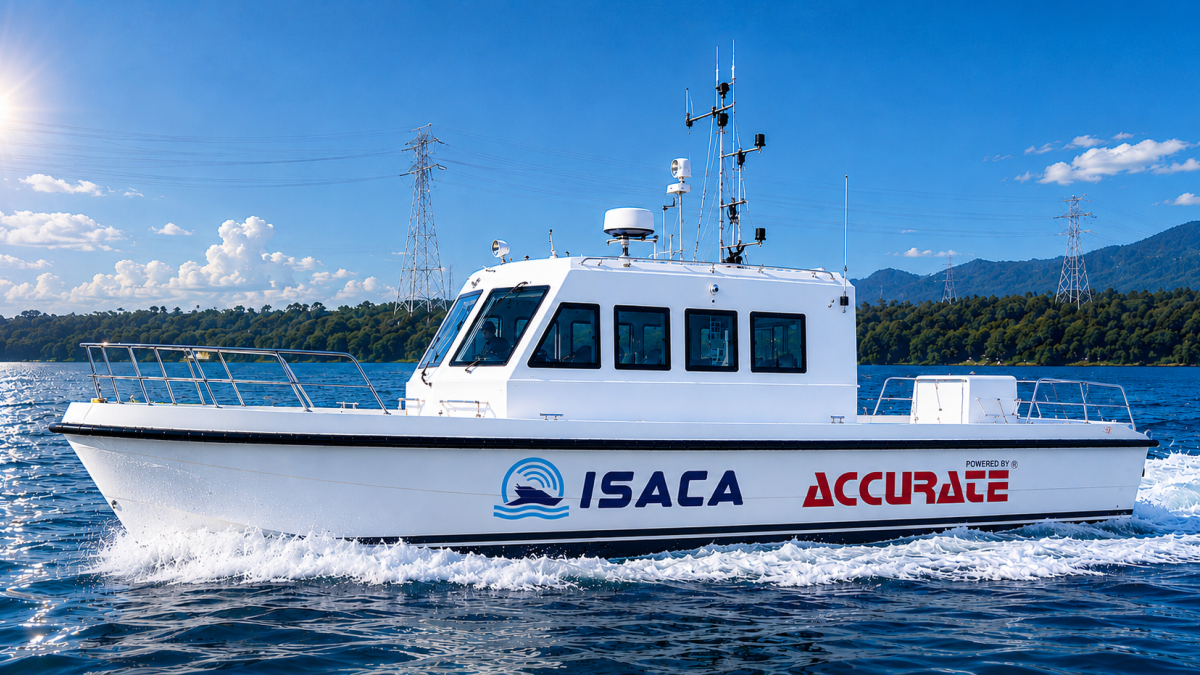
Indian Navy orders six USV conversions to enhance maritime security and rescue
An Indian technology developer will convert patrol and emergency response vessels into unmanned boats for the Indian Navy


As part of a modernisation campaign, the Indian Navy has contracted a domestic marine automation specialist to provide technology for converting existing boats into unmanned surface vessels (USVs) for maritime security, search and rescue (SAR) and emergency response.
Accurate Industrial Controls is set to begin converting three patrol boats to USVs at the naval dockyard in Mumbai as part of a six-vessel deal with the Indian Navy after undertaking a feasibility assessment.
These vessels include two 23-m immediate-support vessels and a 13-m fast-interceptor craft, which all operate with frigates and other larger naval assets in mid-ocean with a 400 nautical mile range. Another three vessels will be converted within the long-term contract period.
Each vessel will be equipped with Accurate’s intelligent situational awareness and collision avoidance (ISACA) technology, which has been certified by the Indian Register of Shipping (IRS) during sea trials on a vessel.
IRS verified that ISACA is compliant with its AUTN 4-R(N) notation and IMO’s COLREGs international regulations for preventing collisions at sea.
ISACA has been tested on a 13-m interceptor craft and a 5-m workboat designed to support SAR, with 2,500 hours of sea and river trials already completed with the navy.
Accurate director of robotics and artificial intelligence, Dharmesh Popatlal Gala, said the Indian Navy provided “a guided development framework, facilitating sea trials in governed space and enabling us to test the ISACA system with high-speed USVs to create COLREG situations in demanding conditions.”
The Indian Navy incentivised Accurate to undertake technology development and testing with minimum-order guarantees, which helps offset development costs.
ISACA systems on these USVs include multiple sensors, such as radar and inertia navigation units, remote command and control units, edge computers and 360-degree situational awareness.
“USVs deploying the ISACA system can replace crews and provide 24/7 monitoring and persistent awareness at a fraction of the operational cost,” said Mr Gala.
“Our ISACA system is light in compute power, demanding low energy which reduces fuel use,” he said.
“It does not require connectivity to a cloud as the computing and AI is done on board, and its latency time is in milliseconds enabling near-instant responses, whereas cloud-based architecture would have response delay from data traveling across the internet.”
Mr Gala anticipates Accurate’s contract with the Indian Navy and its IRS certification and completed pilot tests will enable the Pune-headquartered company to support future contracts in the Middle East and North Africa.





Related to this Story


Events

Maritime Regulations Webinar Week
 16 Dec 2025
 GMT - ONLINE

Floating energy: successfully unlocking stranded gas using FLNGs and FSRUs
24 Feb 2026GMT - ONLINE
© 2026 Riviera Maritime Media Ltd.


