


Business Sectors
Business Sectors
Events
Contents

Register to read more articles.
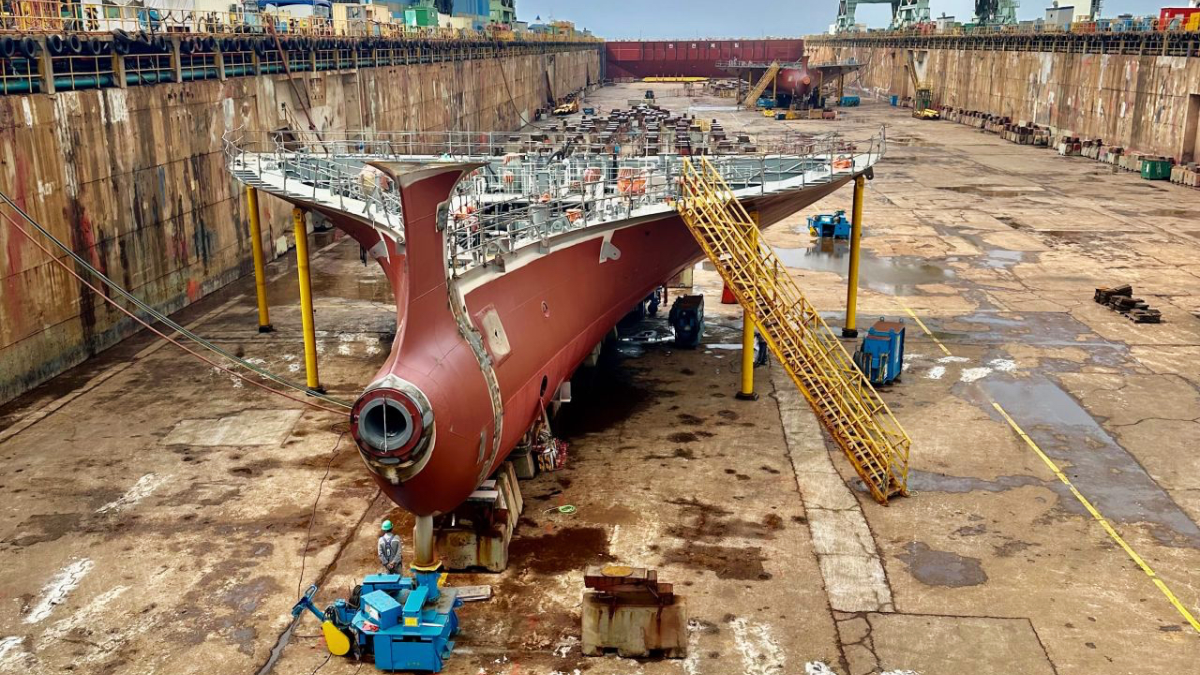
KR guidance targets 2028 IGC code shift
Classification society issues guidance and seminars as IMO readies revised IGC Code for approval in May and entry into force in July 2028


Korean Register (KR) has published updated technical guidance and held technical seminars for major Korean shipbuilders ahead of planned 2028 amendments to the International Code of the Construction and Equipment of Ships Carrying Liquefied Gases in Bulk (IGC Code).
Seminars were held for Samsung Heavy Industries, HD Hyundai Heavy Industries, HD Hyundai Samho and Hanwha Ocean to support compliance planning before the revised code enters into force.
KR said it has completed an impact assessment, categorised 97 amendment items and reviewed their applicability and design implications.
The amendments are scheduled for approval at the 111th session of the Maritime Safety Committee (MSC 111) in May 2026, followed by formal adoption in December, with entry into force expected on 1 July 2028.
The code review has been underway for several years: IMO’s Maritime Safety Committee agreed a new output titled Review of the IGC Code at MSC 103 in 2021.
The work then moved through CCC 8 in September 2022, where the scale of the revision was already clear enough for delegates to consider the need for a consolidated edition of the code.
The upcoming amendments cover a broad range of technical and safety matters.
The package includes changes covering closing devices for air intakes and openings to accommodation spaces, segregation arrangements for cargo machinery spaces and turret arrangements, cargo manifold connections, clarification of firefighting equipment requirements, overflow control, system integration between computer-based systems, ventilation-capacity and gas-detection calculation requirements, inert-gas piping valve requirements, pressure-relief arrangements for gas-fired internal combustion engines, gas-tight enclosures for turbines and the model certificate of fitness.
In practical terms, that means the revision touches on design, equipment integration, safety arrangements and certification.
KR said the period between adoption and entry into force is limited to 18 months, raising concerns that inadequate preparation could affect ship construction schedules because of design changes and equipment procurement.
One of the more contentious points is the trigger date for applicability.
KR said the amendments use the keel laying date rather than the building contract date, which “could result in different regulatory requirements being applied to a series of ships to be built under a single contract and design, depending on their construction sequence.”
In response, KR said it has worked with the Active Shipbuilding Experts’ Federation and the Panama Maritime Authority to propose changing the applicability criterion from keel laying date to building contract date.
For yards and owners, that creates the possibility that sister ships within the same series could fall under different compliance requirements if their construction timing differs.
KR also said it has prepared four documents for submission to IMO after discussions with the shipbuilding industry identified areas “prone to interpretational ambiguity”.
Sign up for Riviera’s November 2026 LNG Shipping & Terminals Conference:
- Register to attend here: The LNG Shipping & Terminals Conference.
- To take part in the Conference or webinars, please contact Ian Pow: ian.pow@rivieramm.com
- View the latest issue of LNG Shipping & Terminals here: LNG Shipping & Terminals.





Related to this Story

Events

Maritime Regulations Webinar Week
 16 Dec 2025
 GMT - ONLINE

Floating energy: successfully unlocking stranded gas using FLNGs and FSRUs
24 Feb 2026GMT - ONLINE
© 2026 Riviera Maritime Media Ltd.


