


Business Sectors
Business Sectors
Events
Contents
Register to read more articles.
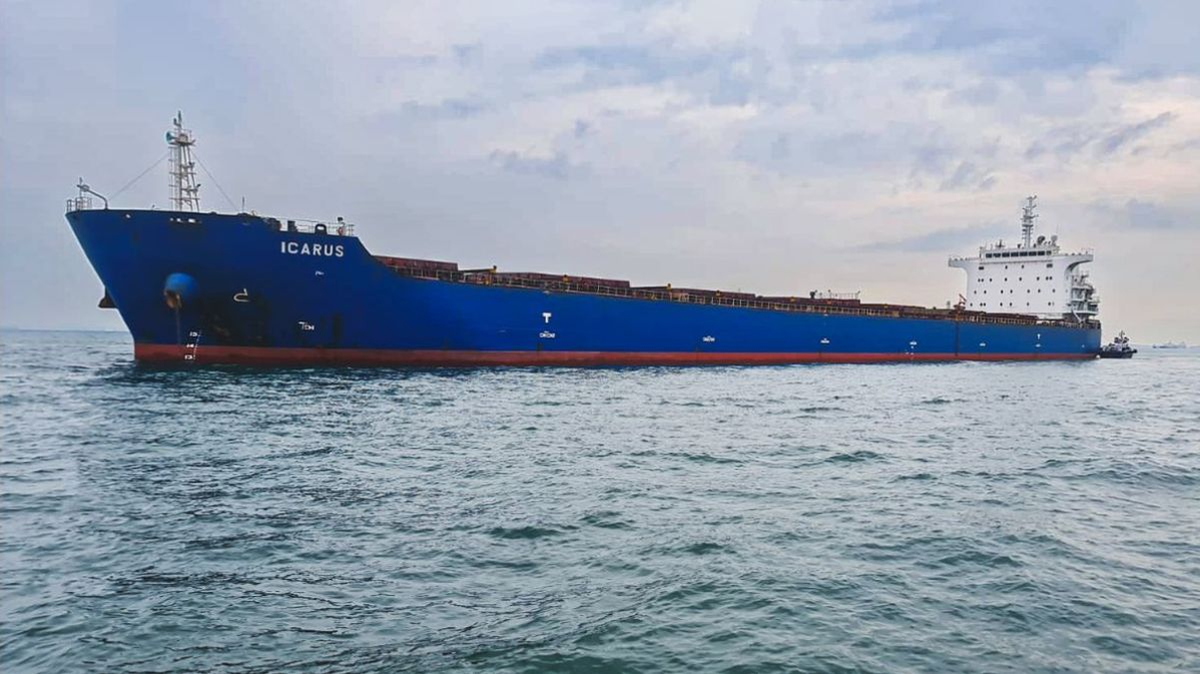
Laskaridis Shipping partners for decarbonisation data analysis
This three-way collaboration will capture data at high frequency from Laskaridis Shipping’s 2012-built bulk carrier, 225-m, 41,101-gt Icarus for analysis


Laskaridis Shipping Co has teamed up with Metis and The Cambridge Centre for Advanced Research and Education in Singapore (Cares) to use digitalisation and data analytics to evaluate the impacts of alternative fuels.
Cares has developed tools to model ship lifecycle pathways towards decarbonisation, including an online calculator, using funding from Singapore’s National Research Foundation. This helps users to compare vessel performance across a range of fuel and decarbonisation options, including onboard carbon capture, to assist in decision making. Analytics could use artificial intelligence (AI) and machine learning to provide greater insight into these options.
“The high-frequency data collection systems installed on our vessels serve as the foundation for harnessing the potential of AI,” said Laskaridis Shipping manager for innovation and technology Nikolaos Tsoulakos.
“Through collaboration with Cares and Metis on this initiative, our aim is to contribute to the scientific community by sharing data and providing valuable insights to the maritime sector through data analysis and performance analytics.”
Laskaridis Shipping has prioritised investing in digitalisation and data analytics to achieve better ship efficiency and measurable progress towards decarbonisation across its fleet.
“Our objective is to achieve operational excellence, reduce the carbon footprint, and advocate for the widespread adoption of digitalisation among maritime enterprises,” said Mr Tsoulakos.
This collaboration with Metis and Cares will create a database for projecting ship CO2 reductions, based on a granular analysis that goes far beyond estimates based on average fuel consumption and routeing.
“Metis and Laskaridis Shipping have agreed to give us fuel consumption, weather and routeing information,” said Cares professor Nondas Mastorakos. “This will allow us to apply our modelling tools and provide ’what-if’ answers based on realistic data. In this way, effective decarbonisation strategies can be developed quickly.”
Integrating individual vessel characteristics such as weight, volume and cargo displacement into the modelling, as well as energy consumption and emissions data, generates realistic inputs to develop an accurate picture of a ship’s future performance across a range of fuel options.
“The maritime sector is considering many decarbonisation options to reduce its environmental footprint,” said Metis chief executive Panos Theodossopoulos. “However, no single option is emerging as a clear winner. Consensus suggests that shipping’s carbon-neutral future will rely on a range of alternative fuels, supply chains and technologies.
“This research provides key examples of the way digitalisation and advanced analytics will help shipowners develop successful pathways towards decarbonisation which balance their commercial and sustainability imperatives,” said Mr Theodossopoulos.
Related to this Story

Events

Maritime Regulations Webinar Week
 16 Dec 2025
 GMT - ONLINE
Floating energy: successfully unlocking stranded gas using FLNGs and FSRUs
24 Feb 2026GMT - ONLINE
© 2026 Riviera Maritime Media Ltd.


