


Business Sectors
Events
Offshore Support Journal Conference, Middle East 2025
 09 Dec 2025
 DUBAI
DUBAIContents
Register to read more articles.
Magnetic-geared propulsion: a sea change in efficiency and reliability
Magnomatics chief executive, Gary Rogers, explores the benefits of magnetically geared motor systems in meeting environmental regulations and reducing fuel consumption


Future marine propulsion systems face considerable demands. Aside from providing vessels with the necessary power and control for speed and manoeuvrability, they need to be energy-efficient, lightweight, durable, safe and have low maintenance requirements. Additionally, with growing concern about the impact of marine transport on the environment, vessels will need to be greener to comply with international regulations.
From as far back as 1903, the marine industry has wavered in its favour between electric and conventional propulsion systems. What held electric propulsion back, despite its superior efficiency and other benefits, were its cost, complexity and size. Magnetic gears, first patented in 1968, offered the potential to address these issues, but it was not until new magnetic materials and analysis techniques were introduced early this century that a feasible solution was found.
Compared to conventional marine propulsion motors, such as permanent-magnet and wound-field electrical machines, magnetically geared systems are far more effective in delivering the needs of modern vessels. Regarding size, weight and cost, traditionally the use of a mechanical gearbox has allowed a high-speed electrical motor to drive a low-speed propeller, enabling the motor to be more compact and less costly than a direct drive equivalent. However, these advantages are lost through the need for a high-torque gearbox.
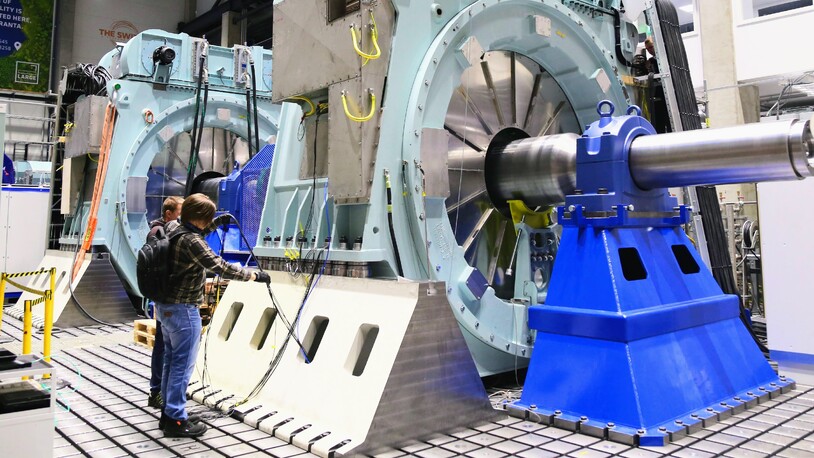
A magnetic gear system overcomes this issue. By coupling a high-speed permanent magnet motor with a magnetic gear, the result is a low-speed, high-torque output which is optimised to the propeller performance curve. Moreover, with a thruster smaller than an equivalent direct-drive motor and with the integrated magnetic gear removing the need for a conventional gearbox, high speed can be achieved with a design that is significantly smaller, lighter, less complex and less costly to produce.
“The modulated magnetic coupling allows the two rotors to turn at different speeds, creating the gear effect”
What makes this possible is the magnetic motor system’s innovative engineering and design. Similar in concept to an epicyclic gear, the latest high-powered magnetic gears feature a central high-speed sun gear that is coupled by connecting planets to a low-speed outside ring gear. Instead of having mechanical teeth that are prone to wear, the interlock is provided by a series of North/South magnetic pole pairs. The rotating planets, meanwhile, are replaced by a series of steel segments that modulate the magnetic fields so that the sun and ring rotors can be coupled. As a result, the modulated magnetic coupling allows the two rotors to turn at different speeds, creating the gear effect.
The outcome of this design approach is a compact, high-speed, low-load electric motor that is ideally suited to the needs of propellers and which overcomes the issues associated with conventional gear systems by reducing size, complexity and cost. Moreover, by simulating the characteristics of a direct drive, these magnetic systems offer high torque at low speeds and by gearing up the inner rotor torque between 5:1 and 10:1 in the novel polepiece rotor, deliver exceptional efficiency.

Shipshape reliability
Marine propulsion systems need to be robust and reliable to withstand the often extreme environments in which they are to operate, whether that is deep-sea pressures, polar temperatures or rough seas. They also need to be able to withstand saltwater corrosion and cope with continual heavy use. Magnetic motor systems are designed for longevity, safety and low maintenance and are ideal for use in challenging marine conditions.
Operating with low currents and at low temperatures, they are inherently safer and have significantly reduced cooling demands than conventional systems – a feature that further reduces weight, size and energy use. Moreover, they are designed to be fault tolerant. Containing fault-tolerant winding designs, and with electrical, mechanical, thermal and magnetic isolation between phases and banks, they enable the system to continue operating following a fault, while preventing fire and reducing the potential severity of electrical shock.
“The result is a low-speed, high-torque output, optimised to the propeller performance curve”
Other design features also contribute to the magnetic gear’s robustness: having no mechanical gear means gear wear is never an issue; the outer magnet array never suffers demagnetisation; the motor is protected from seawater by a hermetic seal; and anti-jamming is provided via a passive reset torque-fuse that protects the drivetrain from the loads associated with hitting solid objects or ropes.
In addition, the removal of the dynamic shaft seal reduces the chance of hazardous transformer oil spills and prevents seawater ingress from causing corrosion or affecting the system’s electrical integrity. This also improves reliability and minimises maintenance requirements. The thrusters, meanwhile, are pressure-balanced for deep-sea operation and the placement of a nozzle on the propeller protects the blades from being damaged by fauna, ice or detritus.
Marine applications
Able to deliver power from kWs to multi-megawatts, magnetically geared systems can be used in a wide variety of applications, including naval, commercial maritime and subsea use. Highly efficient, lightweight and small, their compactness enables turbines to be placed in close proximity, to maximise power output, while the substantial increase in torque density means they are ideal for applications that require high continuous torque at relatively low speed. This makes them particularly useful for small electrically-powered vessels.
Overall, magnetically geared systems are potentially a greener, more reliable and more cost-efficient means of propulsion, while ensuring that vessels have the control over speed and manoeuvrability they require. They provide significant improvements in continuous torque density compared to conventional permanent magnet systems while delivering consistently superior energy efficiency. Moreover, they are a low-cost, low-maintenance solution, with built-in safety, fault tolerance and environmentally friendly features that improve compliance with regulations.
Related to this Story

Events
Offshore Support Journal Conference, Middle East 2025
09 Dec 2025DUBAI
Maritime Regulations Webinar Week
16 Dec 2025GMT - ONLINE
Maritime Decarbonization Conference, Americas 2026
22 Jan 2026HOUSTON
Offshore Wind Journal Conference 2026
02 Feb 2026London
© 2024 Riviera Maritime Media Ltd.


