


Business Sectors
Business Sectors
Events
Contents
Register to read more articles.
MAIB urges tighter watchkeeping after tanker collision
Report on tanker-trawler collision criticises late avoiding action and calls for watchkeeping training reforms and stronger traffic monitoring in the Firth of Clyde


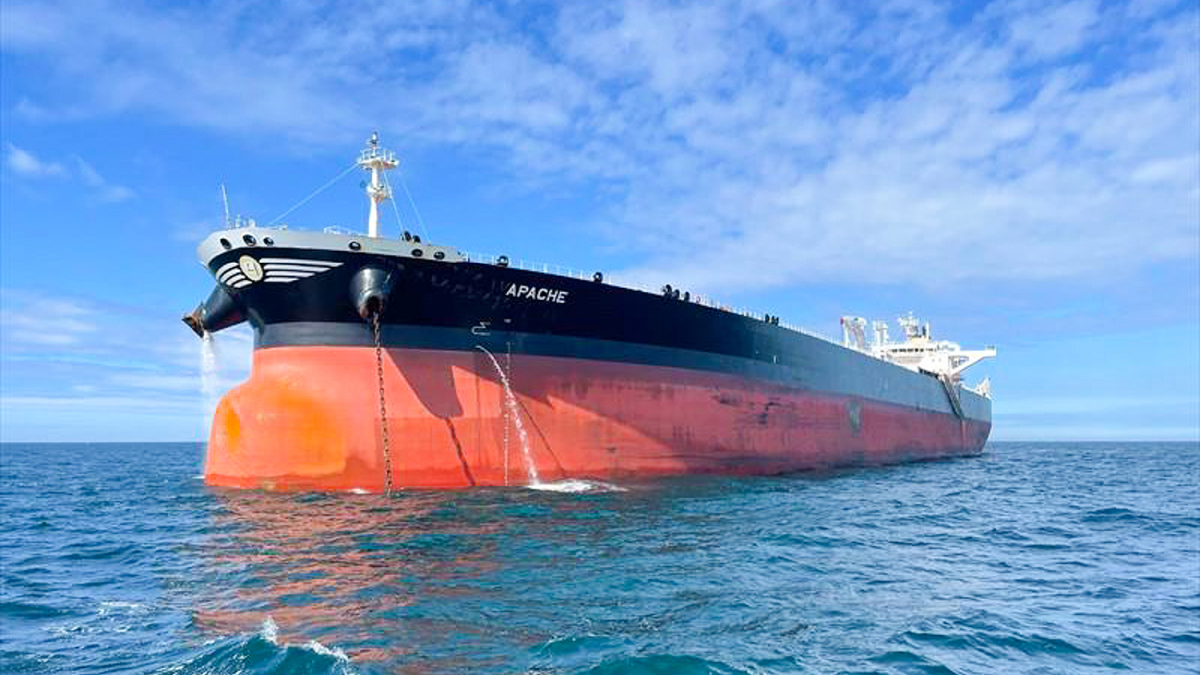
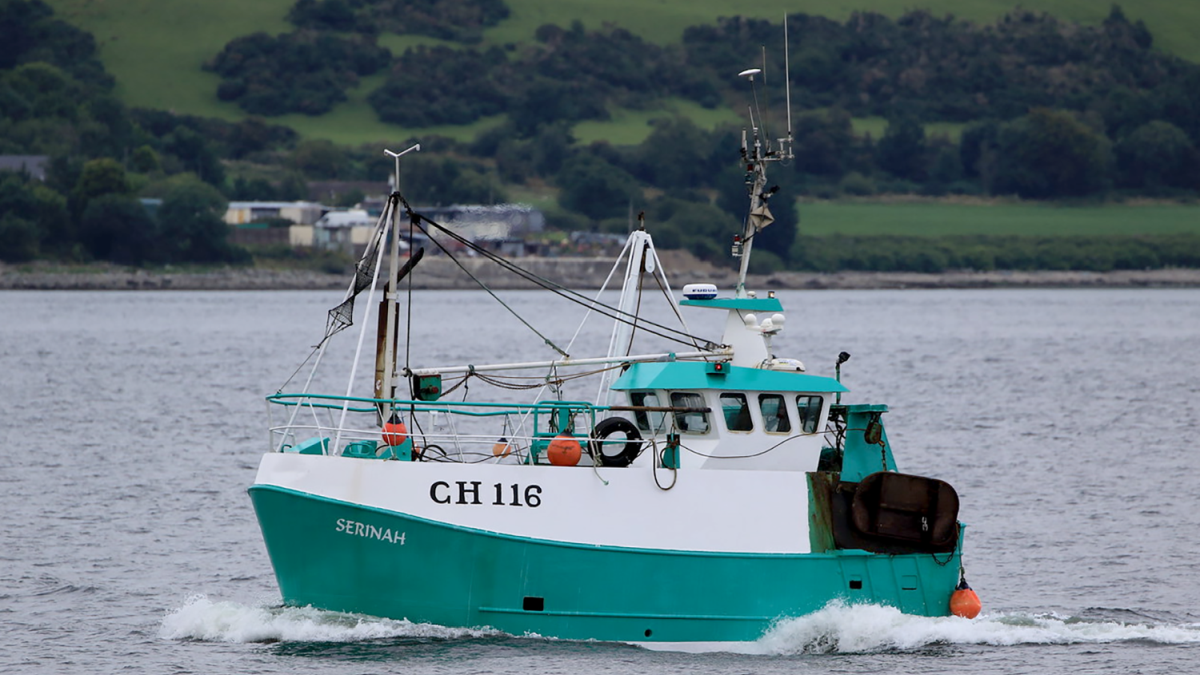
At 15:03 on 25 April 2024, 2016-built Suezmax tanker Apache collided with 10-m stern trawler Serinah (GH 116) in the Firth of Clyde, Scotland, after what the Marine Accident Investigation Branch (MAIB) described as a prolonged failure by either vessel to take effective collision-avoidance action in line with the International Regulations for Preventing Collisions at Sea.
The collision resulted in Serinah sinking rapidly, although all three crew abandoned ship to a liferaft and were uninjured.
MAIB’s synopsis stated that Serinah had been fishing a seabed depression in the middle of the Firth of Clyde known locally as the North Hole, “making circular clockwise tows”, while Apache was inbound to the Finnart Oil Terminal and preparing to board a pilot.
In the lead-up, MAIB found that “neither vessel took avoiding action in line with the International Regulations for Preventing Collisions at Sea, 1972, as amended, and that assumptions were made about the intended actions of the other vessel”.
In MAIB’s report, Apache maintained course and speed as the vessels closed, with the bridge team discussing Serinah’s likely intentions.
As the collision became imminent, MAIB recorded that Apache’s master asked what the fishing vessel was doing and the second officer replied that they “did not think that the fishing vessel would try and cross their bow”.
MAIB reported that the master and second officer “did not discuss any action they could take”.
The collision occurred at 1503 when, according to the MAIB, Apache’s starboard anchor contacted Serinah’s bow and penetrated the hull above the waterline, after which the tanker’s forward movement over the trawl wires pulled the stern down and contributed to the sinking.
The report also described the master’s immediate reaction on the bridge wing as Serinah passed down the starboard side, writing that he shouted, “Are you crazy! Are you crazy! Are you crazy!” at the fishing vessel’s crew.
In post-collision events, MAIB reported that Apache did not stop immediately to render assistance, continuing towards the pilot boarding station until the crew were reminded by His Majesty’s Coastguard Belfast of their responsibility to assist.
MAIB recorded the master’s VHF exchanges with Clydeport Local Port Services, including the statement, “I proceed to the pilot station”, after reporting that a fishing boat had struck the tanker’s bow and that three people were getting into a liferaft.
The investigation linked the failure to help a lack of procedural familiarity and perceived time pressure, stating that the master’s radio calls to port state control and lifeboat control indicated “a lack of familiarity with the correct procedure.
MAIB added that the decision not to stop “placed Serinah’s three crew at serious risk” and was “in contravention of the responsibilities set out in UNCLOS and the Merchant Shipping Act 1995”.
Beyond the actions on the tanker, MAIB also highlighted competence gaps on the fishing vessel.
It reported that neither of Serinah’s deckhands had completed any formal navigational training and were “ill-equipped to understand the developing situation or the need for pre-emptive action to help avoid a collision”.
MAIB concluded that the mandatory training framework for fishermen “did not ensure that those undertaking a navigation watch were qualified to do so safely”.
The report also identified limitations in port monitoring, stating that Clydeport Local Port Services “could not monitor the traffic situation in the Firth of Clyde”.
MAIB contrasted local port services with vessel traffic services, noting that local port services did not require the ability or resources “to respond to developing traffic situations” and did not require “a vessel traffic image to be maintained”.
MAIB recorded a series of actions taken following the casualty.
Peel Ports Group Ltd developed a 5-year plan to upgrade to a VTS in the Clydeport area, and Nereus Shipping alerted its fleet, conducted additional audits, delivered inhouse watchkeeping training, reviewed voyage data recorder records across the fleet, and revised navigational procedures on closest point of approach limits in coastal waters.
MAIB issued three recommendations.
It recommended that the Maritime and Coastguard Agency require skippers and watchkeepers on UK commercial fishing vessels between 7.0 m and 16.5 m to complete approved navigational training (2026/112).
It recommended that Nereus Shipping “Engage with a fisheries liaison officer to increase its understanding of global fishing vessel behaviour and promulgate the information gained to its fleet” (2026/113).
It recommended that S & B Fish (Agency) Ltd ensure crew expected to hold a navigational watch are sufficiently experienced and have working knowledge of the collision regulations (2026/114).
Sign up for Riviera’s April 2026 International Chemical and Product Tanker Conference:
- Register to attend here: The International Chemical and Product Tanker Conference 2026, London.
- View the latest issue of Tanker Shipping & Trade here: Tanker Shipping & Trade.
Related to this Story

Events

Maritime Regulations Webinar Week
 16 Dec 2025
 GMT - ONLINE
Floating energy: successfully unlocking stranded gas using FLNGs and FSRUs
24 Feb 2026GMT - ONLINE
© 2026 Riviera Maritime Media Ltd.


