


Business Sectors
Business Sectors
Events
Contents
Merchant ships caught in crossfire as Iran broadens strikes on UAE energy targets
Iran broadcast an intent to strike UAE ports and facilities after US strikes on the Iran-controlled Kharg Island in the Persian Gulf on 14 March 2026


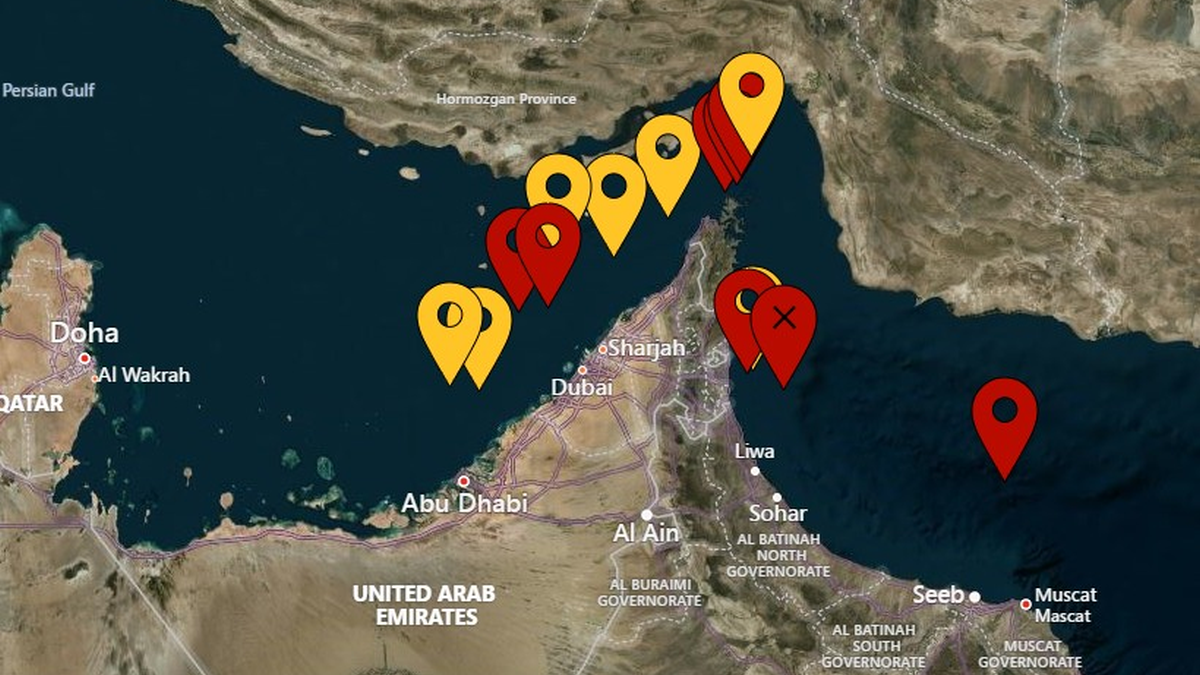
Iran has struck multiple targets in the United Arab Emirates (UAE), including at least one vessel, described as a tanker by the Royal Navy’s United Kingdom Maritime Trade Operations (UKMTO) Centre.
UKMTO said the vessel had been hit by falling debris from intercepted Iranian munitions on 16 March 2026, while anchored 23 nautical miles east of the UAE port of Fujairah, and that no one had been hurt.
"A tanker has reported being struck by an unknown projectile while at anchor. Minor structural damage reported. No injuries to crew. No environmental impact reported," the UKMTO report said.
Multiple media reports have cited maritime security service Vanguard Tech as identifying the vessel as a 54,500-dwt LPG carrier Gas Al Ahmadiah. Vessel databases list the LPG carrier as Kuwait-owned, built in 2020.
Maritime security service Ambrey assessed that the vessel had not been targeted and was ’collateral damage’ in the ongoing war that has, according to UKMTO, seen 21 vessel incident reports and 17 confirmed attacks on vessels operating in and around the Persian Gulf, Strait of Hormuz and Gulf of Oman between 28 February and 17 March 2026.
Ambrey also relayed a report from a merchant vessel anchored four nautical miles north-northwest of the UAE port of Sharjah, in an incident involving explosions near the ship. The vessel reported blast vibrations emanating on board the vessel from explosions nearby after aerial defence systems were sighted. The vessel has not reported damage.
Iran attacks on UAE ports
According to Ambrey, the Fujairah Media Office confirmed a drone attack on the port’s petroleum facilities overnight on 16 March and into the early morning hours of 17 March.
The UAE Defence Ministry said its air defences were engaging drones and missiles originating from Iran, and the Fujairah Media Office confirmed a fire at the facility’s Petroleum Industries area as a direct result of the attacks.
Fujairah port is the UAE’s main oil storage and bunkering facility, and an attack and subsequent fire at the facility on 3 March caused maritime bunker prices to spike.
No injuries were reported in either of the attacks on Fujairah port facilities, but authorities said the 17 March attack had affected at least two terminals at the port and forced vessels to move into anchorage positions. Additional drone attacks on 14 March damaged two crude storage tanks, and a fire in the Fujairah industrial zone on 16 March also interrupted oil loadings.
Monday, 16 March also saw a fire at the UAE’s Shah gas field, with operations suspended due to a drone attack.
Clarksons Research Services reported that bunker prices for maritime are up some 160% from the start of 2026, with VLSFO in Singapore priced at approximately US$1,100 per tonne, as regional oil supply shortages begin to impact shipping markets. S&P Global Commodity Insights reported Singapore bunkers at US$1,920 per tonne.
The attacks on UAE infrastructure were telegraphed by Iran following a series of what US Central Command said were attacks on 90 military sites on the Iran-held island of Kharg in the Persian Gulf. Iran said it would target the UAE due to its claim that US weapons had been fired from the UAE in the Kharg attacks.
US Central Command said the Kharg attacks had destroyed naval mine storage facilities and missile storage bunkers, while avoiding oil infrastructure sites.
Vessel transits through the Strait of Hormuz
Hundreds of vessels remain stranded in the Persian Gulf on the west side of the Strait of Hormuz, and transits through the strait are in the single digits per day, down from around 130 per day in the month leading up to the US-Israeli war in Iran, according to Clarksons Research figures.
Clarksons Research’s latest figures show that Strait of Hormuz transits are down by 95%, as of 16 March, with an average of five transits per day, and Clarksons has identified approximately 1,100 non-locally trading vessels inside the Persian Gulf.
In the two days before 16 March, Clarksons said three oil tankers with approximately 2M barrels of oil capacity had transited the Strait of Hormuz, down from an average of 40 tankers over a typical two-day period.
Two India-linked very large gas carriers have transited, as well, but no LNG carriers have made the trip through the Strait of Hormuz in March. EOS marine head of advisory Martin Kelly named the two vessels as LPG carriers Shivalik and Nanda Devi.
Mr Kelly also said that Iran is continuing to export crude volumes through the Strait of Hormuz and that no naval escorts have yet begun for non-Iranian energy flows.
Mr Kelly later wrote on LinkedIn that a suspicion of Iran verifying certain cargoes for approved exit through the strait had been ’confirmed’.
"At least four vessels have transited outbound via the Strait of Hormuz in the past 24 hours with a short diversion via the Larak-Qeshm Channel," Mr Kelly wrote. "This appears to be a verification process whereby Iran confirms the ownership, cargo and vessel are not US, or belong to those that Iran has permitted transit to."
According to EOS Marine, the ships that have passed are three bulk carriers (two Greek-owned and one Indian-owned) and one Aframax tanker, Karachi, owned by Pakistan-linked interests.
Riviera’s International Chemical and Product Tanker Conference will be held in London on 21-22 April 2026. Use this link for more information and to register for the event.
Sign up for Riviera’s series of technical and operational webinars and conferences:
- Register to attend by visiting our events page.
- Watch recordings from all of our webinars in the webinar library.




Related to this Story


Events

Maritime Regulations Webinar Week
 16 Dec 2025
 GMT - ONLINE
Floating energy: successfully unlocking stranded gas using FLNGs and FSRUs
24 Feb 2026GMT - ONLINE
© 2026 Riviera Maritime Media Ltd.


