


Business Sectors
Business Sectors
Events
Contents

Network investment for future connectivity
Inmarsat remains focused on delivering integrated, seamless connectivity and now has even more scope to do so following the London, UK-headquartered company’s takeover by US corporation Viasat


Inmarsat is using its strong position in the maritime market, investment from the takeover and synergies with Viasat to create a network of multiple communications technologies.
“We have been at the heart of the maritime ecosystem for 40 years, both as a safety and communications provider,” says Inmarsat Maritime president Ben Palmer. “We are committed to staying the course. Realising and securing the gains of digital disruption is a noble pursuit, and one we are committed to driving.”
This 2023 corporate deal brought together Viasat-2, Viasat-3 and associated VSAT services with Inmarsat’s GEO networks of GX and L-band through Fleetbroadband.
“Bringing the two companies together gives us more than 80 years of heritage, experience and commitment to this business,” says Mr Palmer. “We have been here for a long time and mean to build on that legacy. We are excited about the future.”
Before the merger, both companies planned satellite investments to expand their constellations and increase capacity for faster connectivity.
“We already have one of the world’s best GEO networks as our backbone, with plans to augment it with new Viasat-3 and GX satellites over the coming few years,” says Mr Palmer.
There have been challenges with reliability across the network this year, with satellite issues and failures forcing Inmarsat to reposition satellites and speed up launch plans.
“Two highly elliptical orbit satellites are soon to come, delivering high-speed broadband services in the Arctic region and in Northern latitudes,” says Mr Palmer.
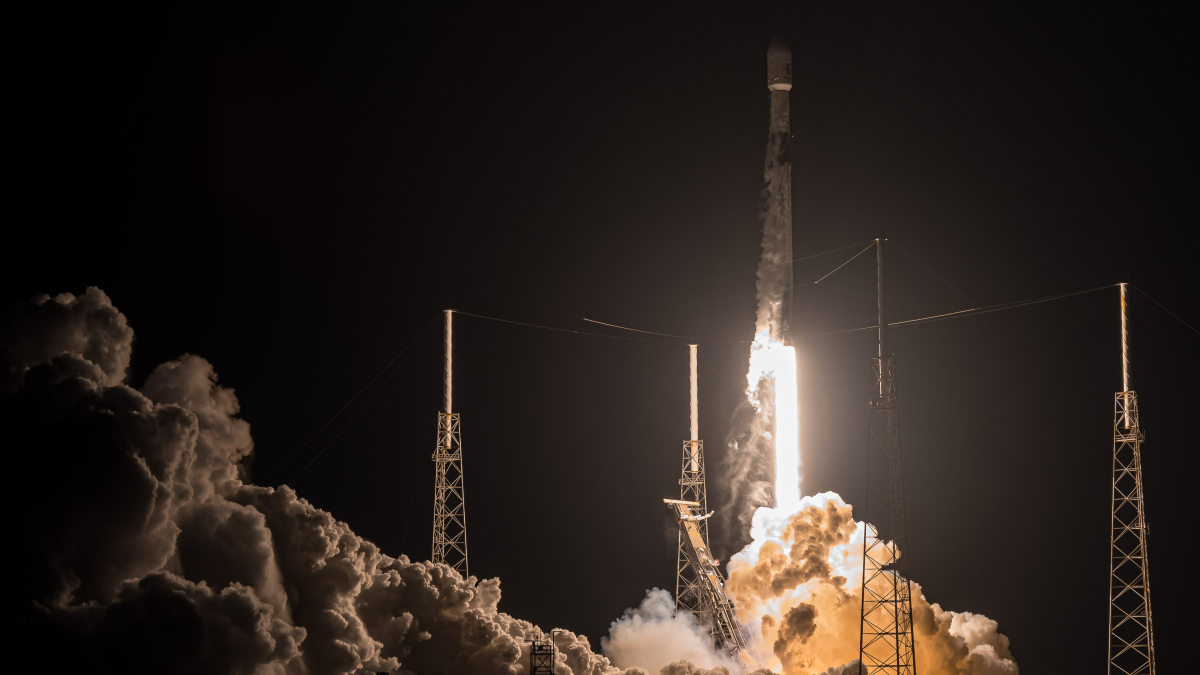
Inmarsat has operational I-4 satellites providing L-band communications, the first generation of GX satellites delivering Ka-band connectivity and started rolling out the second generation of GX with two GX6/I-6 satellites launched and coming into operation, also with extensive L-band payloads. There are plans to launch GX7, GX8 and GX9 in the next few years.
In 2023, Inmarsat launched Fleet Reach to offer supercharged coastal connectivity via added terrestrial mobile connectivity and long-term evolution (LTE) offshore networks.
“LTE services are in place, and our own, unique 5G mesh is proceeding past proof-of-concept trials,” says Mr Palmer.
“And we are assessing the best path forward on a potential LEO component. Ultimately, the goal is to ensure the best possible solution for our partners and customers.”
Inmarsat is building its orchestrated ‘network of networks’ which aims to use multiple satellite technologies in multiple orbits to deliver reliable connectivity wherever and whenever it is needed.
Global communications and offshore connectivity will be presented in depth at Riviera’s Offshore Support Journal Conference, Awards and Exhibition 2024, the world’s largest OSV event, to be held in London, 7-8 February 2024, click here to purchase tickets



Related to this Story

Events

Maritime Regulations Webinar Week
 16 Dec 2025
 GMT - ONLINE
Floating energy: successfully unlocking stranded gas using FLNGs and FSRUs
24 Feb 2026GMT - ONLINE
© 2026 Riviera Maritime Media Ltd.


