


Business Sectors
Business Sectors
Events
Contents
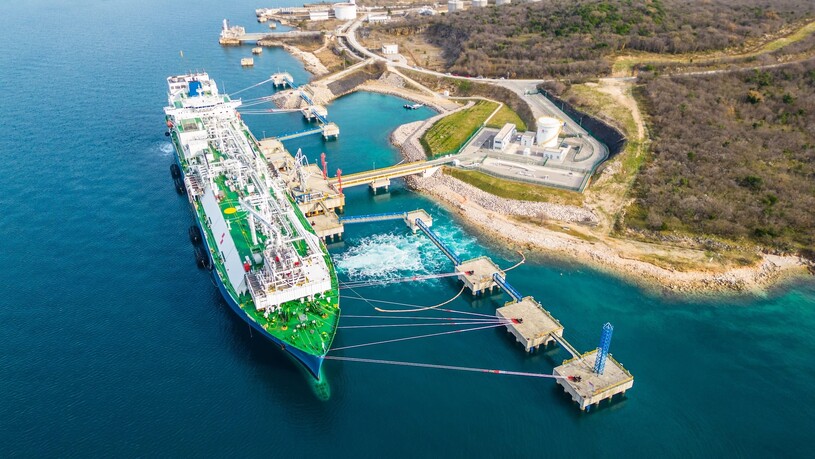
AHTS contracts retendered


In November 2013, Petrobras issued a tender for the AHTS 18000 class, divided in two batches. However, as broker Westshore explained in its latest report on the Brazilian market, the long-awaited international tender for large anchor-handling tug/supply (AHTS) vessels ended up being cancelled and retendered.
The two sections were split into:
• ‘A’ for a large anchor handler with two secondary winches and 400 tonne/450 tonne double drum main winches, for a two-year contract period
• ‘B’ for a large anchor handler with 350 tonne/400 tonne double drum winch, for a period of four years.
When proposals were delivered and ranked by Petrobras in early January 2014, bidders realised there had been a misunderstanding about the criteria applied to Type A. One component of the formula applied to normalise the mobilisation fee over the day-rate took into consideration 48 months (as instructed in the tender) but should have used 24 months (as per the proposed contract period).
The impact was significant for owners, whose offer included a higher mobilisation fee that they spread over a longer period, giving them an advantage over those whose bids were based on a higher day-rate but lower or no mobilisation fee.
Formal claims were then filed by owners who felt that they were disadvantaged by the mistake in the tender documents. In the end, Petrobras decided to cancel the tender for Type A, and retender it.
“Was retendering the only, or best, alternative, or did Petrobras take advantage of the issue to encourage a new round of competition?” said Westshore. “We don’t know but the story is that in the original tender, 14 vessels were offered and five of them were failed to qualify for non-technical compliance or excessive price; in the second tender, 11 vessels were offered (including a new vessel) and only one was discarded for excessive price.”
After the disclosure of the new bid offers, it became clear that the retender had benefited Petrobras because some owners significantly reduced their daily rates and mobilisation fees. “It may have also meant that Swire Pacific, which was looking to relocate its Havyard 844XL vessels from Southeast Asia to Brazil, lowered its day-rate by US$3,000 and mobilisation fee by US$3.5 million, recognising the impact of the vessel’s conventional propulsion system on fuel consumption compared to contenders with hybrid propulsion systems,” the broker explained. Siem Offshore also considerably lowered the day-rate, by US$10,000, and mobilisation fee by US$900,000 for the VS491CD anchor handler it was proposing to relocate from the North Sea to Brazil.
Farstad, offering Far Senator and Far Sagaris, which were working for international oil companies in Brazil, plus Far Statesman, from the North Sea, kept the same day-rate for the UT731CDs, but would have had lower mobilisation costs for the vessels already in Brazil. Sealion also reportedly reduced its bid, which was based on VS4616 anchor handlers based at the time in the North Sea. Westshore said that Go Offshore, which stuck with its original commercial terms for the VS491CD Go Phoenix slid from being first place in the first round to ninth place in the second round.
Solstad appeared as a new contender, with a bid based on the UT722L Normand Borg, which has been working for Petrobras since 2003, and Maersk reportedly reduced its day-rate by US$13,000 and mobilisation by US$2 million for one of its L-types in the UK sector of the North Sea – however, the effort didn’t pay off as the vessel did not qualify.
What this seems to demonstrate, said Westshore, is that for many owners, it is preferable to have vessels employed in Brazil on a 2+2 year contract, even at lower day-rates, which gamble on finding employment for them in the North Sea spot market.
“For a healthy and fair market environment, we hope Petrobras doesn’t make a habit of retendering after offers have already been published,” said Westshore. “And if it does, it doesn’t make much sense, even for a charterer, for there to be such significant differences in long-term market prices within a matter of weeks, without any change in the market that would really justify this.”OSJ




Related to this Story



Events

Maritime Regulations Webinar Week
 16 Dec 2025
 GMT - ONLINE
Floating energy: successfully unlocking stranded gas using FLNGs and FSRUs
24 Feb 2026GMT - ONLINE
© 2026 Riviera Maritime Media Ltd.


