


Business Sectors
Business Sectors
Events
Contents
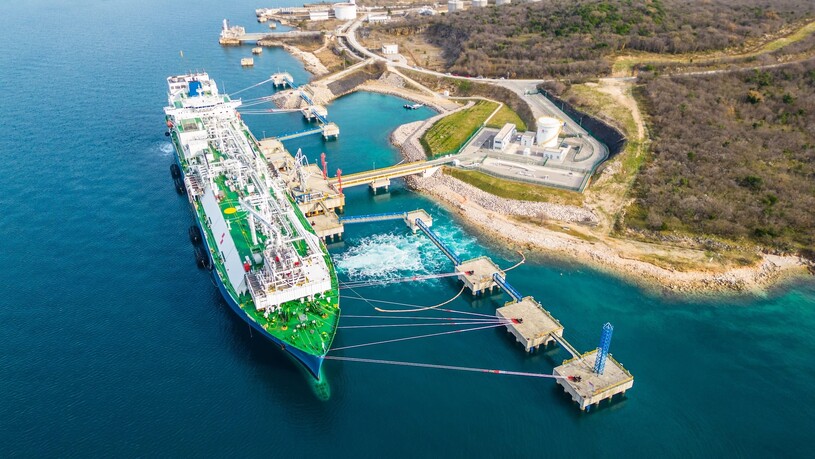
Bright outlook for emergency rescue vessel market


Data published by the research arm of leading shipbroker Clarksons suggests that demand for emergency response and rescue vessels (ERRVs) will remain strong for at least the next 12–18 months, even after large numbers of newbuilds and high spec vessels have entered the worldwide fleet.
According to Clarkson Research Services Ltd’s newly published 2014 Rescue and Salvage Vessel Register (which covers ERRVs and salvage vessel), the rescue and salvage fleet segment consisted of 562 active vessels as of 1 June 2014, accounting for 4.5 per cent of the overall offshore fleet. This relatively small vessel sector mainly services a niche, specialised market sustained in large part by governmental health, safety and environment (HSE) regulations.
Historically, the global ERRV fleet was comprised almost entirely of ad hoc conversions, either from fishing boats/trawlers or from ageing offshore support vessels. This is still reflected in the age profile of the rescue and salvage fleet, 46 per cent of which was built before 1984.
As Clarksons Research highlights in the introduction to the new vessel register, it was the Piper Alpha disaster in 1988 that created the conditions and incentives for the transformation of the market in the North Sea. The Cullen Inquiry launched by the UK Government in the wake of the accident made a series of recommendations, many of which were incorporated into law in the Offshore Installations (Prevention of Fire and Explosion, and Emergency Response) Regulations 1995, known as PFEER. Among the regulations laid out in the document was the requirement for “duty holders” to establish “appropriate standards of performance for ensuring effective evacuation, escape recovery and rescue” from offshore structures and vessels. Hence, the centre of gravity for the ERRV market is today to be found in the North Sea, in UK waters in particular. Approximately 40 per cent of the entire ERRV fleet was deployed offshore the UK as of 1 June 2014, reflecting the imperative that all UK offshore structures or clusters of structures have a dedicated ERRV on station.
However, the reshaping of the demand side in the ERRV market has in turn led to a reshaping of the supply side. In other words, the fleet profile has changed. In response to regulatory requirements and general HSE concerns, owners have sought to modernise their fleets, a trend visible in the strong contracting levels of the latter half of the 2000s. Since the start of 2004, 40 vessels have been removed from the fleet whilst 108 have been delivered. Newbuild vessels today are typically equipped with a number of more advanced features to assist in rescue and recovery missions, including dynamic positioning to stabilise the vessel in rough seas, decompression chambers to facilitate diving operations, infrared cameras to assist in search missions and specialist medical areas for treating survivors. Newbuilds are normally built to ice-class notation, have a bollard pull of 80 tonnes minimum and are capable of stern recovery.
Newbuild ERRVs tend to be more fuel efficient and environmentally friendly than earlier vessels as well. Newbuild employment is pan-European, while the majority of older, lower spec ERRVs are deployed in other regions where governmental regulations are less stringent.“The short-term outlook for the ERRV sector is positive for owners: rates have increased by around 10–15 per cent over the last couple of years,” said Clarksons Research. “The buoyant market of 2013 and first half of 2014 is expected to continue through into 2015.”
Rates are determined by vessel supply and demand and by crew costs (because of the need to ensure crew retention). For high spec newbuilds, day rates for one-year time charters are anticipated in the range of £8,650–9,500/day. Chartering of vessels for two-year and three-year periods is expected in the ranges of £7,650–8,250/day and £7,350–7,500/day respectively. In addition to the usual demand at fixed infrastructure, a number of scheduled offshore drilling campaigns reported by exploration and production (E&P) companies are likely to increase inquiry.
“Moreover,” said the broker, “in contrast to some segments of the offshore fleet, the ERRV sector has not been exposed to speculative contracting. Oversupply does not look likely to become a problem, even with the newbuild tonnage scheduled to enter the market in the remainder of 2014 and in 2015: 17 units and 11 units respectively.” It is anticipated that some of the owners receiving North Sea standard newbuilds may well retire older vessels from their fleet as a result or at least sell them on to less-rigorous operations in other regions.
“In the longer term,” said the broker, “demand for high spec ERRV units looks likely to remain strong, given the macro trends in the North Sea offshore sector. Firstly, ageing field infrastructure will continue to require high spec ERRVs to be on station. Field infrastructure is likely to be in place longer than was once thought, with E&P companies using enhanced oil recovery (EOR) methods and subsea-to-fixed-platform tie-backs to prolong the life of mature fields and bring marginal fields on stream. When platforms really have reached the end of their economically useful life, the hazardous process of decommissioning will also provide work for ERRVs.”
As it also notes, a high, stable oil price is facilitating exploration and development further from shore, in deeper waters and harsher environments. In northwest Europe, this means the Barents Sea and West of Shetlands. High spec ERRVs will be required in these hazardous frontiers, where the distance from shore complicates conventional rescue operations. While more dangerous offshore exploration and development is problematic, albeit necessary, for oil and gas companies, the same is an opportunity for ERRV owners.
The estimated contract value of new ERRV orders in 2013 was US$254 million, with an average unit cost of US$19.5 million. In comparison, in 2006, the estimated contract value of new ERRV orders was US$255 million, with an average unit cost of US$10.6 million. This almost twofold increase largely represents the ordering of increasingly high spec vessels.
The development of the ERRV fleet was most pronounced between 2007 and 2010, at the height of modernisation-driven ordering, when vessel numbers increased by between 2.3 per cent and 5.3 per cent per annum. Net fleet growth subsequently slowed as deliveries fell to 12 in 2012 and 9 in 2013, more or less on par with removals – 10 in 2012 and 11 in 2013.
The majority of construction takes place in European or East Asian yards. Of the 44 ERRV and salvage vessels on the orderbook, 26 (59 per cent) are under construction in Chinese or Singaporean yards, while 13 (30 per cent) are under construction at yards in Finland, Germany, Norway, Russia and Spain.
“With the development of a tighter market again, contracting has picked up and deliveries may begin to approach levels last seen before the financial crisis,” said the broker. “Given the age profile of the fleet, recent history would suggest that this would not necessarily represent a problem for owners. They would have the option of removing older vessels from the market, thereby restraining fleet growth, supporting stronger rates. The rescue and salvage market thus has the potential to be quite resilient in the face of changing market conditions.”
The top 10 owner groups of rescue and salvage vessels together account for 205 units – 36 per cent of the entire sector. The leading owner in the rescue and salvage sector in terms of vessel numbers is the Netherlands-based Vroon with a fleet of 57 – equivalent to 10 per cent of all rescue and salvage vessels worldwide. Vroon also accounts for 20 per cent of the rescue and salvage orderbook. The company’s vessels have an average age of 21.4 years, notably less than the average of 25.4 years. Vroon has been at the forefront of fleet modernisation in recent years, with 40 per cent of its fleet built after the start of 2007 and a number of older vessels removed from the fleet.
In this regard, Vroon is representative of other leading vessel owners, such as Esvagt and North Star Shipping, who have also undertaken modernisation programmes to remain competitive in the North Sea market.
Key trends in the ERRV segment
• modernisation of a mainly elderly fleet has caught a second wind, particularly in the North Sea, where newbuild contracting is being paralleled by removals of older vessels
• the North Sea ERRV charter market is tight and is expected to remain thus through 2014 into 2015
• new contracts show a trend for larger vessels with multifunction field support facilities capable of performing in harsher environments such as Arctic waters and West of Shetlands. OSJ



Related to this Story



Events

Maritime Regulations Webinar Week
 16 Dec 2025
 GMT - ONLINE
Floating energy: successfully unlocking stranded gas using FLNGs and FSRUs
24 Feb 2026GMT - ONLINE
© 2026 Riviera Maritime Media Ltd.


