


Business Sectors
Business Sectors
Events
Contents
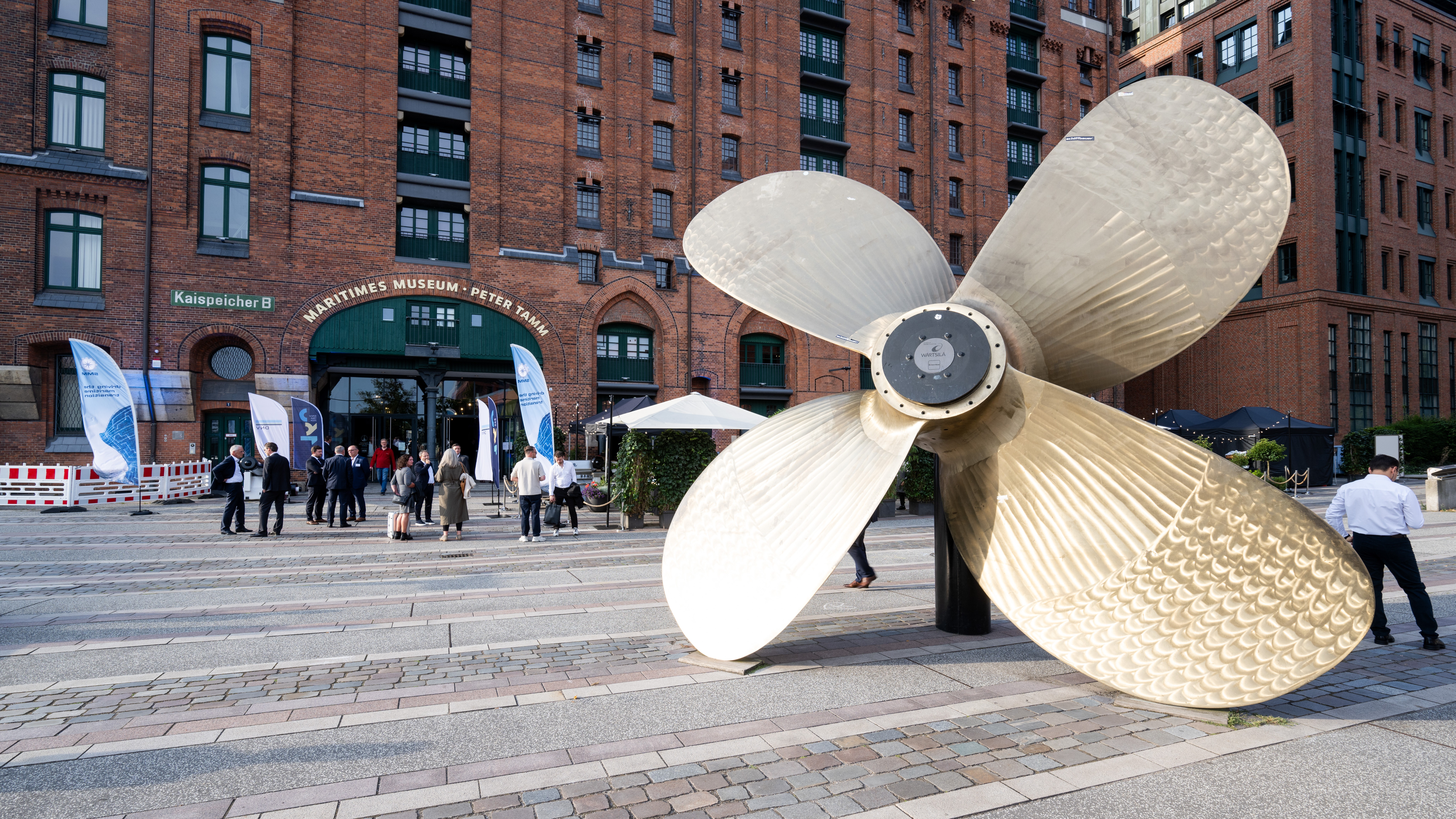
Caley A-frame for Ndurance


Offshore handling systems specialist Caley Ocean Systems recently supplied what it described as “a high performance A-frame handling system” to Boskalis Offshore. The A-frame is used to launch trenching vehicles and ploughs from the company’s first N-class cablelay vessel, Ndurance.
Mounted on the stern of Ndurance, the A-frame is capable of handling loads of 70 tonnes with a maximum lift and reach of 21m up to sea state 5. The structure of the A-frame is manufactured in three sections – two leg sections and a top crossbeam. The crossbeam includes the pivot mountings for the A-frame’s telescopic swinging beam assembly mounted on a dampening frame, allowing the lifting system to handle a wide range of equipment.
The A-frame includes an anti-pitch system incorporating two double-acting hydraulic cylinders trunnion-mounted to the crossbeam, together with a hydraulic power unit (HPU) and winch, for maximum operational flexibility. In addition to cable-laying, Ndurance’s A-frame will be used for a range of other tasks, including launch and recovery of tools and equipment associated with offshore construction projects.
The A-frame is the latest in a number of contracts secured by the company. In 2013, Caley was awarded a contract by Subsea 7 to design, manufacture and supply a deepwater lowering system (DLS). The DLS will initially be deployed by Subsea 7 on the Chevron-operated Gorgon project, off the northwest coast of Western Australia, to lower subsea structures weighing up to 950Te in water depths in excess of 1,300m.
The DLS consists of two double-drum traction and storage winches and fully redundant controls, all mounted on an integrated grillage structure for rapid mobilisation onto the pipelay and heavy-lift vessel Sapura 3000. The system will connect to a deepwater lowering beam (DLB) and connector. Each set of winches has its own dedicated hydraulic power unit for optimum control. The range of equipment to be handled by the DLS in the Gorgon and Jansz-Io fields will include subsea structures and foundations and heavy-lift spools.
“The lifting requirements for oceanographic and offshore are very different,” said Gregor McPherson, sales director, Caley Ocean Systems. “For oceanographic systems, great depths are involved up to 10,000m but the payload is small – often amounting to only a few tonnes, compared with the offshore industry where the depths are less but the payloads much higher.
“The dual winch DLS system is designed to provide optimum load handling and speed of deployment. It will also feature our modular control systems methodology to ensure safe operation offshore,” he explained. OSJ
Related to this Story
Events

Maritime Regulations Webinar Week
 16 Dec 2025
 GMT - ONLINE
Floating energy: successfully unlocking stranded gas using FLNGs and FSRUs
24 Feb 2026GMT - ONLINE
© 2026 Riviera Maritime Media Ltd.


