


Business Sectors
Business Sectors
Events
Contents
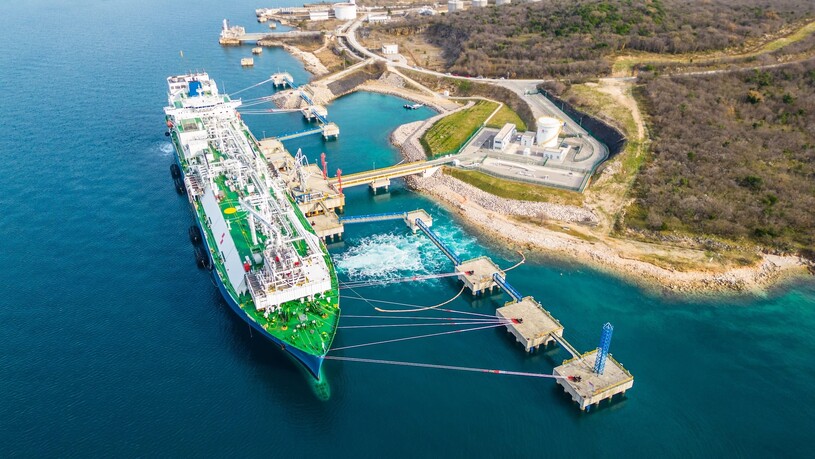
Clough expands into subsea market


Australian engineering company Clough took a long term charter of the Norwegian-built Rem Clough at the end of 2008 as part of a strategic move into the subsea umbilicals, risers and flowlines (SURF) market in Asia.
Rem Clough is a purpose-built diving support and subsea construction design, 117m long and equipped with a 250 tonne offshore rated, active heave compensated crane capable of deploying subsea structures in water depths down to 2,500m. The ship is outfitted with two 150hp, 3,000m rated work-class ROVs and a saturated dive support system.
“The intention was to provide a piece of hardware that was appropriate for the market and would allow us to start competing directly in the SURF market,” said Kevin Cain, vice president for marine construction and fabrication at Clough. Rem Clough’s first project will be to provide subsea intervention services for offshore platform decommissioning and subsea construction works in the Gulf of Mexico for Wild Well Control, a subsidiary of Superior Energy Services in the US. The contract is for one year with two six month options and is worth US$38 million.
Clough first entered the SURF market with the 127.5m, DP2 offshore construction service vessel, Normand Clipper, which was chartered in 2005 with the intention of serving on Oil & Natural Gas Co of India’s G1 project. The ship was subsequently moved to the Gulf of Mexico to work, good news in itself for Clough, but thwarting plans for a presence in the Australasian SURF market.
Normand Clipper has a 250 tonne deepwater crane, a 60 tonne A-frame, 140 tonne traction winch for ploughing operations, a diving moonpool, an ROV launching system and accommodation for 102 people. The ship is still performing rig remediation work in the Gulf of Mexico and, in October 2008, Clough secured agreements with Oceaneering International to use it in a subsea construction role for pipeline repairs with Shell Oil and Taylor Energy.
Apache Corp also extended its existing agreement with Clough for the provision of Normand Clipper immediately following the Oceaneering work. The vessel will continue remediation works for both clients in the Gulf of Mexico in the wake of Hurricane Ike through most of first quarter 2009.
Apart from the US work, Clough offers a wide range of services to the oil and gas, mineral and infrastructure sectors in south-east Asia and Australia, and the company achieved strong growth throughout the 2007-8 July to June financial year. Net profit after tax was A$66.6 million and revenue was A$769.4 million. The company started the new financial year with net cash of A$9.5 million (compared to a net debt of A$79.5 million in 2006-7) and an orderbook of A$1.18 billion (up 44 per cent on 2006-7).
Clough’s Indonesian presence, Petrosea Offshore Supply Base, is located in Balikpapan harbour, Borneo, and is a comprehensive logistic base for offshore petroleum exploration and production. It has a 205m long quay with a water depth of 8.5m, which can handle three supply vessels at a time. Another 160m quayside with a water depth of 6.4m can berth a further two vessels. Currently, the base services clients such as ExxonMobil, ENI, Total Indonesia and Chevron.
Clough’s derrick pipelay barge, Java Constructor (pictured), works predominantly in Asia and it, too, will soon be bringing enhanced market opportunities for the operator. The ship is currently in drydock at STM Shipyard in Singapore where a 15m addition is being made to its midship section. This upgrade will increase the pipelay capability from 60 tonnes to 120 tonnes, and a second tensioner is being installed, making it DNV compliant. Crane capacity is being increased from 400 tonnes to 1,000 tonnes, and improvements made to the winching system. Deck space is being expanded, since additional power generation will be moved inside the vessel.
The upgrade is a response to increases in the size of jacket structures. Concrete coating sizes and pipe wall thicknesses have increased and, although previously comfortable with the field lines and wellhead platforms typically found in Thailand and Malaysia, Java Constructor’s capabilities have become limiting.
“We have reached the point now where the accessible market place for Java Constructor in its present configuration is relatively small,” reports Mr Cain. “By upgrading (and we recognise this is not significant in the scheme of derrick pipelay barges working in south-east Asia, since we are obviously not in the 2,000 or 3,000 tonne class), our improvements will return the vessel to the upper end of that segment of the market in which we are competent.”
Java Constructor’s first project after the upgrade will be on the installation of a 610mm (24in) pipeline and associated tie-ins and stalk-on risers for Real Offshore Installation Co of Malaysia. Work is scheduled to start in the second quarter of 2009 and is part of the B17 field joint development in the area between Malaysia and Thailand.
Java Constructor had been scheduled to perform Apache Energy’s Reindeer offshore project, due to commence in September 2009, but Apache and Santos shelved the project in December 2008. All of Clough’s costs and commitments made will be fully reimbursed by Apache. The residual value of the contracts at termination is A$390 million, which reduces the Clough work under contract to around A$1.3 billion. The effect on planned earnings for the current financial year will be offset by improvements in other projects, says Clough, in particular the unbudgeted repair work on Varanus Island, Australia, after a gas pipeline explosion in June 2008.
After receiving the news about Reindeer, Mr Cain is cautious about whether or not further additions to the company’s fleet are imminent. “Two months ago I would have said ‘yes’. Now, it may be ‘perhaps’,” he said. “There is a significant number of new vessels that are under construction at present for delivery between mid-2009 and mid-2011, and our task is to keep a watchful eye on the marketplace and see what tonnage is available, what tonnage is chartered, or more importantly, what tonnage is built but not chartered, as to whether there may be any opportunities there to increase our fleet.”
Clough employs approximately 5,000 people from bases in Australia, Indonesia and Thailand, and the company has put much effort into attracting and retaining a skilled workforce. It recently commissioned an independent talent management study and, from that, has placed a renewed focus on learning and development, remuneration and benefits such as flexibility.
Staff numbers increased by 34 per cent during the last financial year. “We have placed a lot of emphasis on strengthening our operations and management team in support of the vessels. We are looking to strengthen what we believe is already a useful and experienced engineering team by taking on specific and targeted SURF engineering and operations support personnel,” said Mr Cain.
For over 30 years, Clough has run a graduate development programme and has longstanding relationships with the Australian Maritime College and universities in Western Australia. In 2008, more than 30 graduates have been employed, and the programme offers a combination of practical experience and training that benefits both participants and the company. As part of this, Clough actively seeks to understand the career and lifestyle goals of its young talent.
Clough uses a suite of project management and engineering support tools in its operations, and Mr Cain believes that the company’s strength is displayed through a track record for successfully completing world-class projects. Clough recently worked with ConocoPhillips to shutdown the Bayu-Undan offshore facilities in the Timor Sea for scheduled maintenance. This facility consists of an FPSO and three fixed platforms, and more than 350 personnel were involved in the works, which lasted for 30 days.
In 2008, Clough designed, built and installed the Maari wellhead platform in New Zealand. This is a 10,000 tonne self-elevating design and was challenging both technically and from a project management perspective.
Clough’s ability to provide design, engineering and fabrication as well as transportation and installation is a key strength, continues Mr Cain. A few weeks before installation of the Maari wellhead platform, the Clough Aker Joint Venture took just six hours to complete the Angel topside floatover installation for Woodside’s field development off Dampier, Western Australia.
“It was a two year project that has been performed quietly and capably by a small number of people,” said Mr Cain. “It is a demonstration of Clough’s capability to bring to bear management and engineering skills to solve a diverse number of projects and styles.”

Related to this Story
Events

Maritime Regulations Webinar Week
 16 Dec 2025
 GMT - ONLINE
Floating energy: successfully unlocking stranded gas using FLNGs and FSRUs
24 Feb 2026GMT - ONLINE
© 2026 Riviera Maritime Media Ltd.


