


Business Sectors
Business Sectors
Events
Contents
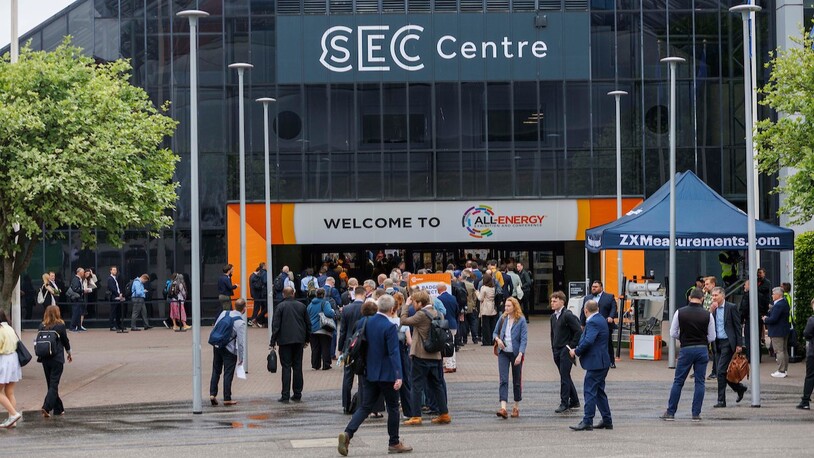
Huge trenching vessel has a host of innovations


OSJ’s Ship of the Year 2009, Far Samson, combines a record-breaking bollard pull with an advanced, fuel efficient and environmentally friendly propulsion plant, purpose-designed trenching package and the ability to deploy ROVs and undertake subsea construction/IMR work
Delivered to Farstad Construction earlier this year, Far Samson was designed by Rolls-Royce Ship Technology Offshore in Ulsteinvik, Norway in accordance with the directions and requirements of Farstad Construction’s parent company, Farstad Shipping. Construction was carried out by STX Europe Langsten in Tomrefjord, employing a hull fabricated by STX Europe Tulcea in Romania.
Many ideas for innovations and the development of the Far Samson design concept are founded in experience gained through operation of another Farstad vessel, Far Sovereign, which has been performing trenching works since 1999, and in the close collaboration between Farstad and the client charterer, Saipem. Like Far Samson, Far Sovereign was also built at the Langsten shipyard.
Not too many years ago, trenching work was performed by a barge towed by two or more anchor handlers. Far Sovereign made single vessel operation possible and was a big step forward in efficiency; in Far Samson, Farstad has undoubtedly made a another great leap forward, having brought into operation a vessel which, like Far Sovereign in its time, is an order of magnitude more capable than what went before.
The Norwegian operator already controls an impressive list of sophisticated vessels but Far Samson is noteworthy for many reasons apart from bollard pull, as Karl-Johann Bakken, Farstad Shipping’s chief executive officer, made clear at the time that the deal for the ship was announced. He highlighted the fact that Far Samson is the company’s first venture into a new market, one hitherto dominated by one of its closest competitors.
Described by designer Rolls-Royce as “the most powerful offshore vessel ever built”, Far Samson is a UT761 CD design, and is described, with some justification, by Rolls-Royce’s president for offshore, Anders Almestad, as “truly a world class combination of high technology and new capabilities, pushing new boundaries in the offshore market”.
The vessel, which can cut trenches in the seabed in water depths down to 1,000m, is 121.5m long with a 26m beam, has a hull strengthened to DNV ice class 1B and is capable of more than 19 knots maximum speed. A Rolls-Royce hybrid propulsion arrangement, combining diesel-electric and diesel-mechanical transmission (see elsewhere in this special supplement) provides optimal flexibility and fuel economy, and minimum exhaust emissions. Far Samson is powered by Rolls-Royce diesel engines which meet Clean Design class rules and have catalytic converters fitted to the exhaust lines, giving a 95 per cent reduction in NOx emissions.
The vessel’s hugely increased level of efficiency provides performance and economic gains in many respects, but in keeping with Farstad Shipping’s focus on bringing into service ever more green vessels, Far Samson also has a host of innovative solutions on board that reduce the ship’s impact on the environment.
As reported above, Far Samson’s hull was fabricated by STX Europe’s yard at Tulcea in Romania, a shipbuilding contract for the vessel having been signed on 14 June 2006. The hull arrived at Langsten on 4 July 2008 and vessel was delivered to Farstad Construction on 24 March 2009. Many of the innovations embodied in the ship have been developed, designed and manufactured by well known Norwegian companies that form part of Norway’s much-heralded ‘maritime cluster.’
Immediately after delivery and final testing, Far Samson started a long-term contract with Saipem UK Ltd, the vessel having been purpose-designed and built for seabed pipeline trenching; it will tow a remote controlled plough on the seabed and place pipelines into trenches up to 2.5m deep – all in one operation, the trench being backfilled by a second plough (Far Samson carries both types of plough, which can be interchanged at sea). In addition to this, its main role, Far Samson is a fully equipped subsea construction and IMR vessel.
During bollard pull tests, an unofficial world record was established, some 423 tonnes continuous bollard pull having been achieved and verified by Norwegian classification society, DNV.
This is over 100 tonnes more than the previous unofficial world record. The official peak performance in bollard pull mode – also verified by DNV – was a huge 438 tonnes, the effective bollard pull/kW of energy demonstrating the vessel’s extremely high level of efficiency in this role.
The complex but very capable diesel-electric hybrid machinery developed for Far Samson and the massive, new-generation ploughs with which it is equipped, are discussed elsewhere in detail in this special supplement, but are only examples – the most important examples – of a vessel with many interesting and innovative features. With an engine output of approximately 65,260kW, this unique ship’s hybrid diesel-electric/mechanical propulsion plant ensures that a minimum number of engines are running at any one time, thus reducing fuel consumption and emissions to air.
Hybrid propulsion systems combining mechanical and electric transmissions have been growing in popularity among owners and operators of OSVs, and have been specified for a number of Rolls-Royce’s UT-Design vessels. As highlighted previously in OSJ, owners consider hybrid machinery especially attractive for offshore construction ships and anchor handlers, which have to operate in several different modes (they may spend part of their operational profile in transit, part in DP or in towing or ploughing modes, the required power in each mode being quite different). Individual hybrid systems can therefore be tailored to the needs of individual vessels and their operational profile in terms of total installed power.
Among other interesting innovations, Far Samson’s Kongsberg DP3 dynamic positioning system, which was developed especially for the ship and has a dedicated ‘ploughing mode,’ focuses on efficient and optimal conditions for the plough, not just the position of the hull itself. Towing conditions are measured and monitored continuously on board Far Samson using the special ploughing module in the DP system, which controls all of the ship’s propellers and thrusters.
Given its key role in the control and positioning of the plough, the third DP console is positioned in a Plough Control Centre on the deck below the bridge, where the tow winch, crane winch and the A-frame with its winch are controlled by secondary panels – the bridge DP system, with its two consoles, remains manned at all times during ploughing operations, even if DP operations are actually being controlled from the deck below. This newly developed DP package has also been tested to the new DP-HIL rules from DNV.
A National Oilwell Varco (NOV) main crane is placed on a high column for optimal lift height and is able to work down to a water depth of 3,500m. Active heave compensation is taken care of by the winch itself (and not by hydraulic cylinders); this eliminates any limitation on wave height and vessel movement.
In order to reduce the massive weights with high centre of gravity, the winch has been placed on the main deck to starboard with the spooling devices to port. An idea of the weight of the crane and associated systems can be gained from the fact that the crane wire alone weighs some 180 tonnes.
Next to the main crane winch, the National Oilwell Varco winch for the A-frame is arranged in a similar configuration, and the A-frame winch is also similarly equipped with active heave compensation. The A-frame is capable of working down to 1,500m water depth, but if more water depth is required the main crane wire and winch can be utilised via the A-frame to achieve a working depth of 3,500m. Since both winches are supplied by the same manufacturer, synchronised lifting by the A-frame and crane has been incorporated into the ship’s operating profile, which is a great advantage when deploying heavy loads such as the massive ploughs.
An ROV service crane was supplied by Odim in Aukra, Norway and is also equipped with active heave compensation, the ROV hangar being positioned between the comfortable and spacious living quarters and the work deck. It accommodates a Sepro Stavanger launch and recovery system (LARS) with control rooms, workshops and store rooms for ROV in a well protected area.
Given the nature of the tasks that the vessel will carry out, accommodation is obviously an important factor, and the UT761 CD is outfitted to a very high standard, with cabins and amenities for 100. The accommodation is arranged with several spacious day rooms, there being many nationalities on board with different languages, cultures and preferences when it comes to TV channels. The accommodation amenities also include an exercise room, laundry, provision rooms, lift, Internet lounge, and helicopter reception area, as well as comfortable cabins with TV and Internet connection for the highest levels of comfort.
Large office areas and meeting rooms, as well as a dedicated operations centre, are to be found on the deck below the bridge, along with an ROV control room on A deck. The bridge arrangement itself complies with DNV’s Naut OSV-A class. Large passive roll reduction tanks in combination with a dual anti-heeling system ensure the highest possible levels of comfort at sea for the ship’s crew and other onboard personnel.
In addition to all of the tugger winches, mooring winches and windlass, the main towing winch was supplied by Rolls-Royce Deck Machinery in Brattvaag, Norway in co-operation with IP Huse Steinshamn. The 600 tonnes pull/950 tonnes breaking force low pressure hydraulic winch is equipped with a new type of creep compensation system developed specifically for this ship; this means that the winch can tow on the hydraulic motors since internal oil leakage in the hydraulic system is compensated for continuously, ensuring that the drum is not moving at all during towing. This is very important in order to avoid damage to the tow wire if moving over the stern roller.
If the plough stops on the seabed, the winch will pay out wire immediately and at the same time provide a signal to the DP system to reduce pitch. Unlike Far Samson, Far Sovereign does not have creep compensation, so towing must be done on the band brake to keep the drum in position. However, a band brake is slow to release, and the weak link on the tow wire ahead of the plough often breaks if the plough stops. Reconnecting this link normally takes several hours, hence Far Samson is expected to be far more efficient in this respect and experience much less down time.
Again, unlike Far Samson, Far Sovereign only has one deck, which means that very little work can take place in the cargo area during towing, for safety reasons (the high tension tow wire runs over the deck). However, as shown on the general arrangement of Far Samson (see page V), all winches on the new vessel are placed on the main deck while A deck acts as the cargo level.
This means that tasks can be carried out in safety on the cargo deck during towing operations and work can, for instance, be undertaken on the plough which is not in use at the time or on other objects which may need to be maintained and worked on from time to time.
Another benefit of the UT761 CD design is the stern arrangement, which gives a low position for the Rolls-Royce stern roller and at the same time will not permit towing wire to slide very far from the ship’s centreline; this improves safety during high wire tension. Forward of the recessed towing winch, a container storage area is arranged on the main deck around the moonpool area.
Two ploughs (a main plough and back-fill plough) are necessary to cover the full scope of trenching work. Far Sovereign does not have enough space on deck to carry both ploughs at the same time and has to return to port to change ploughs, whereas Far Samson has been provided with two hydraulically operated Plough Transportation Systems (PTS) manufactured by AxTech Molde in Norway. These allow the vessel to carry both ploughs on board at any time and to move the ploughs around on deck offshore in and out of the reach of the A-frame; they are another innovation which significantly improves the new ship’s overall flexibility, efficiency and cost-effectiveness.
Axtech Molde also designed and manufactured the large A-frame placed at the stern. As this has twin cylinder systems each side, its working length is extremely long and extends well aft of the stern and forward over the deck. When placed on the main deck, with the ploughs ‘parked’ on A deck, the combination of a plough stabilisation frame (installed below the top gantry of the A-frame) and active heave compensation on the A-frame winch allows for safe launch and recovery of the ploughs, even in rough weather.
Yet another interesting feature of the new vessel is a removable hangar over the moonpool, which provides the opportunity to move the ploughs inside for service and maintenance if this is required by weather conditions. Hatches are installed on top of hangar, making it possible to work with the crane wire through the moonpool even with the hangar in place. The hangar can be lifted off the deck with the ship’s crane if this is found to be necessary in order to increase deck space or for other reasons.
The ship’s helicopter deck, fabricated by Marine Aluminium in Haugesund, Norway, is placed as low as possible on the forecastle but at the same time elevated above the deck in order to ensure a homogenous airflow below and above for optimal helicopter landing conditions. Adjacent to the deck, a helicopter lounge with reception area is to be found, with dedicated rooms for safety equipment.
In addition to the equipment described above, Rolls-Royce also supplied many other essentials on board Far Samson, including the rudders, steering gear, propeller nozzles, automation system, stern roller, tow pins, shark jaw, and wire centring device, as well as the electric switchboards and main cabinets. The electrical installation work on board was carried out by Acel Ålesund.
A Clean Design class notation was implemented for the newbuild, as was Naut OSV-A (as mentioned above), and Comfort Class. As also mentioned, the vessel complies with the new DP HIL rules, which require extensive testing and class approval of all DP-related software functions. These tests were carried out by Marine Cybernetics in Trondheim, and during the design process, extensive model tests were carried out in order to optimise the bollard pull, seakeeping capabilities and transit speed. These tests were performed at Marintek’s facilities in Trondheim.
The superstructure is very much enclosed, a reflection in part of the fact that Far Samson has an ice class 1B strengthened hull and is equipped to meet a DeIce notation, as well as having the removable plough hangar on deck. The winches are also well protected below A deck, these features all making the vessel well suited for work in harsh climates and low temperatures.
A new layout has been applied to the engine control room, where the traditional main console has been replaced by a free standing control desk in the middle of the room. Additional large monitors are positioned on the bulkheads in front of the operators, an arrangement that has reportedly been very well received by the crew.
Although the ploughs are the supply and property of Saipem UK Ltd, they were designed and manufactured by IHC Engineering Business (EB) in Newcastle upon Tyne in the UK in close co-operation with Saipem UK and Farstad. Full details appear elsewhere in this supplement.
Farstad notes that its experience of operating Far Sovereign, which has no active heave compensation on the A-frame winch and uses a twin fall lift wire, showed that this is a significant operational limitation. Because of this, Far Sovereign has to position itself in parallel with the pipeline when launching a plough to the seabed. More often than not, this means doing so in wind, waves and currents.
As a consequence of this, Far Samson has active heave compensation on its A-frame winch, as well as a single fall lift wire on the A-frame, and remote controlled side thrusters on the plough. This package permits the vessel to select the most favorable course and direction freely, with wind, waves and current taken into account.
The operational window is thereby considerably increased, since launch and recovery of the plough over the pipeline is a critical operation, during which damage to pipeline and plough must be avoided at all costs. In order to avoid the plough’s umbilical, which normally floats in the sea, being sucked into the propellers, the umbilical winch has constant tension, which is also a new feature.
In closing, it is worth comparing the environmental performance of Far Samson with that of its predecessor, Far Sovereign, which entered service in 1999. That ship has a length of 85m and a fuel consumption of 23 tonnes/day (or 18 tonnes/day in DP mode). The vessel has no exhaust gas cleaning, and the propulsion machinery takes the form of direct drive with fixed revolutions. All the main engines are engaged most of the time, thus adding significantly to fuel burn, and having been designed and built before the days of Clean Design, the fuel tanks are located directly against the hull.
Entering service a decade later, the much larger Far Samson has a fuel consumption of 29 tonnes/day, but in DP2/DP3 mode this fall to just 9 tonnes/day. The machinery is fitted with catalytic converters that remove a minimum of 95 per cent of the produced NOx. With the hybrid/diesel-electric plant in operation, only a minimum number of engines is running at any one time, and no fuel is stowed against the hull. Such innovations do not come cheap, however – Farstad estimates that the ‘environmental extras’ that it invested in Far Samson cost some NKr80 million. OSJ
Related to this Story

Events

Maritime Regulations Webinar Week
 16 Dec 2025
 GMT - ONLINE
Floating energy: successfully unlocking stranded gas using FLNGs and FSRUs
24 Feb 2026GMT - ONLINE
© 2026 Riviera Maritime Media Ltd.


