


Business Sectors
Business Sectors
Events
Contents
Register to read more articles.
Incubating disruptors to survive
Traditional shipping services companies are facing disruptors entering their space – one way to survive is to incubate a disruptor of their own


During Posidonia 2022, Wilhelmsen Port Services (WPS) announced it had expanded its traditional ports agent role to establish an internal incubator for new innovations and solutions. WPS president Neal de Roche said: “We have been working hard to implement a new strategy on how we could do something more than being a ship’s agent.”
The strategy aims to go beyond traditional ship agency offerings, with a greater emphasis on efficiency in port, a new approach to port call management, and biofouling monitoring to reduce fuel consumption and CO2 emissions – all part of a raft of services coming soon from WPS, Mr de Roche explained.
Phase one is HIVE, which is a new-generation hub platform enabling customers to communicate, share and interact with agents, vendors and their hub agents in a more efficient way.
For operators and owners, HIVE allows WPS customers to share data and information about port calls by adding them directly into the system. On the operations side, the platform gives customers the ability to customise and implement any type of documentation so operations can be standardised across all agents and suppliers.
“There is a lot of mistrust and confusion about what the role of an agent is”
The strategy includes new growth – led by Marius Johansen, vice president of strategy, M&A and new growth at WPS. His remit includes anything adjacent or outside the core operations of ships and ships agency, up to and including financial services. Mr Johansen said at Posidonia 2022: “We see there is an opportunity for someone like us, on the back of our robust agency service, to take additional positions in that local value chain, whether it is in a traditional service industry, or in a new way, like what we are doing with ECOsubsea as a partner.”
Taking the example of ECOsubsea, he said: “We [WPS] became a global distribution partner and helped them move from being a small Norwegian company to one that can have a global reach through our services.”
ECOsubsea uses drones to inspect the hull of a ship, which not only slashes the cost of biofouling monitoring by more than 70%, it also significantly reduces risk and time spent.
ECOsubsea chief executive Tor M Østervold said: “Wilhelmsen Port Services is exactly what the industry needs today. There are many great solutions and services that today are only available locally. Building upon its reputable track record and one-of-a-kind global footprint, Wilhelmsen Port Services will be the enabler of change for the whole industry. For ECOsubsea, WPS is key to solving more environmental problems in one year than we could do alone in 10 years.”
Another maritime service company looking to incubate innovators is Inchcape. In an exclusive interview at Posidonia 2022, Inchcape chief commercial officer Christopher Crookall explained how the company will expand from its traditional base as a port agency into data provision. “Because it has not, traditionally, been a transparent business, there is a lot of mistrust and confusion about what the role of an agent is,” said Mr Crookall.
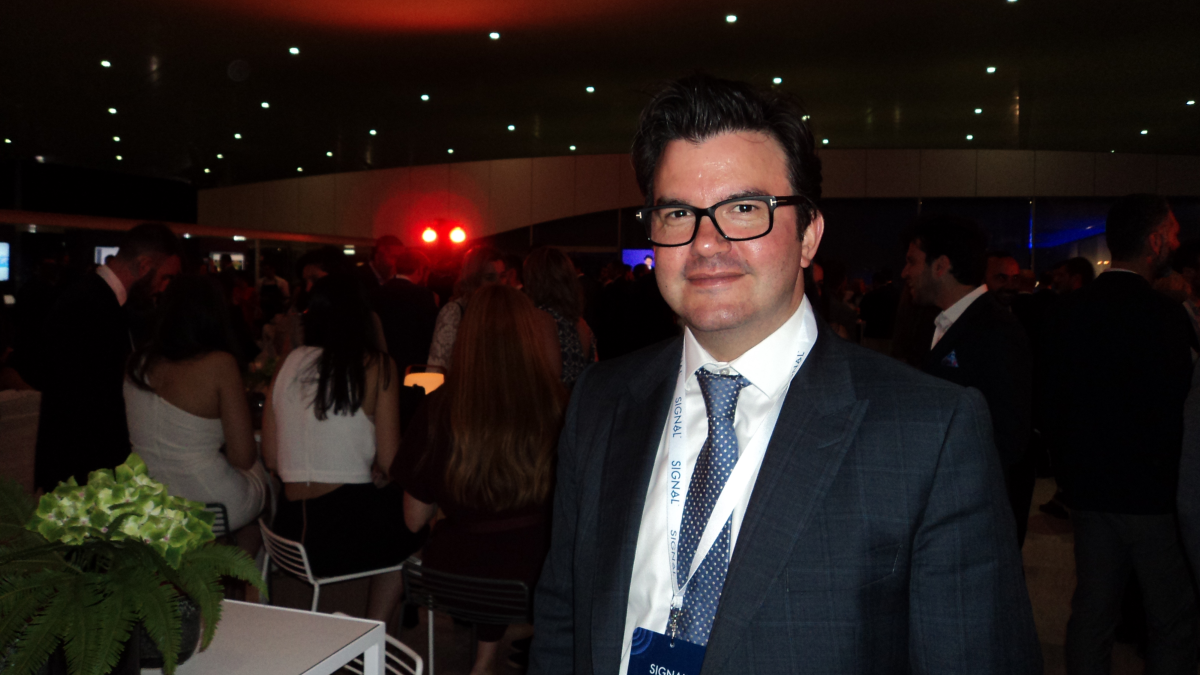
The solution, and a major tenet of the company’s strategy, is to increase transparency for all stakeholders around the port agency process. “We are trying to shine a light on what actually happens in ports through applying technology and a very rigid governance structure to provide transparency around the financial processes,” he said.
One of the key features is providing APIs that link to operational control of the stakeholders, such as a fleet management control room. Mr Crookall pointed out Inchcape is not a technology company and is not providing a particular product or software. The company is also asset-light. “We are only people. That is our single biggest asset, and our only asset, and it will remain that way.”
“But we are a physical network, with tentacles in the port to capture and validate a lot of information,” he said, “which is difficult for people to capture and validate if they are not an agency in the port.”
“The solution is to increase transparency for all stakeholders around the port agency process”
This data can be used in many different ways and the company has geo-fenced 90% of the world’s ports down to berth level. Combined with Inchcape’s World of Port data, which has detailed knowledge of the berths, this is a powerful tool.
It can relay cargo movements in the port and the Inchcape data is live – its agency role means it knows when, for instance, a terminal berth is assigned a different type of oil product.
Inchcape is also looking to joint ventures with data specialists. “We are partnering with more specialists, data providers and intelligence providers in the marine space to use our information for the products and services they offer to their customers,” said Mr Crookall.
At Posidonia, Signal Group called for shipping entrepreneurs to come forward with new ideas for its incubator model. One of the latest to be included in its incubator model is Shipergy, a bunker operation co-founded by chief executive Daniel Rose. Mr Rose is well-known in the bunker industry, with a career spanning Integr8 Fuels, OceanConnect Marine and LQM Petroleum Services.
“Initially, Shipergy will be a service for the [pool] fleets under Signal,” he said. Signal Maritime chief executive Panos Dimitracopoulos is a director, reflecting the special incubator nature of the arrangement, where the Signal Group provides support for early-stage technology start-ups and entrepreneurs in the shipping, logistics and commodities space.

Related to this Story
Events

Maritime Regulations Webinar Week
 16 Dec 2025
 GMT - ONLINE
Floating energy: successfully unlocking stranded gas using FLNGs and FSRUs
24 Feb 2026GMT - ONLINE
© 2026 Riviera Maritime Media Ltd.


