


Business Sectors
Business Sectors
Events
Contents
DHT Holdings Q1 profit soars nearly fourfold on 'exceptionally strong' VLCC markets
DHT profit surged to US$164.5M in Q1 2026 as tanker specialist eyes further tailwinds from tightening vessel supply and a retreating ‘shadow fleet’


DHT Holdings reported a nearly fourfold increase in first-quarter net profit, bolstered by surging rates and a strategic overhaul of its fleet.
The Bermuda-based crude oil tanker company saw its Q1 2026 profit climb to US$164.5M from US$44.1M recorded in Q1 2025.
The robust bottom-line performance was supported by higher shipping revenues, which reached US$186.3M in Q1 2026, up from US$118.2M in Q1 2025. This was driven by higher daily earnings, but partially offset by a decline due to fewer revenue days following a downsizing of the fleet.
DHT recently concluded the sale of DHT Europe and DHT China, two 2007-built very large crude carriers (VLCCs), netting a gain of approximately US$60M. As previously reported by Riviera, the shipping company also agreed to sell DHT Bauhinia, another 2007-built VLCC, expecting to record a gain of US$34.2M.
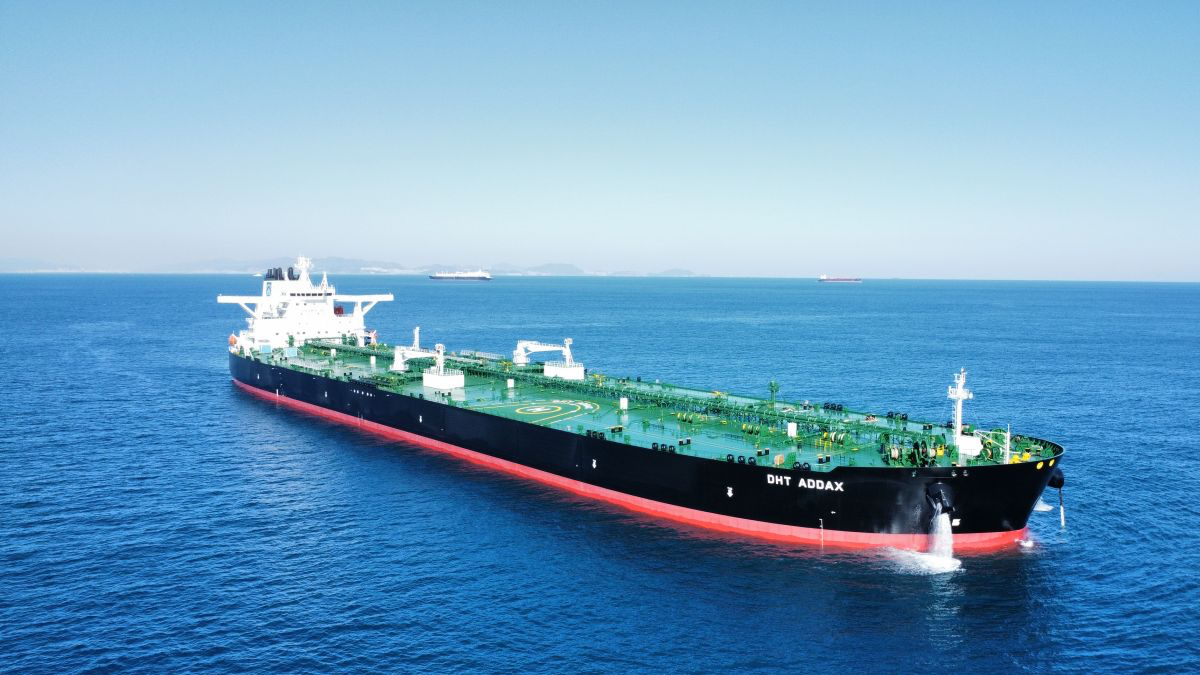
Refreshing the fleet age, DHT took delivery of DHT Antelope, DHT Addax, and DHT Gazelle during the first quarter. These represent the first three in a series of four VLCC newbuilds scheduled for completion in H1 2026. DHT earlier noted that the newbuilds are expected to enhance the group’s earnings power, fleet efficiency, and broader service offerings.
“The delivery of our four VLCC newbuildings is proving well-timed, with one vessel already commencing a long-term charter with a key customer,” DHT said.
During Q1 2026, DHT achieved average combined time charter equivalent (TCE) earnings of US$78,800 per day, comprised of US$91,700 per day for its VLCCs operating in the spot market and US$61,300 per day for the company’s VLCCs on time charter. These figures mark a sharp increase from Q1 2025, when spot and time charter rates averaged US$36,300 and US$42,700 per day, respectively. The surge can be attributed to exceptionally strong VLCC markets, which reached record highs amid the Hormuz crisis, significantly accelerating the payback period for newbuild investments.
DHT maintains that freight rates continue to be supported by a disciplined supply-demand balance. The market has also been tightened further by consolidation activity from a private aggregator in early 2026. Simultaneously, regional tensions involving Iran have introduced risk premiums on specific routes, leading to wider earnings spreads across different geographical corridors.
“We observe that end-users are increasingly seeking to secure vessel capacity in response to tightening market conditions," the company explained.
"We have strategically positioned our fleet for the first half of the year to seize on this development, capturing spot market rewards whilst selectively securing term employment to reduce volatility and enhance earnings visibility.”
Regarding shareholder returns, the NYSE-listed tanker specialist reaffirmed that its disciplined capital allocation policy remains a core priority. Given current market conditions, management expects the firm’s strategic positioning to translate into continued quarterly cash dividends.
DHT anticipates a shift of volumes from the ‘shadow fleet’
Looking ahead, DHT identified several emerging trends that could provide long-term tailwinds. The prospect of sanctions relief on Venezuelan and Iranian crude exports is viewed as a potential catalyst for shifting cargo volumes away from the non-compliant ‘shadow fleet’ toward independent, compliant operators, thereby expanding the addressable market for DHT’s tonnage.
Furthermore, the company anticipates that more rigorous enforcement of international regulations will accelerate the retirement of ageing, non-compliant tankers, further tightening global vessel supply.
Management also highlighted heightening concerns over global energy security. This environment is expected to encourage sovereign states to bolster long-term crude inventories, supporting transportation demand beyond immediate refinery consumption needs.
As of 31 March 2026, DHT’s operational fleet comprised 23 VLCCs in operation, with a total carrying capacity of 7,164,430 dwt.



Related to this Story

Events

Maritime Regulations Webinar Week
 16 Dec 2025
 GMT - ONLINE
Floating energy: successfully unlocking stranded gas using FLNGs and FSRUs
24 Feb 2026GMT - ONLINE
© 2026 Riviera Maritime Media Ltd.


