


Business Sectors
Business Sectors
Events
Contents
Register to read more articles.
New year, new optimism: Asia Pacific OSV dayrates hit seven-year highs
The dawn of a new year brings a positive outlook for the APAC OSV sector, underpinned by tight supply and increasing utilisation and dayrates


How quickly the fortunes of OSV owners have changed in the Asia Pacific (APAC) region. It would have been unthinkable just a year or two ago to hear that OSV owners were shunning spot charters; but as we enter the Chinese New Year of the Water Rabbit officially on 22 January, it is just what is happening and with good reason.
As shipbroker Fearnleys points out in its latest offshore supply market report, owners in November were “turning down spot work as to not limit their fleet availability and rather biding their time for longer-term work anticipated to hit the market in the new year.”
OSV owners’ confidence for 2023 stems from a tight supply of available quality OSVs, limited possibility of newbuilds, higher dayrates and increased drilling activity by oil companies.
For ongoing tenders in 2023, Fearnleys sees a clear focus on firm duration, as well as significantly higher rates brought on by the tightening supply in the region. “Overall, a sentiment change among the local owners, and a welcome one at that,” it notes.
“Each follow-on contract was signed at a materially higher dayrate than the first contract”
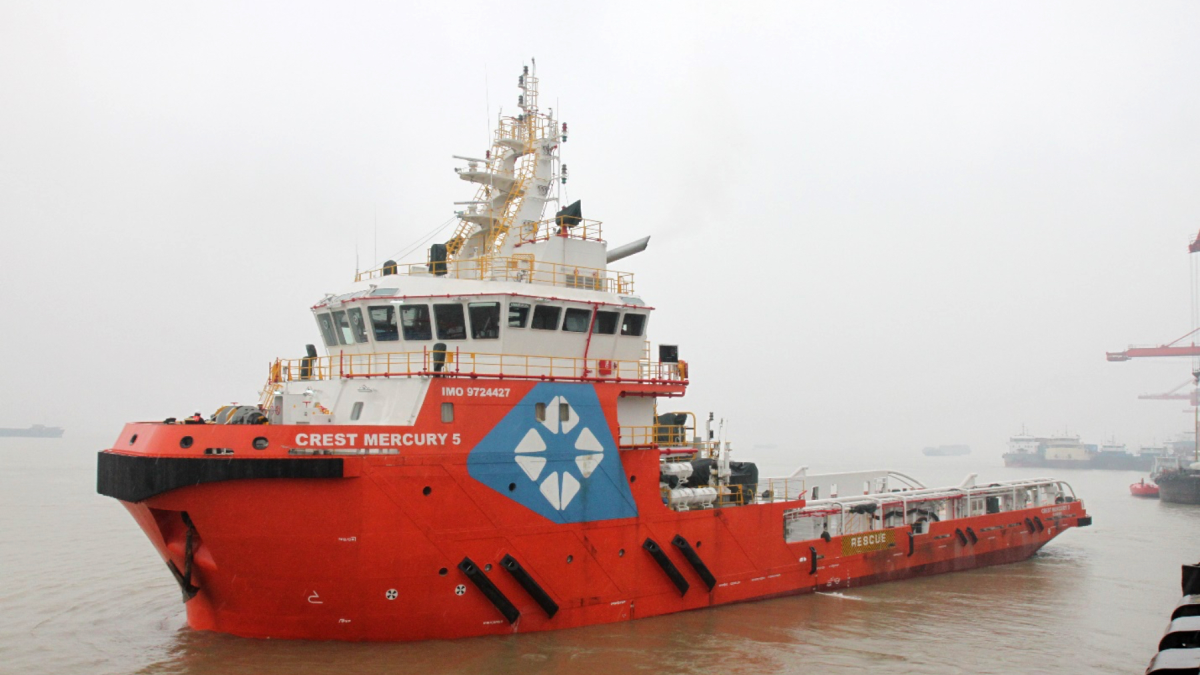
Data released in mid-December by Fearnleys indicates APAC term fixture rates for all vessel types, both small and large anchor-handling tug supply vessels (AHTS) and platform supply vessels (PSVs), reached rates not seen since either late 2015 or early 2016. The largest class of AHTS vessels in the power range of 12,000-16,499 bhp, for example, had average dayrates of US$17,000 range in November 2022 — a level not seen in more than seven years.
This trend is also evident in dayrates for some of its OSV types shared by Tidewater in its quarterly report for the period ending 30 September. Day rates for a PSV with a clear deck area of 900 m2 or more averaged US$25,072, up from US$21,850 the previous quarter and US$14,126 year-on-year. Vessel utilisation for this segment was 94.5%.
Second only to privately held Edison Chouest Offshore (ECO) based on the size and the value of its owned OSV fleet, Tidewater completed the acquisition of Swire Pacific Offshore (SPO) last year, expanding its global footprint and improving its fleet profile. Data provided by VesselsValue based on the number of live vessels as of the end of November shows ECO with a fleet of 200 owned OSVs, followed by Tidewater with 173. Rounding out the top five OSV owners are Bourbon, COSL and Hornbeck Offshore Services (HOS).
When it comes to fleet valuation, ECO and Tidewater remain the top dogs, both with fleet values close to US$2Bn, followed respectively by HOS, Solstad Offshore and Bourbon.
Going short
To take advantage of rapidly rising dayrates in Q3 2022, Tidewater president, chief executive and board member Quintin Kneen said the company used a “chartering strategy of going short”. Mr Kneen explained that Tidewater entered into 54 contracts for 38 vessels during the quarter, with the average contract length about four months.
“Each follow-on contract was signed at a materially higher dayrate than the first contract,” he said, noting that this allowed Tidewater “to continue to realise further upward pricing momentum in today’s market.”
Secondhand market
While there was a large volume of secondhand sales during 2022, momentum temporarily paused in November. However, Fearnleys expects the S&P market to recover in 2023, underpinned by rising dayrates. One of the positive S&P developments in November was a further reduction to the Chinese orphan fleet, noted the shipbroker. These stranded newbuilds have been slowly dwindling over the last few years, reducing the threat of a massive influx of new tonnage into the market.
“We are quite confident that both utilisation and dayrates will continue to increase”
Among those sold during the month were two Nantong Rainbow PX121 PSVs, which appear to be headed to Brazil, two Focal 78 m PSVs at Xiamen for “W2W conversion and geotechnical work”, and the 75 m PSV Zhong Shang 3, which was sold to Chinese state-owned offshore wind company Haifeng for possible W2W conversion.
“While the number of sales during November has been significantly lower than previous months … the total sum does still further diminish the potential for additional supply hitting the market down to just a handful of units”, says Fearnleys.
China market absorbs OSVs
The shipbroker notes a recovery in the Chinese offshore oil and gas market has resulted in the absorption of some tonnage, with CNOOC firming up multiple OSVs every week as of late and domestic owners enjoying far higher utilsation rates than in recent years. “The COOEC fleet specifically has seen almost 99% utilisation during November, mainly driven by domestic demand,” it noted. “As a result, the previously abundant supply herein is all but gone, and vessel markets relying on said supply, both international as well as domestic, are expected to tighten even sooner than previously anticipated.”
This is the case in the Middle East where Saudi Aramco and ONGC issued tenders for a double-digit number of OSVs each, the latter two for 27 and 24 vessels, respectively.
Concluded Fearnleys: “All in all, we saw clear recovery momentum in the Asian OSV markets continue to unfold during November. As we move into 2023, we are quite confident that both utilisation and dayrates will continue to increase as vessel supply is tightening and offshore development in these regions will require significantly more tonnage than presently employed.”
If that holds true, the Year of the Water Rabbit will be a very fortunate one for APAC OSV owners.



Related to this Story



Events

Maritime Regulations Webinar Week
 16 Dec 2025
 GMT - ONLINE
Floating energy: successfully unlocking stranded gas using FLNGs and FSRUs
24 Feb 2026GMT - ONLINE
© 2026 Riviera Maritime Media Ltd.


