


Business Sectors
Business Sectors
Events
Contents

Register to read more articles.
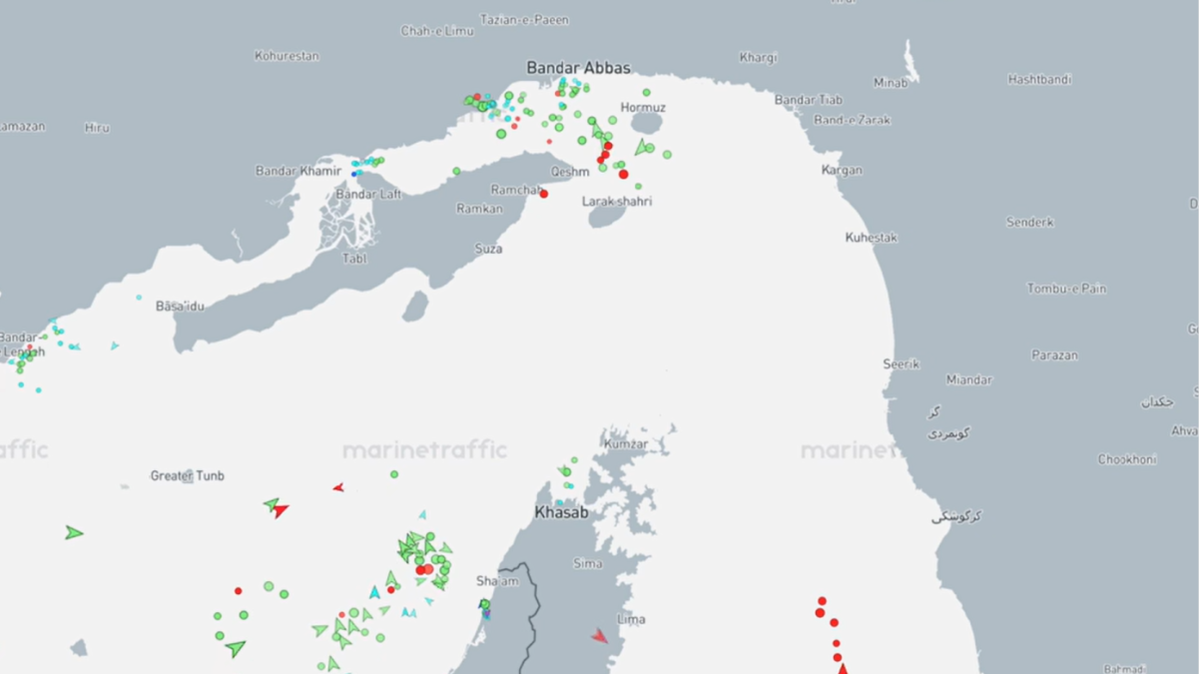
'No clarity': owners are grappling with confusion over Hormuz transits
Charterers have begun making enquiries about vessel availability for shipments from the Middle East Gulf, but shipowners remain cautious, awaiting greater clarity before committing to transits through the Strait of Hormuz


Despite a temporary ceasefire brokered between the US and Iran with Pakistan’s involvement, the situation in the region remains fragile, with vessels still stranded in the Gulf.
“We don’t know how to exit or enter. There is no clarity on what ‘safe transit’ means. It will take days to figure it out,” a Greece-based shipping company executive told Riviera.
According to the same source, vessels in the Gulf and the Oman Sea have received messages from Iran indicating that permission must be obtained before transiting the Strait of Hormuz.
Reuters reported on 9 April that commodities traders and Asian state-owned refiners have chartered tankers to load Middle Eastern crude bound for Asia. However, activity remains highly constrained.
“While charterers are making enquiries on vessel availability and quoting rates for Gulf liftings, we do not expect fixture activity to return meaningfully in the near term, nor do we anticipate a rush of transits,” said Howe Robinson tanker research analyst Sokratis Vounotrypidis.
“Israel is not included in the Pakistan-brokered discussions and continues its operations, signalling that the pause does not extend to Lebanon. This indicates that the broader conflict remains very much alive,” he added.
“As a result, insurers still need to reassess war risk premiums. Until there is greater clarity, war risk will remain a significant concern, premiums will stay above pre-war levels, and owners will be reluctant to commit tonnage to the Gulf.”
Mr Vounotrypidis noted that the immediate post-ceasefire phase is likely to involve a cautious testing of the transit corridor, with initial movements led by vessels already trapped inside the Gulf rather than new entrants.
Howe Robinson data indicates that there are currently 74 VLCCs in the Gulf, along with approximately 20 Suezmaxes, 33 Aframax/LR2s, 26 Panamax/LR1s, 64 MRs and 29 Handies.
“However, we expect the initial wave to involve vessels that Iran has already been granting passage to – primarily those serving Indian and Chinese buyers – effectively using them as test cases before broader commercial traffic resumes. If these transits proceed without incident, confidence will gradually build,” he said.
Supply and demand dynamics
Should transits normalise in the near term, the tanker market’s supply-demand balance would be significantly affected.
Citing Kpler data, Mr Vounotrypidis said that around 172M barrels of crude and products are currently on the water in the Gulf. Approximately three-quarters of this volume consists of crude and condensate, heavily concentrated on VLCCs and dominated by medium and heavy sour grades from Saudi Arabia, Iraq and the UAE.
“The scale and composition of this backlog suggest that crude will lead the initial wave of outbound movements,” he said.
He added that around 170 laden tankers are currently stranded within the Strait of Hormuz, carrying crude and products that could provide short-term respite to Asian refiners, which have been scrambling for alternative supplies.
“However, that relief is conditional – it depends on the Strait remaining open, insurers pricing risk accordingly, and the ceasefire holding,” he explained.
Mr Vounotrypidis also noted that the reintroduction of vessel supply into the market between late April and mid-May is expected to put pressure on rates for May liftings.
At the same time, prompt buying of Middle Eastern crude – driven by uncertainty over the duration of the ceasefire – is likely to provide a cushion, partially offsetting the increase in available tonnage.
On the demand side, he said the ceasefire could limit stock draws that would otherwise have supported forward tanker demand.
“More than five weeks of conflict have significantly depleted stock levels, and the need to rebuild inventories was expected to become a key driver of tanker demand,” he said.
“This had been resonating with the oil forward curve, which – before the ceasefire – had been undervaluing the anticipated increase in demand required to replenish depleted stocks and strategic petroleum reserves.”
Riviera’s Tankers 2030 Conference will be held in Singapore, 19-20 November 2026. Use this link for more information and to register for the event.


Related to this Story


Events

Maritime Regulations Webinar Week
 16 Dec 2025
 GMT - ONLINE
Floating energy: successfully unlocking stranded gas using FLNGs and FSRUs
24 Feb 2026GMT - ONLINE
© 2026 Riviera Maritime Media Ltd.


