


Business Sectors
Business Sectors
Events
Contents
Register to read more articles.

North Sea, a tale of two markets: anchor-handlers prosper as PSVs nosedive
As 2026 started, the North Sea offshore support vessel (OSV) market was – and continues to be – very much a tale of two different types of vessels


The number of anchor-handling tug/supply (AHTS) vessels in the North Sea is limited, which has been the main driver behind a particularly strong market. Bad weather has had an effect, but looking towards the busy summer season, brokers say the supply side is set to become even tighter, prompting charterers to secure vessels earlier than usual, with a relatively high proportion of the fleet already booked up for parts of the summer at increasing rate levels.
In contrast, the market for North Sea platform supply vessels (PSVs) is in a slump, with little sign of any improvement other than the usual increase in activity in the summer months.
As Seabrokers highlighted in its latest monthly report, much of the tightness in the AHTS market can be attributed to vessels that departed from the North Sea not returning, as they originally expected to. “While we have seen Aurora Saltfjord and BB Octopus return from the Black Sea and the Mediterranean, respectively, more vessels are headed in the opposite direction,” the broker explained.
“Normand Sapphire and Skandi Laser mobilised south to the Mediterranean, Siem Challenger departed for the Black Sea, and Ben Viking departed for a term charter in Canada. That means vessel availability has remained extremely tight, and owners have been capitalising on opportunities to secure lucrative spot fixtures.”
Comparing average spot fixture rates for February 2026 with February 2025 highlights a remarkable change to trading conditions over the last 12 months. The average fixture rate for large AHTS vessels (>22,000 bhp) was 384% higher in February 2026 than it was in February 2025; the increase for small-medium vessels was even more remarkable: 430% higher than last year.
“After many years of being accustomed to slow and meagre starts to the new year, 2026 kicked off with a bang for the owners of AHTS tonnage, with day rates at historical levels,” said Fearnley Offshore Supply in its most recent report on the market.
“2026 started in the same fashion as last year ended, emphasising the effects of a tight market even in the face of lower activity volumes. In fact, January 2026 saw average day rates for large AHTS vessels of almost Nkr1.35M (US$138,000) per day in Norway, while February ended up around Nkr1.55M per day.
“The momentum at the end of last year was admittedly slightly stronger, seeing average day rates of Nkr1.44M and Nkr1.7M in November and December, respectively. Nonetheless, these levels extend the run of months with average day rates above Nkr1.00M to five in a row,” said Fearnley Offshore Supply.
“Also worth noting is that the highest fixture recorded so far this year was reported at around Nkr3.00M per day, with several fixtures in the Nkr2.00M range. In the UK as well, average day rates are reported above £100,000, underlining what has been an extremely strong start to a year for the AHTS spot market overall.”
In fact, as Fearnley Offshore Supply noted, looking back at the data, current day rate momentum is without parallel historically. “At no other point in time – not even in 2008 – did AHTS day rates maintain the sorts of levels we are witnessing at present for this length of time. There is simply no denying the strength in day rates seen these last few months,” said the broker.
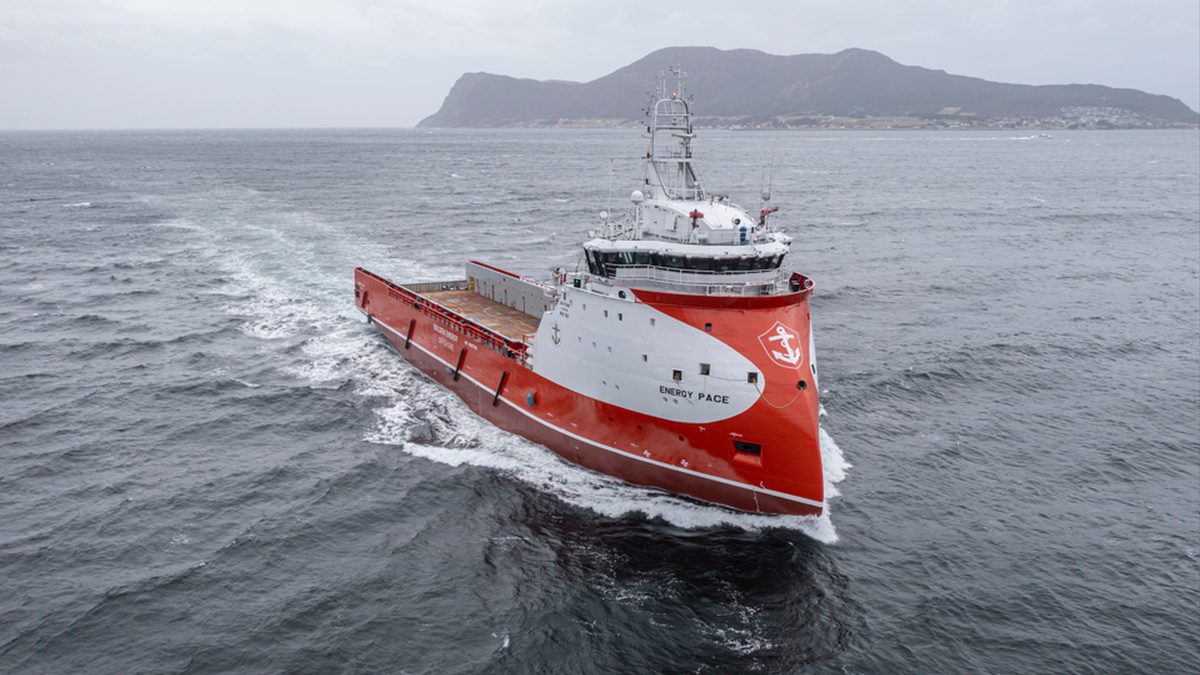
Unfortunately for PSV owners, however, there is a tremendous contrast with the AHTS market. Average reported day rates in Norway barely surpassed Nkr100,000 in January 2026 and remained below Nkr200,000 in February. In the UK, January was also slow, with an average day rate of around £4,500, with a subsequent increase to £12,000 per day in February.
Speaking at the 2026 Annual Offshore Support Journal Conference in London in February, Seabrokers offshore market analyst, Paul Dear, said term PSV demand levels in northwest Europe were “almost identical to the demand troughs we experienced in the 2014-2018 downturn and the Covid-related downturn,” although, as he noted, supply levels are significantly lower now.
Fearnley Offshore Supply said vessels continue to leave the market, either via sales or charters to other regions, or for conversions to other segments, although the reduction in the number of larger PSVs in the market could improve the market balance.
In the term segment of the market, softness in the spot market also led to a drop in rate levels, although larger, more modern tonnage was still able to obtain a day rate premium. The only reason for PSV owners to be optimistic is that the second half of the year and beyond looks better. Fearnley Offshore Supply’s analysis of the market suggests that, with the supply side shrinking, it is likely that there will be better days ahead for North Sea owners.
“We continue to see vessels leaving the market,” it said, “either via sales or charters to other regions, or for conversions to other segments. In addition, there is certainly a decrease in the number of larger units remaining in the market, both of which could improve the market balance going forward,” the broker said. “On the term side of things, the soft spot market has led to a drop in rate levels here as well. While that is true, larger, more modern tonnage is still able to obtain a substantial premium.”
Riviera’s Offshore Support Journal Conference, Asia will be held in Singapore on 8-9 September 2026. Use this link for more information and to register for the event.




Related to this Story




Events

Maritime Regulations Webinar Week
 16 Dec 2025
 GMT - ONLINE
Floating energy: successfully unlocking stranded gas using FLNGs and FSRUs
24 Feb 2026GMT - ONLINE
© 2026 Riviera Maritime Media Ltd.


