


Business Sectors
Events
Contents

Register to read more articles.

Reducing marine plastic litter from vessels
Experts outlined how IMO rules, port reception facilities and microplastic testing shaped efforts to cut plastic litter from ship operations


Efforts to reduce marine plastic pollution from ships were examined in detail during Riviera’s webinar Reducing marine plastic litter from ships, held on 28 October 2025.
Panellists from ABS, OVAM, IDTechEx and SGS considered how evolving regulation, port reception practice and testing activity are reshaping obligations for ship operators and ports.
ABS engineer regulatory affairs Sofia Pantazopoulou set out the regulatory context at the International Maritime Organization (IMO), tracing a line from the London Convention and London Protocol to Marpol Annex V and the IMO action plan on marine plastic litter.
She reminded attendees that, with the adoption of Annex V, “the discharge of all garbage into the sea is prohibited.”
She highlighted work on a revised IMO action plan for 2026–2030, including measures on fishing vessels, plastic pellets and port reception facilities, and pointed to upcoming requirements such as mandatory reporting of lost freight containers from 1 January 2026.
OVAM policy advisor Peter Van den dries focused on waste delivery to port reception facilities. He described proper ship waste management as a legal obligation and an environmental necessity, noting, “It is clear the collection of ships waste helps to prevent marine plastic litter.”
IDTechEx senior technology analyst Shababa Selim examined microplastics and the emerging regulatory landscape. She noted that definitions differ but “there is a general consensus that microplastics are solid particles that typically have a diameter of 5 mm or less.”
Ms Selim distinguished between primary microplastics, intentionally manufactured as functional additives, and secondary microplastics generated by the breakdown of larger items.
SGS Testing & Control Services Singapore global marine services manager Guillaume Drillet drew attention to the role of measurement and laboratory practice. He described SGS’s work on marine litter, microplastics and polymer studies worldwide and noted, “Sampling is the main source of uncertainty” because microplastics are unevenly distributed in the environment.
Mr Drillet explained that laboratories operated under ISO 17025 accreditation for quality assurance, but multiple methods with different size ranges created variability between datasets. He pointed to potential shipboard sources such as inwater hull cleaning, food digesters and grey water, and suggested grey water discharges were likely to attract future regulatory attention once better data is available.
Across the session, the panellists converged on a common theme: without reliable waste delivery systems in ports, clear regulatory signals from IMO and robust testing methods, efforts to control plastic and microplastic releases from ships will remain constrained.
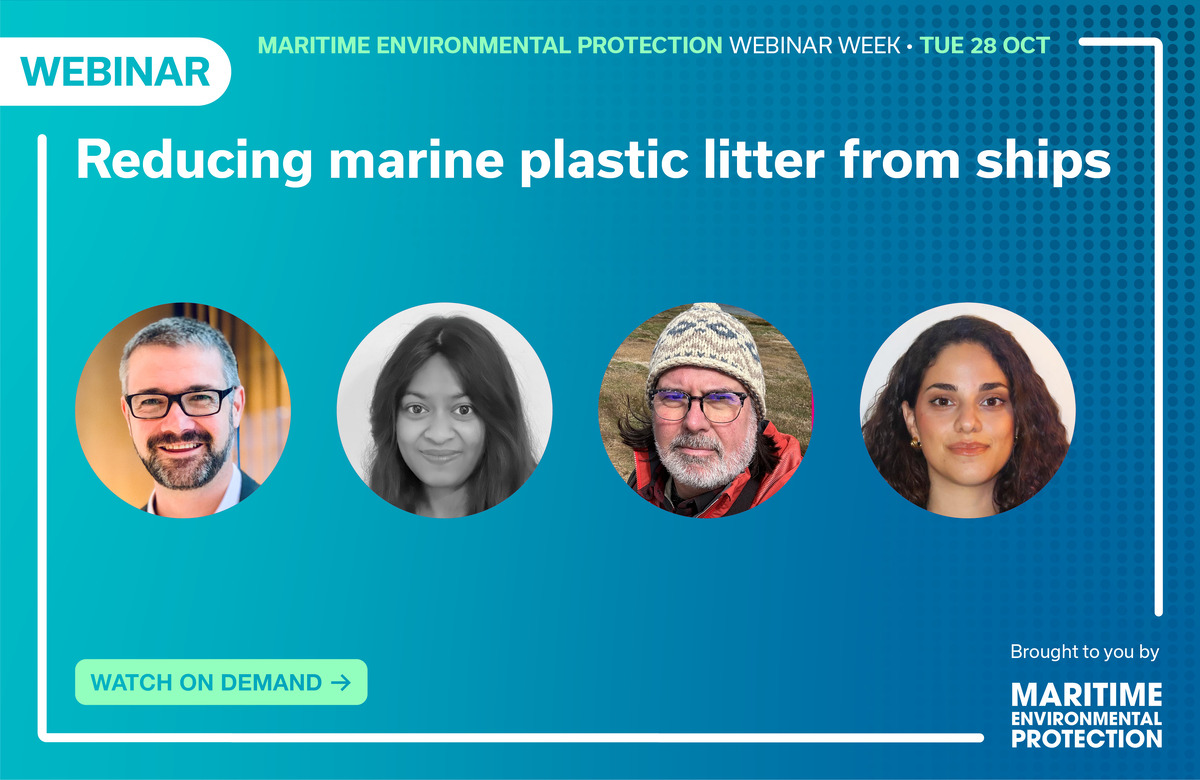
From left to right: Guillaume Drillet (SGS), Shababa Selim (IDTechEx), Peter Van den dries (OVAM), Sofia Pantazopoulou (ABS)
Related to this Story

Events

Maritime Regulations Webinar Week
 16 Dec 2025
 GMT - ONLINE
Floating energy: successfully unlocking stranded gas using FLNGs and FSRUs
24 Feb 2026GMT - ONLINE
© 2024 Riviera Maritime Media Ltd.


