


Business Sectors
Business Sectors
Events
Contents

Register to read more articles.
Commercial shipping activity 'most likely cause' of severed Red Sea cables
Microsoft initially raised the alarm in a system status update on 7 September


The International Cable Protection Committee (ICPC) has released a statement linking commercial shipping activity to the severing of subsea cables in the Red Sea that has rerouted internet traffic and caused reports of connectivity issues in the region in recent days.
Posting on professional social media platform LinkedIn, the UK-headquartered, government-industry membership organisation ICPC said, "Early independent analysis suggests the most likely cause of the damage is commercial shipping activity in the region."
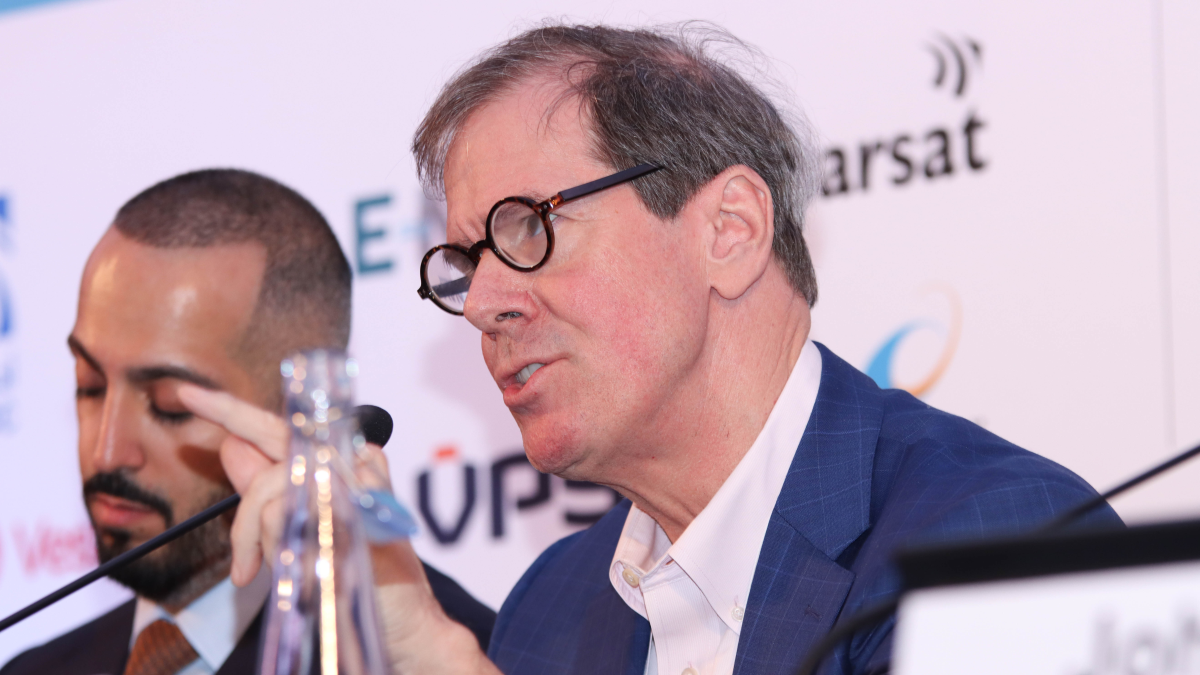
IPCC operations manager John Wrottesley told Riviera the organisation’s member companies routinely monitor vessel movements in the vicinity of submarine cables using AIS monitoring and other techniques.
"This allows the route of vessels to be tracked and indicates which vessels would have been passing over the cables coinciding with the estimated time of the faults," Mr Wrottesley said.
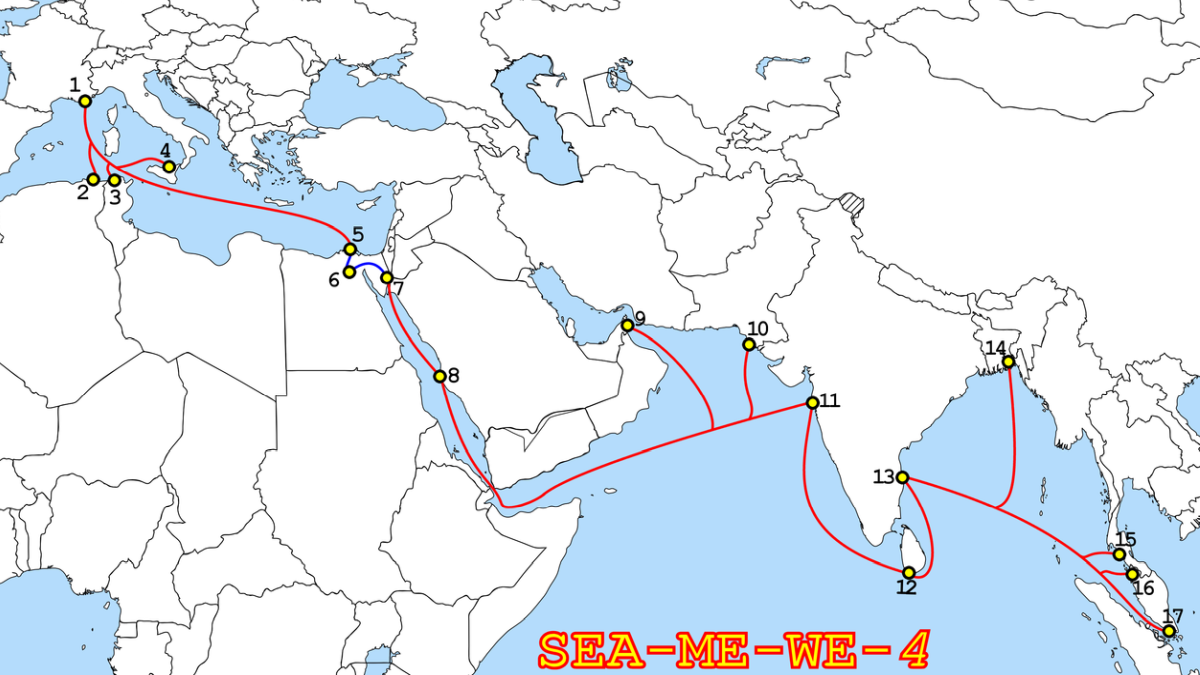
The ICPC said dragged anchors are the cause of nearly 30% of submarine cable damage incidents globally each year and noted 15 operating submarine cables pass through the Bab-el-Mandeb Strait, near Yemen and Saudi Arabia in the Red Sea.
According to its website, the ICPC estimates repair costs for damage to telecommunications cables at approximately US$750,000-1.25M per incident and repairs to damaged power cables to run between US$10M-US$100M.
"It is worth noting that generally only those incidents which cause disruption to communications or electricity supply get media attention, however far more incidents of cable damage occur each week than [are] covered in the news. Therefore coverage can lead to the speculation that such incidents are uncommon or suspicious – however such incidents can be attributed to poor seamanship practices, equipment failure or improper stowage of anchors," the ICPC said.
The organisation’s fact sheet also cites an incident in which the Liberia-flagged vessel Blue Princess damaged three submarine cables in the Red Sea in 2012. Over a period of 12 hours on 17 February 2012, the vessel’s AIS showed it crossing over the SEA-ME-WE 3, EASSy, and EIG cables, causing multiple cable faults. "The vessel could be tracked using AIS as crossing the cables at a similar time as faults were reported and appeared to become fastened to the cable with the speed reducing to zero at the time of the final fault during that period," the ICPC said.
8 September
Subsea cables in the Red Sea have been cut, impacting internet network traffic, according to US-based technology firm Microsoft.
Warning of increased latency (slower speeds) on internet traffic routes through the Middle East, Microsoft said its network traffic would not be interrupted, with the company using alternative routes for internet traffic, and that any internet traffic not traversing the Middle East region would not be impacted.
"Starting at 05:45 UTC on 06 September 2025, network traffic traversing through the Middle East may experience increased latency due to undersea fiber cuts in the Red Sea. Network traffic is not interrupted as Microsoft has rerouted traffic through alternate network paths. We do expect higher latency on some traffic that previously traversed through the Middle East," the company said.
No official cause for the reported cuts to the subsea cables has been cited, but a representative of the internationally recognised Yemeni government linked the cable cuts to attacks on commercial shipping by the Yemeni rebel Houthi militia.
"Several international undersea cables in the Red Sea have been cut, potentially leading to slower internet services between the continents of Asia and Europe, coinciding with escalating maritime piracy and random attacks launched by the terrorist Houthi on commercial ships and oil tankers. This is a destructive role played by the militia in undermining global digital infrastructure, threatening global internet security and freedom of maritime movement," Yemeni Minister of Information, Culture and Tourism Muammar Al-Eryani said in a statement to social media site X (formerly Twitter).
"This incident cannot be isolated from the series of direct attacks carried out by the Houthi militia targeting undersea cables in the Red Sea, in addition to their terrorist activities causing cable disruptions due to repeated attacks on ships in Yemeni territorial waters," he said.
Mr Al-Eryani claimed that the Houthi sinking of the commercial ship Rubymar resulted in damage to four undersea cables and impacted internet services. On 2 March, 2024, Belize-flagged, UK-owned bulk carrier Rubymar sank in the Red Sea after being struck by a Houthi missile two weeks earlier on 18 February.
Houthi spokesmen and online outlets have denied claims that they are responsible for previous subsea cable cuts and have not claimed responsibility for the most recent cuts to internet cables in the region.
Undersea cables can be damaged or severed for multiple reasons, both accidental and deliberate.
--Riviera News Editor, Jamey Bergman
Contractors call for government investment in the subsea sector in response to cable cuts
As more subsea cables are damaged or cut across busy shipping routes, contractors are calling on governments to invest in the vessels, equipment and people needed to make repairs and to prevent further disruption to international communications and internet services.
The International Marine Contractors Association (IMCA) and the European Subsea Cables Association (ESCA) have jointly urged governments to reform regulations to encourage this investment and to treat subsea resilience as a matter of national and international security.
IMCA and ESCA are calling for the urgent reform of regulatory frameworks and improved cross-border co-operation to enable faster repairs and strategic investments. They said training and succession programmes are needed to educate new generations of cable engineers and offshore crews.
“The world depends on the marine contracting sector to repair these lifelines,” said IMCA chief executive Iain Grainger. "When cables fail, nations lose connectivity, financial flows are interrupted and economies feel the shock immediately. This sector is now more critical than ever to global security and stability.”
In its call for action, IMCA used the destruction of subsea cables across the Red Sea as an example of how undersea cable cuts have disrupted internet access across Yemen, the Arabian Gulf, and as far as India and Pakistan.
Damage is caused by ship anchors, natural hazards or deliberate attacks to sever subsea cables.
“The Red Sea cable cuts show that subsea infrastructure is no longer a background issue, it is frontline critical,” said Mr Grainger.
Subsea cables carry 99% of the world’s internet traffic and support US$50Tn in annual financial transactions, said IMCA, sourcing information from an Associated Press news report on the subsea internet cable cuts.
In addition to impacts to internet-based financial transactions, subsea power cables carry growing volumes of renewable electricity through offshore interconnectors.
IMCA said disruption in one region can quickly ripple through global systems, affecting communications, markets and energy flows.
“Ensuring resilience in these cables is not automatic,” Mr Grainger continued. “It requires sustained investment in vessels and equipment, fresh talent entering the workforce to complement today’s experienced specialists and regulatory frameworks that enable crews to respond without delay.
“Building this preparedness is a shared responsibility between governments, regulators and industry,” Mr Grainger concluded.
--Martyn Wingrove, Editor, International Tug & Salvage / Maritime Optimisation & Communications
Riviera’s Offshore Support Journal Conference, Americas will be held in Rio de Janeiro, 7-8 October 2025. Click here to register your interest in this industry-leading event.

Related to this Story

Events

Maritime Regulations Webinar Week
 16 Dec 2025
 GMT - ONLINE
Floating energy: successfully unlocking stranded gas using FLNGs and FSRUs
24 Feb 2026GMT - ONLINE
© 2026 Riviera Maritime Media Ltd.


