


Business Sectors
Business Sectors
Events
Contents
Well intervention option race accelerates


In February, a milestone agreement in light well intervention was initialled between UK company Expro Group and Aker Oilfield Services of Norway, in order to market jointly Expro’s AX-S rigless technology with AOS’s fleet of well intervention ships
A new agreement between Expro Group and Aker Oilfield Services (AOS) is aimed at linking the former’s groundbreaking AX-S rigless technology with the latter’s fleet of custom-built ships. AOS has a fleet of four such vessels on order, with options for a further two, and just three months earlier, in November 2007, Expro signed a related agreement with BP, covering development and commercialisation of the AX-S system.
The BP deal basically means that the technique, which has been under development since 2004 and which could potentially be deployed from any DP Class 3 OSV capable of being retrofitted with an A-frame package built for the purpose, will be viable. Nevertheless, a little more time is needed to ensure that any bugs are eliminated.
For its part, BP will provide partial project funding and technical input, including field trials on subsea wells, subject to the system passing agreed testing milestones, and the agreement anticipates that field trials will take place during the first half of 2009, which is more or less when the first of the AOS ships will be delivered.
As this issue of OSJ was about to got to press, a further development saw Expro International Group PLC announce the signing of a contract with BP Exploration Operating Company Ltd concerning the development and commercialisation of Expro’s AX-S. The deal will see Expro will build and deploy a fully engineered AX-S system; BP will provide partial project funding and technical input, including field trials of the AX-S system on subsea wells, subject to the system passing agreed testing milestones. The agreement anticipates that field trials will take place during the first half of 2009.
While there are now competing systems, notably the FMC concept that beat Expro to commerciality, the UK company believes it is at the threshold of playing a leading role in solving many of the issues associated with lightweight subsea well intervention, especially in deep water to 10,000ft (3,000m).
Now that the technology is being matched up with a fleet of purpose-designed light intervention ships, all with the same characteristics, both Expro and AOS should be set fair in what is now a fast-growing and still sparsely resourced aspect of deepwater oil and gas.
The lack of suitable intervention technologies began to be commented on extensively 10-15 years ago, since when progress has been slow, although there is clear evidence of acceleration since OSJ last examined the topic of rigless deepwater intervention a year ago.
The bottom line is that the global population of subsea wells is growing rapidly and will likely hit 2,600 by 2010. More than 400 such wells are to be found on the Norwegian Continental Shelf alone, and this figure is set to reach at least 500 on current predictions.
It is not the purpose of this article to determine who currently offers the best rigless well intervention system, rather it is to highlight the growing interest among OSV fleet owners/management in a subset of the huge subsea market, which will see monohulls largely displace semi-submersible drilling rigs from the intervention market over the next five to 10 years.
Crucially for oil companies, large-scale deployment of rigless packages from suitable OSVs will (not should) result in huge cost savings and lead to a dramatic improvement to well performance. The biggest up-front savings will be in time and on not having to hire expensive drilling rigs.
In 2007, there were perhaps two key events that will help set the pace in the years to come, both involving AOS. One was the creation of Aker Oilfield Services itself, plus the attendant block order with Aker Yards for purpose-built light intervention tonnage already referred to; the second was a five-plus-five years contract with Petrobras of Brazil, based on two purpose-built subsea equipment support vessels (SESVs).
It was in March 2007 that Aker, Aker Kværner, Aker Yards and DOF Subsea went public saying they had created a new company – Aker Oilfield Services – with ownership initially vested 75 per cent to the Aker companies via an entity known as Aker Innovation, and 25 per cent to DOF Subsea. AOS’s purpose was to offer its customers subsea light well intervention services by means of both riserless and riser-based subsea systems.
The strategic intent is to be a turnkey provider through having in-house access to apparently the entire spectrum of hardware, software and personnel required to undertake subsea well intervention operations in water depths down to 2,500m.
At some future date, there is the possibility of offering light, medium and heavy well intervention techniques and light drilling technologies, currently being developed at Aker Technology. In addition, services will be provided from Aker Oilfield Services' vessels in co-operation with DOF Subsea and these include cable/umbilical installation services, light subsea construction/maintenance and survey and inspection work.
AOS was quick to start moving as, simultaneous with the launch, the company signed a contract with Aker Yards for building four high specification, ice-class well intervention designs for delivery in 2010 and 2011, plus issuing options for a further two. They will be known as the Aker OSCV 06 WI class – basically a derivative of the OSCV 06 workhorse, but adapted for well intervention purposes. Delivery of the first is scheduled for spring 2010, and the following trio will be delivered at approximately six month intervals.
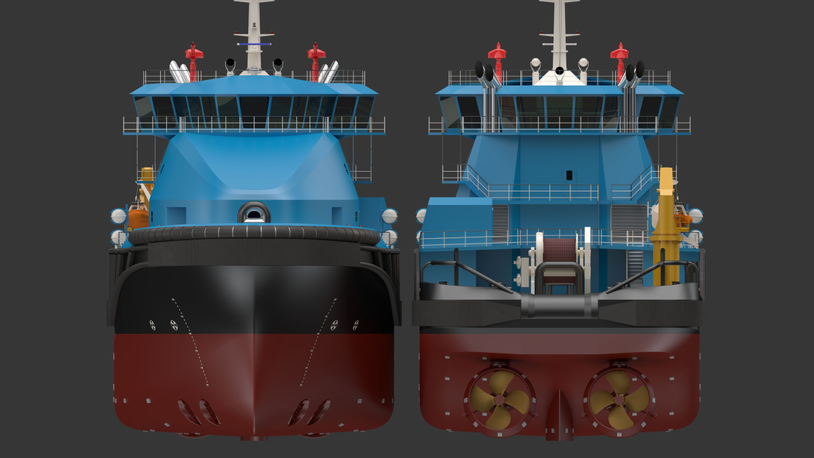
Each will measure 157m overall, with a 27m breadth, be equipped to class DP3 and be fitted with an active heave compensated crane, ROV, launching systems and a derrick for well intervention purposes. They will have a maximum speed of 18 knots, which is of significant importance for global operations in order to minimise mobilisation time.
It was in October 2007 that news of the Petrobras-AOS deal broke. Of course, Petrobras is a world leader in deep- and ultra-deepwater development of oil and gas reserves, and the decision to hire in AOS at this time is very significant. The contract is worth US$350 million to the Norwegian company over the first five years and is scheduled to kick-in in 2010 when the first vessel is scheduled for delivery.
The SESV concept was hatched by Petrobras and further developed by AOS for operations in water depths down to 2,000m, undertaking a broad range of services related to subsea equipment intervention: the kind of work traditionally performed by semi-subs. Tasks include handling, testing, retrieving and installing subsea Christmas trees and related equipment.
The first Petrobras SESV vessel is based on the 120m Aker OSCV 03 design and has been chartered from DOF Subsea subsidiary DOFCON. In August 2007, Norwegian company Odim was awarded a contract by AOS for a 125-ton Odim CTCU system, which will be a part of the topside automated module handling system for the first of the Petrobras SESVs.
Later, in November, Odim secured a second contract covering an automated module handling system featuring a handling tower, moonpool hatches, cursors, skidding arrangement and control systems.
While the bulk of this review has been given over to AOS, other emerging players continue to make progress, not least Island Offshore, whose latest interventional vessel, the 116m Island Wellserver, is scheduled for deployment with StatoilHydro, starting in the second quarter of this year.
The company holds a long-term contract with the Norwegian major, initiating the work with its pioneering light well intervention vessel Island Frontier. The Rolls-Royce UT767 CD class Wellserver will mostly operate in water depths to 600m, working with a riserless system developed by FMC Technologies. To be successful, well intervention vessels have to be inherently steady, and Rolls-Royce says its Norwegian company, UT-Design, developed the ‘Clean Design’ 116m UT767 CD class with a large freeboard to give the required stability, low motion and freedom from spray and green water on deck.
A module-handling tower will dominate Wellserver’s main deck, even though a large area was specified so that containerised tanks and equipment can be carried. A large crane is installed to give heavy subsea lifting capability and there is a low-freeboard area aft to facilitate lifting equipment over the stern. During deployments, two Oceaneering ROVs will be carried in hangars, one either side of the hull.
Meanwhile, on the opposite side of the North Sea, Aberdeen company TSMarine reported at the end of January that construction work had started its second intervention vessel at Astilleros Huelva in Spain. This is the second of three MT6040 design vessels being delivered to TSMarine over the next two years, the first of which, Loch Torridon, is scheduled to be delivered in December, 2008, while Loch Sunart will follow in mid-2009.
The ships are designed to undertake a large number of subsea decommissioning and intervention operations, including the handling of seabed and well product residue with the installed environmental treatment systems, well decommissioning and intervention.
The Huelva yard has – for the most part - been pretty good at holding to schedules so fingers are crossed at TSMarine that this will indeed be the case. In February the company was granted a cash injection of US$100 million (US$53 million) from two of Europe’s leading investment groups, 3i and ABN AMRO Merchant Banking, so it will be anxious to ensure that the new tonnage is earning revenues as quickly as possible. In 2007 ABN AMRO Bank provided the US$260 million (£130 million) debt facility to finance the ongoing vessel build programme in Spain.
Fingers are also crossed at Helix, whose subsidiary, Well Ops UK, is tracking construction of its newbuild, Well Enhancer, which is still on track for delivery from Merwede in the Netherlands – a yard with a reputation for delivering vessels on time – in December 2008. This will be a multi-service dive support/well intervention vessel that will be capable of working in the North Sea, West of Shetland and Gulf of Mexico. The ship will be 131.7m overall, have a 22m breadth and feature more than 2,000m2 of main deck space. A large moonpool will accommodate a 160Te Huisman-Itrec Multi-purpose tower with active and passive heave compensation systems and water depth capability upgradeable to 600m.
The wellbore access will be provided by a 177mm, 10,000 lb/in2 subsea intervention lubricator that is has been designed in the Well Ops SEA office in Perth, Western Australia. The riser system has been designed to allow for coiled tubing operations to support both well intervention and abandonment needs in the Central North Sea (CNS) and Northern North Sea (NNS), and will be upgradeable for West of Shetlands water depths.OSJ

Related to this Story



Events

Maritime Regulations Webinar Week
 16 Dec 2025
 GMT - ONLINE
Floating energy: successfully unlocking stranded gas using FLNGs and FSRUs
24 Feb 2026GMT - ONLINE
© 2026 Riviera Maritime Media Ltd.


