


Business Sectors
Business Sectors
Events
Contents

Register to read more articles.
Norway backs 12 battery-powered ships, two charging facilities with NOK420M in grants
Norwegian maritime electrification push continues, with new Enova grants backing the construction and conversion of 12 battery-powered ships and workboats


Enova SF, which manages Norway’s Climate and Energy Fund, is backing 12 new battery-powered ships and two onshore charging facilities with NOK420M (roughly US$44M) in grants. The Norwegian state enterprise has been instrumental in building the world’s largest global fleet of battery-powered vessels, supporting the country’s drive to cut CO2 and greenhouse gas (GHG) emissions from the shipping sector.
Since the first batteries were installed in 2015, Norway’s fleet of fully or partially battery-powered ships in operation has grown to 561. About two-thirds of the battery-powered vessels - 378 - have been supported by Enova grants.
“Almost every third battery ship in the world is Norwegian. Now we are taking a new step, from using batteries to reduce fuel consumption, to being able to power entire ships on batteries. With support from Enova, we are helping to develop new solutions that can cut emissions from shipping and make the technology available to more people,” says Minister of Climate and Environment Sigrun Aasland.
Enova’s latest round of funding will support the conversion of cargo ships and construction of cargo, workboat, and aquaculture newbuilds. Enova estimates the projects will reduce emissions by around 21,300 tonnes of CO2 emissions annually.
“Shipping will be able to take a significant step closer to fully electric operation of more ships if the projects Enova is now supporting are successful, says Andreas Forsnes Jahn, head of maritime electrification at Enova.
First battery-powered bulk ship to Northern Europe
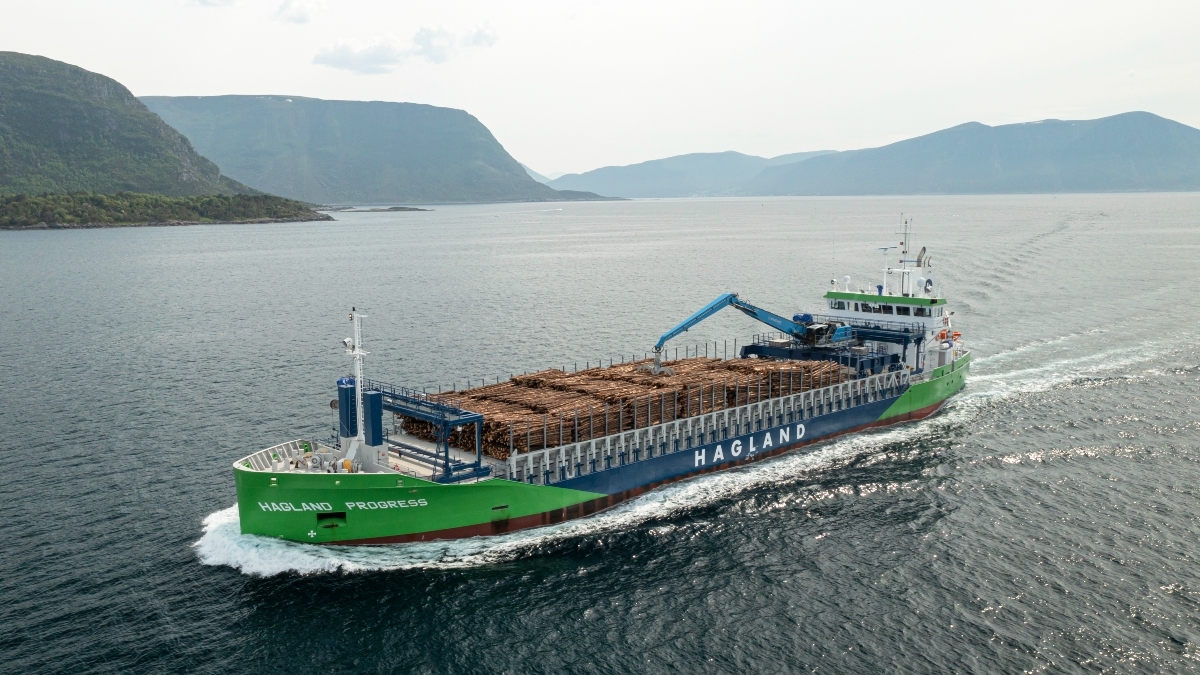
Hagland Shipping will receive almost NOK236M to convert four cargo ships to battery operation. These will be the first bulk ships to operate on batteries between Norway and other countries in Northern Europe.
Backed by a NOK15M grant, Kristiansand Havn IKS will develop a charging and battery exchange facility in Mandal. The operation is planned to start before the end of 2028.
Hagland Shipping co-CEO and CFO Paal W. Aanensen said important clarifications around infrastructure, operational conditions and regulations remain to be worked out.
Each ship will have a battery capacity of 40 MWh, with Norwegian manufacturer Zen supplying the battery swapping and charging technology. The ships will operate on battery power alone and be equipped with wing sails.
Oslo-based Bulk Loaders was awarded a NOK89.2M grant to build a new battery-powered dry and liquid cargo ship, replacing an older vessel in its fleet. The vessel will transport various types of cargo for the oil industry along the Norwegian coast, primarily between Stavanger and Kristiansund.
The new vessel will transport cargo currently carried out by truck, reducing heavy transport on the roads, cutting greenhouse gas emissions, and contributing to more efficient and environmentally friendly logistics for the oil industry.
The ship will have 15 MWh of battery system that will be charged with shore power during loading and unloading.
Additional grants were awarded to Grieg New Energy (NOK64.5M) for two battery-powered aquaculture service boats and one charging facility, and Steinarbo Invest (NOK15M) for five new battery-powered aquaculture workboats.





Related to this Story

Events

Maritime Regulations Webinar Week
 16 Dec 2025
 GMT - ONLINE

Floating energy: successfully unlocking stranded gas using FLNGs and FSRUs
24 Feb 2026GMT - ONLINE
© 2026 Riviera Maritime Media Ltd.


