


Business Sectors
Business Sectors
Events
Contents

Register to read more articles.
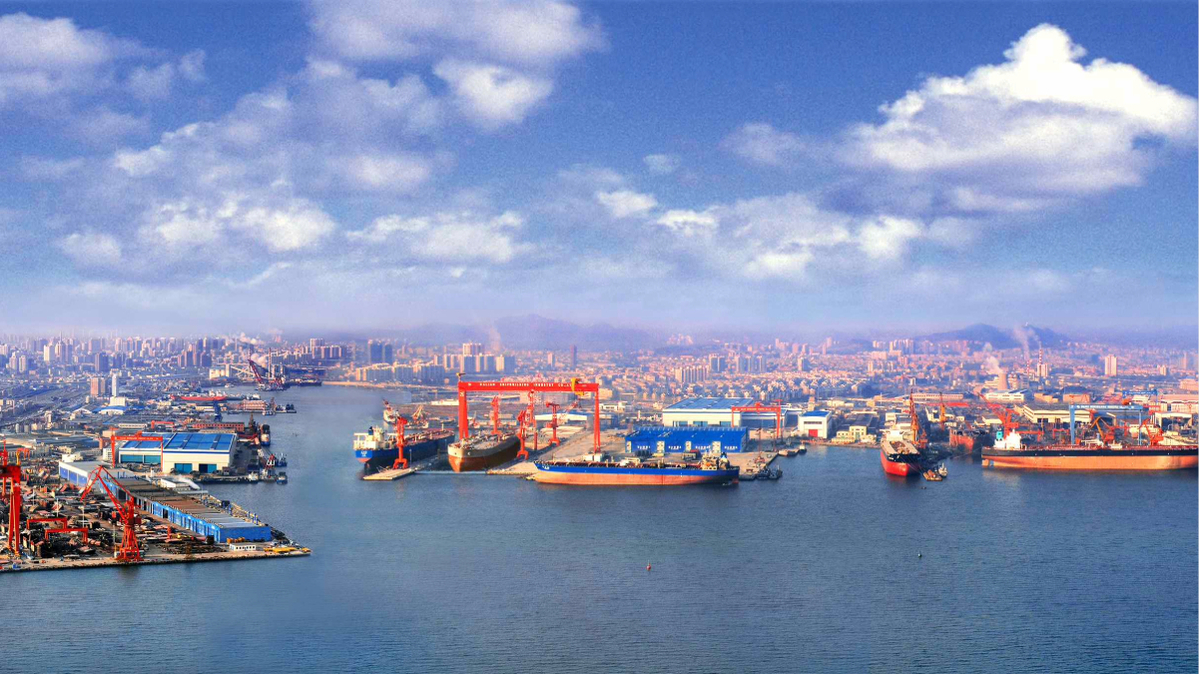
Not just scale: Explaining China's staggering shipbuilding dominance
The Chinese shipbuilding industry has captured a staggering 82.5% of this year’s newbuilding contracts, with shipbrokers now focusing not only on the country’s scale but also on the depth of its industrial ecosystem


BRS Shipbrokers said in a new report that Chinese shipyards have 445M dwt on order, equivalent to 75.1% of the global orderbook in dwt terms. South Korea and Japan follow with market shares of 14.9% and 6.7%, respectively.
This momentum has continued into 2026, with first-half figures showing that China secured 82.5% of global newbuilding orders.
“China’s deeper advantage lies in the industrial ecosystem surrounding its yards: a dense network of suppliers, engineers, skilled labour, infrastructure, financing and technology that allows capacity to translate into high-volume, increasingly sophisticated production,” BRS said.
The brokerage explained that Chinese yards have organised production around modular construction and extensive prefabrication. Hull blocks, equipment modules and selected systems can be manufactured in parallel before final assembly, increasing throughput and shortening construction schedules.
“The result is an industrial base capable of handling large volumes while meeting increasingly complex production requirements,” analysts said.
The numbers speak for themselves. Chinese shipbuilders have delivered 813 vessels so far this year, while orderbooks at some yards extend beyond 2029.
Beyond scale: experience, technology and finance
BRS also highlighted China’s cumulative industrial learning, stemming from the construction of series of similar vessels. This has enabled yards to build experience in design integration, procurement, production planning, quality control and construction, improving productivity and reducing execution risk.
It is no secret that Chinese shipyards lead in bulk carriers, tankers and container ships, the three largest segments of the global merchant fleet.
South Korea, meanwhile, continues to lead in gas carrier shipbuilding, while Japan remains a specialist in standardised but high-quality vessels, with particular strengths in bulk carriers and a strong presence in RoRos, ferries and certain tanker segments.
Data shows that while China has not displaced its Asian competitors across every segment, its growing presence in technically demanding vessels suggests that its advantage is extending beyond conventional merchant tonnage.
Energy transition and new fuels are also becoming increasingly important as Chinese yards deliver new vessels to the global fleet.
BRS data shows that Chinese yards currently have 1,082 dual-fuel or battery-equipped ships on order, including 738 LNG dual-fuel vessels, 178 methanol dual-fuel vessels and 19 ammonia dual-fuel vessels.
“The ability to deliver these vessels at scale indicates that Chinese yards are increasingly capable of integrating new propulsion, fuel-storage and control technologies into series production,” analysts explained.
China also benefits from its expanding financial ecosystem. “Access to domestic financing, state-backed financial institutions and industrial policy has supported the expansion and modernisation of shipbuilding capacity and related marine industries,” BRS said.
The competitive effect is further strengthened when yard investment is combined with owner financing, leasing structures and export support.
Technology has also played a role. “Automation, robotics, machine vision and digital platforms are being introduced across production, improving precision and productivity,” BRS said.
A lead difficult to challenge
A key question raised by the BRS report is whether China’s shipbuilding dominance can be challenged.
Several factors could work against the country’s continued expansion. The sheer size of China’s orderbook could put pressure on production capacity, equipment availability and delivery schedules, BRS said.
Furthermore, geopolitical tensions may encourage some governments and shipowners to diversify supply chains or reduce their strategic dependence on Chinese yards. Trade restrictions, tariffs, sanctions exposure and local measures could also alter contract economics and financing availability, although their effects will vary by ship type, owner and trading pattern.
South Korea and Japan also retain significant advantages in specialised and technologically demanding segments, while other countries are seeking to rebuild or expand their domestic shipbuilding capabilities.
However, BRS said the challenge for competitors is not simply to build additional yards. It is to recreate the industrial ecosystem capable of supplying them competitively, financing their expansion, providing skilled labour and engineering expertise, and generating sufficient production volume to create the same learning effects.
“That process would require years,” the research concludes.





Related to this Story


Events

Maritime Regulations Webinar Week
 16 Dec 2025
 GMT - ONLINE

Floating energy: successfully unlocking stranded gas using FLNGs and FSRUs
24 Feb 2026GMT - ONLINE
© 2026 Riviera Maritime Media Ltd.


