


Business Sectors
Business Sectors
Events
Contents
Oman 'working intensively' on safe passage for vessels through Strait of Hormuz
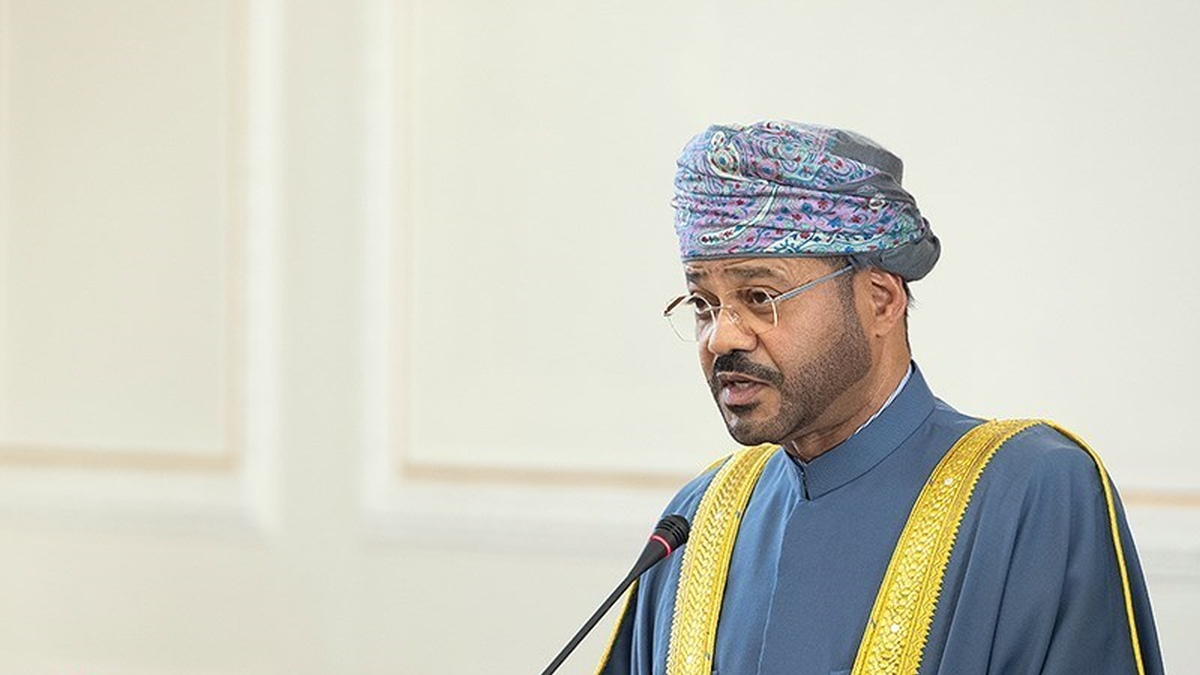
Omani foreign minister Badr Albusaidi has claimed that the Sultanate, which has been an intermediary for Iran and the US in nuclear negotiations, is attempting to secure safe passage for vessels through the strait


A senior figure in Oman’s government has claimed that the sultanate is working to secure safe passage for maritime vessels through the Iran-blocked chokepoint of the Strait of Hormuz.
"This is already causing widespread economic problems, and I fear they promise to get much worse if the war continues. Oman is working intensively to put in place safe passage arrangements for the Strait of Hormuz," Mr Albusaidi’s verified account on X (formerly Twitter) posted.
The post came as US President Trump announced a postponement to a 21 March, 48-hour deadline threat in which the US President wrote on Truth Social that he would "obliterate" Iran’s ’power plants’ if the Strait of Hormuz were not opened.
President Trump claimed to have had "very good and productive conversations regarding a complete and total resolution of our hostilities in the Middle East ... which will continue throughout the week." An unverified report from Iran’s Fars news agency quoted an unnamed source in Iran’s Islamic Revolutionary Guard Corps as saying that "no direct or indirect" talks have taken place between the warring nations.
In postponing the threat, President Trump said he has "instructed the Department of War to postpone any military strikes against Iranian power plants and energy infrastructure for a five-day period".
Shortly after President Trump’s statement, the Israel Defense Forces’ official Hebrew-language account on X posted that "The IDF began another wave of attacks in Tehran".
The US President has told journalists that the US is speaking with a ’top person’ in Iran, but not the Iranian supreme leader. He also reportedly said that Iran must abandon attempts to build nuclear weapons for the US to agree to a deal. Iran reportedly maintained that contact with the US is indirect, through third-party channels. Oman has been a mediator between the two countries in talks aimed at reaching a deal on Iran’s nuclear capabilities in the lead-up to the US-Israeli air strikes on Iran and the Iranian reprisal attacks.
Maritime security risk advisory EOS Marine head of advisory Martin Kelly posted to his LinkedIn account that President Trump’s claims should be approached "with caution".
"Remember this is the same person who said the US Navy will escort shipping, demanded EU escorts shipping, told masters to show some guts, said he’s winding down, sent 3,000 marines, threatened Iranian energy infrastructure, then said we’ve made friends, all in three weeks," he wrote.
Mr Kelly also posted a report from Iran’s Defense Council claiming that it could mine "key waterways in the Persian Gulf" if Iran’s coastal territory and islands were invaded, pointing out that the message indicates that Iran has yet to use mines.
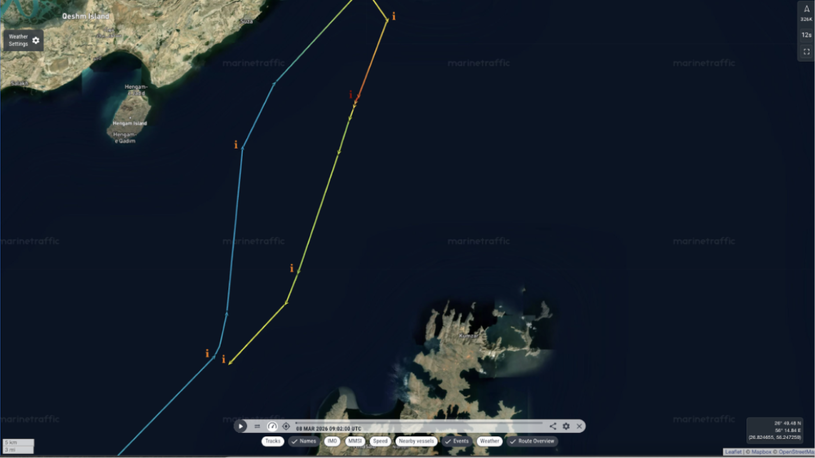
"Iran’s Defense Council says the only way for ’non-combat’ countries to pass through the Strait of Hormuz is by co-ordinating with Iran. During the weekend, more ships transited the Strait of Hormuz using the newly promulgated Larak-Qeshm channel. Two Indian-flagged LPG carriers are currently underway via the same route. Even more ships transited with AIS switched off and via the normal Strait of Hormuz route," Mr Kelly wrote.
The Royal Navy-operated United Kingdom Maritime Trade Operations Centre reported a potential explosion near a bulk carrier off the coast of the United Arab Emirates on 22 March, but later said the incident is under investigation.
The international, co-operative naval service, the Joint Maritime Information Center said on 22 March that the regional risk level assessment for the Middle East maritime region remains at the highest level, Critical, throughout the Arabian Gulf, Strait of Hormuz and Gulf of Oman.
Riviera’s International Chemical and Product Tanker Conference will be held in London on 21-22 April 2026. Use this link for more information and to register for the event.

Related to this Story
Events

Maritime Regulations Webinar Week
 16 Dec 2025
 GMT - ONLINE
Floating energy: successfully unlocking stranded gas using FLNGs and FSRUs
24 Feb 2026GMT - ONLINE
© 2026 Riviera Maritime Media Ltd.


