


Business Sectors
Business Sectors
Events
Contents

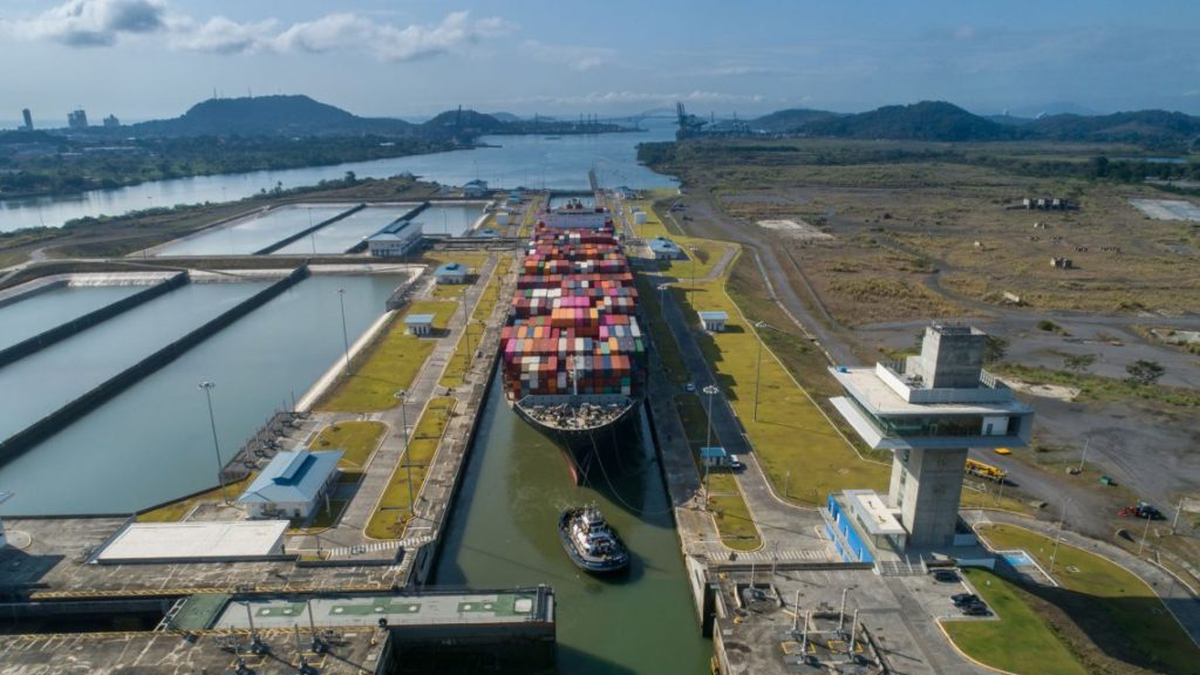
Panama Canal Authority warns of potential El Niño impacts in 2027
Citing ’historically high’ levels in its Gatún Lake reservoir, the authority administering the global shipping shortcut said it does not foresee the need for transit restrictions in 2026


The Panama Canal Authority (ACP) has said it is carefully monitoring water levels and weather models as it faces what it calls "greater climate variability".
Three years after an El Niño climate cycle across the tropical Pacific contributed to a drought that saw the ACP cut daily transits, a dry season that was "among the wettest on record since 1950" has prompted the canal authority to "strengthen water reserves in Gatún and Alhajuela Lakes", two of the reservoirs used for both canal transits and water supplies for more than half of the country’s population.
The ACP has undertaken what it says is continuous monitoring of "the El Niño scenario" since late 2025 and began to implement water-saving measures at the locks.
"Panama Canal updates lake-level projections every week, evaluating possible water-deficit scenarios for May and June 2026, while also maintaining 38 daily transits. Current data does not forecast the need for transit restrictions through December 31, 2026," the ACP said.
Under typical water level conditions, the Panama Canal has capacity for 34 to 38 daily transits, but the Canal Authority was forced to cull transits during 2023 and into early 2024, due to low water levels.
In 2023, the country experienced one of its driest years, forcing authorities to impose limits on vessel transits through the Canal. According to the Panama Canal Authority, October 2023 saw its lowest levels of rainfall since the earliest recorded registers 73 years ago.
Historically high temperatures in the Atlantic Ocean, exacerbated by the presence of the El Niño phenomenon, delayed the start of the rainy season in Panama, resulting in a significant decrease in the levels of freshwater in the Canal’s reservoirs.
Gatun Lake, a reservoir that provides water for the waterway’s operations, fell to ’unprecedented levels’ for the time of year, with 41% less rainfall than usual in one of Panama’s typical rainy seasons.
"History indicates that the most pronounced impacts of moderate or strong El Niño events tend to be reflected more clearly in the subsequent year, as was the pattern in 1982–1983, 1997–1998, 2015–2016, and 2023–2024. Accordingly, operational projections for 2027 are already being developed," the ACP said.
With the Strait of Hormuz seeing only a trickle of vessel traffic and a significant percentage of traffic through the Suez Canal diverted around Africa’s Cape of Good Hope, further restrictions through major maritime waterways would be likely to place added strain on supply chains, drive up consumer costs, and further reshape global trade patterns, impacting vulnerable economies disproportionately, according to UN trade and development body UNCTAD.



Related to this Story


Events

Maritime Regulations Webinar Week
 16 Dec 2025
 GMT - ONLINE
Floating energy: successfully unlocking stranded gas using FLNGs and FSRUs
24 Feb 2026GMT - ONLINE
© 2026 Riviera Maritime Media Ltd.


