


Business Sectors
Business Sectors
Events
Contents
Fourth annual IMO-led day for women in maritime focuses on embedding gender equality amidst 'persistent challenges'
IMO aims to bring focus to the difficulties faced by women in the maritime sector and the sector’s difficulties in building diversity among its ranks with launch of gender mainstreaming handbook


International Maritime Organization (IMO) Secretary General Arsenio Dominguez has said that the maritime sector needs to reflect on its shortcomings to building gender diversity in the sector.
“Despite our longstanding commitment to fostering gender diversity across the maritime sector, persistent challenges remain. It is time to reflect deeply and ask, where are we falling short, and what practical measures can we implement to move beyond rhetoric and achieve meaningful, lasting change?” Mr Dominguez said.
As part of the annual day devoted to highlighting women’s access to careers and treatment in the maritime professions, International Day for Women in Maritime, Mr Dominguez and the IMO are holding a special event aimed at advancing gender equality in shipping.
Significant among the presentations and speeches at the event is the launch of a guide for the governmental and non-governmental bodies and companies that make up the maritime sector in integrating a wider set of gender perspectives within policies, procedures and operations.
The Handbook on Gender Mainstreaming in the Maritime Sector, developed by Professor Momoko Kitada of the World Maritime University (WMU) and jointly published by WMU and IMO, is billed by IMO as a practical resource in the push to create "tangible actions that will make a difference in the lives of women in the sector, from seafarers to shore-side professionals".
Professor Kitada will also be presented with the 2026 IMO Gender Equality Award.
IMO says its Women in Maritime programme, developed in 1988, takes a three-pronged approach of training, visibility, and recognition, to support bringing more women into the sector.
"The evidence is clear: equality for women means progress for all," IMO said.
Women remain underrepresented across the maritime sector, making up less than 20% of the onshore maritime workforce and less than 2% of seafarers globally.
Surveys reflect challenges for women in maritime and challenges for the sector in employing women
A survey of the shipping sector taken in 2024 and finalised in 2025 has revealed that the proportion of women in maritime-related roles may have fallen in recent years.
The 2024 iteration of the Women in Maritime survey, the second jointly undertaken and published by the International Maritime Organization and the Women’s International Shipping & Trading Association (WISTA), extrapolated data from a sample group to offer insights into levels of gender diversity in the sector.
With a larger catchment of respondents to the most recent survey in 2024 than the prior survey in 2021, results showed a smaller ratio of women employed in maritime.
The dataset shows that women account for just under 19% of the total workforce sampled, 176,820 women in 2024. That result compares to 26% of women in the catchment group sampled, 151,979, in 2021.
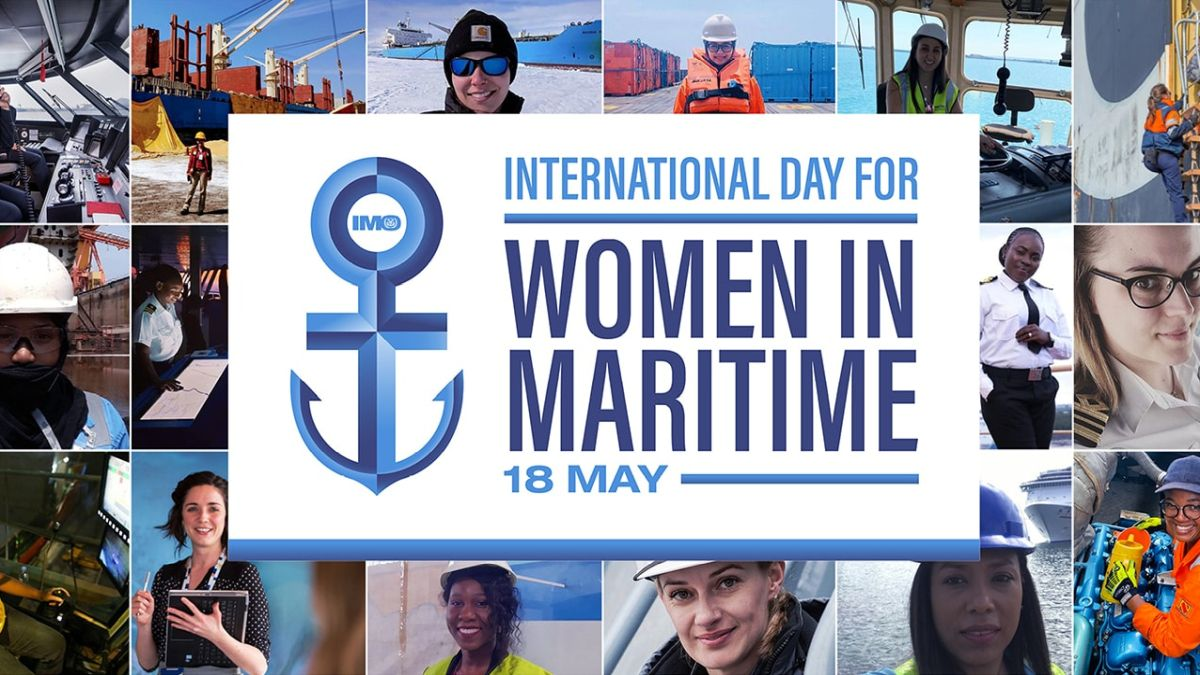
The IMO-led International Day for Women in Maritime was officially sanctioned at December 2021’s assembly meeting. IMO member states designated 18 May each year, beginning in 2022, as a date to acknowledge and pay tribute to the accomplishments of women working in the maritime sector.
In the 2021 survey, data demonstrated that women accounted for 29% of the overall workforce in the industry and 20% of the workforce of national maritime authorities of IMO member states.
Other past surveys, while far more limited in sample group size, have chimed with the downward trajectory for the number of women working in the maritime sector.
On International Women’s Day in 2023, human resource survey data from 2022 showed a lack of diversity, particularly in senior roles in the shipping sector.
Maritime HR firm Spinnaker’s salary survey from 2022 showed technical roles in the maritime sector quickly move away from relative equality at a trainee level to extreme gender disparity at director level. The proportion of women in what Spinnaker categorised as the technical and marine job family remained "stagnant at around 13%", according to Spinnaker’s salary survey. And that figure had declined by 2% as compared with the same company’s survey data from 2020.
In 2022, WISTA International, Anglo Eastern, International Seafarers Welfare and Assistance Network (ISWAN) and International Chamber of Shipping (ICS) conducted a public online survey designed to examine how female seafarers perceived discrimination and how it manifested on board vessels.
The survey covered 1,128 women seafarers from 78 countries, with 60% of women reporting encountering gender-based discrimination on board, 66% of respondents agreeing that male employees had turned to harassing and intimidating female co-workers and 25% reporting that in the shipping sector, physical and sexual harassment is common, occurring on board and involving violations of privacy. Notably, 90% of the respondents to the survey worked in the cruise sector.
Steps to combat harassment
In June 2025, IMO’s annual International Day of the Seafarer took on the theme of creating harassment-free ships and calling attention to what it called an urgent need to eliminate bullying and harassment in the maritime industry and to foster a culture of dignity, safety and inclusion on board every vessel.
The IMO said in 2025 that it is taking concrete steps to tackle harassment in the maritime workplace.
A key initiative cited by the organisation is the launch of an Interactive World Map, which highlights reporting channels, national policies, and support systems by flag state. This tool is designed to empower seafarers to access help, wherever they are in the world, and to promote transparency in the maritime response to harassment.
And, starting 1 January 2026, mandatory training on the prevention of harassment, including sexual assault and sexual harassment, has been required under the industry’s Standards of Training, Certification and Watchkeeping for Seafarers (STCW) Code. The amendments were adopted in 2024, strengthening protections for seafarers.
For more profiles of inspiring women working in maritime, from cadets to veterans, and their advice on work and life in the shipping sector, take a look at our Women in Maritime Today and Women in Maritime Tomorrow series:
- Women in Maritime Today: Anemoi Marine’s Clare Urmston is on a mission to clean up shipping
- Women in Maritime Today: IRI’s Laura Sherman on managing corporate and career growth
- Women in Maritime Today: DNV’s Catrine Vestereng encourages curiosity and determination
- Women in Maritime Today: Jeanne Grasso’s ‘serendipitous’ journey to maritime attorney
- Women in Maritime Today: AIT Worldwide Logistics’ Chelsea Lamar describes her passion for sustainability
- Women in Maritime Today: Marita Krems is a woman in MAN’s world
- Women in Maritime Today: Chevron Marine Lubricants’ Ayten Yavuz smooths the path to decarbonisation
- Women in Maritime Today: ABS director Wei Huang encourages initiative taking
- Women in Maritime Today: bound4blue’s Cristina Aleixendri harnesses the wind
- Women in Maritime Today: North Star’s Gitte Gard Talmo
- Women in Maritime Today: WISTA Hellas president Vivi Kolliopoulou discusses equality in shipping
- Women in Maritime Tomorrow: Damen’s Rebecca Belmer ’working in maritime offers an ocean of possibilities’
- Women in Maritime Today: BW LNG’s Monika Johannessen counsels ’never stop learning’
- Women in Maritime Today: Elin Saltkjel says no day working in maritime is dull
- Women in Maritime Today: Hanwha Ocean Europe’s Claire Wright encourages adaptability and curiosity
- Women in Maritime Today: Anisa Koci advises ’be persistent in your passion’
- Women in Maritime Tomorrow: Eirini Diamantara on shipping’s diverse opportunities
- Women in Maritime Today: Krystyna Tsochlas’ maritime journey
- Women in Maritime Tomorrow: V Group’s Lalithaa Rai Mahendran is ready to break down barriers
- Women in Maritime Today: Svitzer’s Lise Demant
Related to this Story
Events

Maritime Regulations Webinar Week
 16 Dec 2025
 GMT - ONLINE
Floating energy: successfully unlocking stranded gas using FLNGs and FSRUs
24 Feb 2026GMT - ONLINE
© 2026 Riviera Maritime Media Ltd.


