


Business Sectors
Business Sectors
Events
Contents
Register to read more articles.
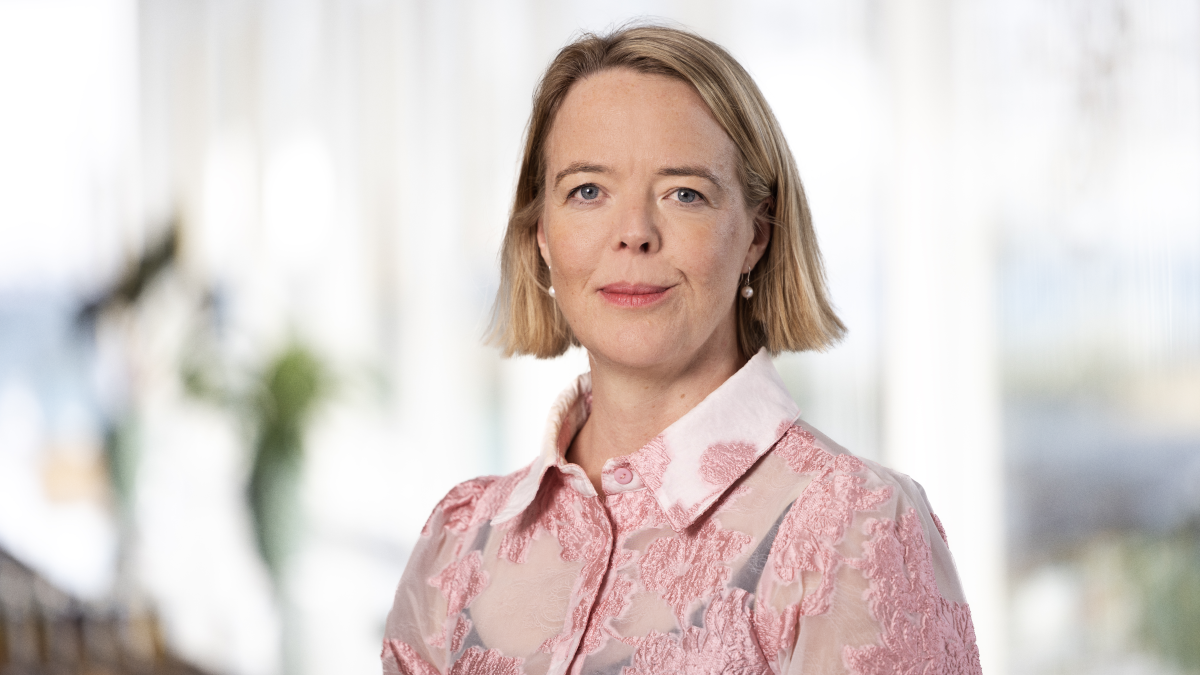
Women in Maritime Today: Svitzer's Lise Demant
Svitzer’s managing director of European business discusses her career in maritime and towage


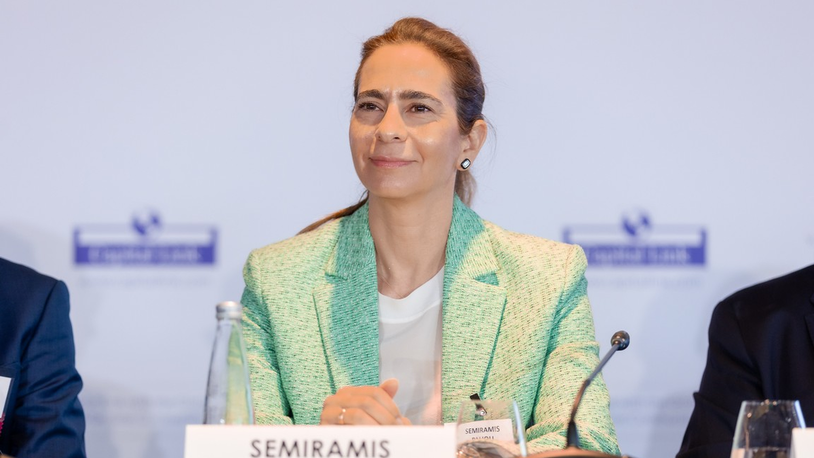
Lise Demant has risen to the top position in Svitzer, Europe, during a career that began as a graduate at AP Moller-Maersk and has included roles in Maersk Tankers and Svitzer, in North America, the Middle East, Asia and Europe. Ms Demant provides insights into her career development, her inspirations and her aspirations, and she explains how she helped Svitzer in its quest to become an efficient, value-adding partner to global shipping and ports and to terminal operators.
What inspired you to pursue a career in the marine industry?
As a school pupil, I mostly enjoyed maths and social studies, and in my teens I developed a strong appetite for exploring the world. So, when AP Moller-Maersk recruited for their graduate programme, it was almost a perfect match for me. Fortunately, it turned out to be just that, allowing me to live in the US and Singapore and travel the world through my work in shipping.
What are your key responsibilities in your current role?
As the managing director of Svitzer’s business in Europe, I am responsible for ensuring a safe, healthy, and profitable operation in this region. I am also part of Svitzer’s executive leadership team, where I share responsibility for ensuring the Svitzer group delivers on its promises to our customers, shareholders, business partners, and employees.
“The principle of ‘listening to learn’ has been fundamental throughout my life”
Was there anyone who inspired or encouraged you in your career?
I grew up in a family where my brother and I were encouraged to follow our passions and be curious about the passions of others. That taught us how curiosity is key to personal and professional growth and to unlocking opportunities in life. That principle of ‘listening to learn’ has been fundamental throughout my life.
In the maritime world, I learned a lot from Søren Skou when he was chief executive of Maersk Tankers. His meetings required you to be exceptionally well-prepared, on top of everything and able to explain both the bigger picture and the finer details, as well as how they were connected.
Mastering your subject matter so thoroughly builds self-confidence and enables swift decision-making in highly volatile markets, which has been invaluable in my career. I must also mention Henriette Thygesen, who has been a great mentor in shaping my commercial business acumen and fostering a truly customer-centric approach. She inspired me and others under her leadership to deeply understand what our customers dream of, worry about, think of us, and what is happening in their market. Only with this insight can you build a trusted relationship with your customers.
What have been your biggest achievements to date?
I am not a fan of listing professional achievements. But what I am proud of is being part of a great company like Svitzer, which plays a critical role in keeping society running. What we do may not be widely known, but by providing safe and reliable marine services to shipping companies, we enable people to buy new clothes in stores, get their cars repaired, and heat their homes. I take great pride in making Svitzer an efficient, value-adding partner. This includes being an employer of choice, supporting my colleagues’ development, and helping them achieve things they never thought possible. If I had to name just one professional achievement, that would probably be it.
What have been your biggest hurdles along the way?
Changing people’s perceptions and actions takes time. As a leader, you stand on the bridge, having spent hundreds of hours analysing, discussing and mentally preparing for, say, a new strategy. So, when the strategy is launched, it is easy to forget that your colleagues also need time to digest, understand and integrate it. In my view, overcoming the challenge of bringing an entire organisation up to speed is one of the most demanding aspects of leadership.
What do you see as the biggest challenges ahead, both for your company and the maritime industry?
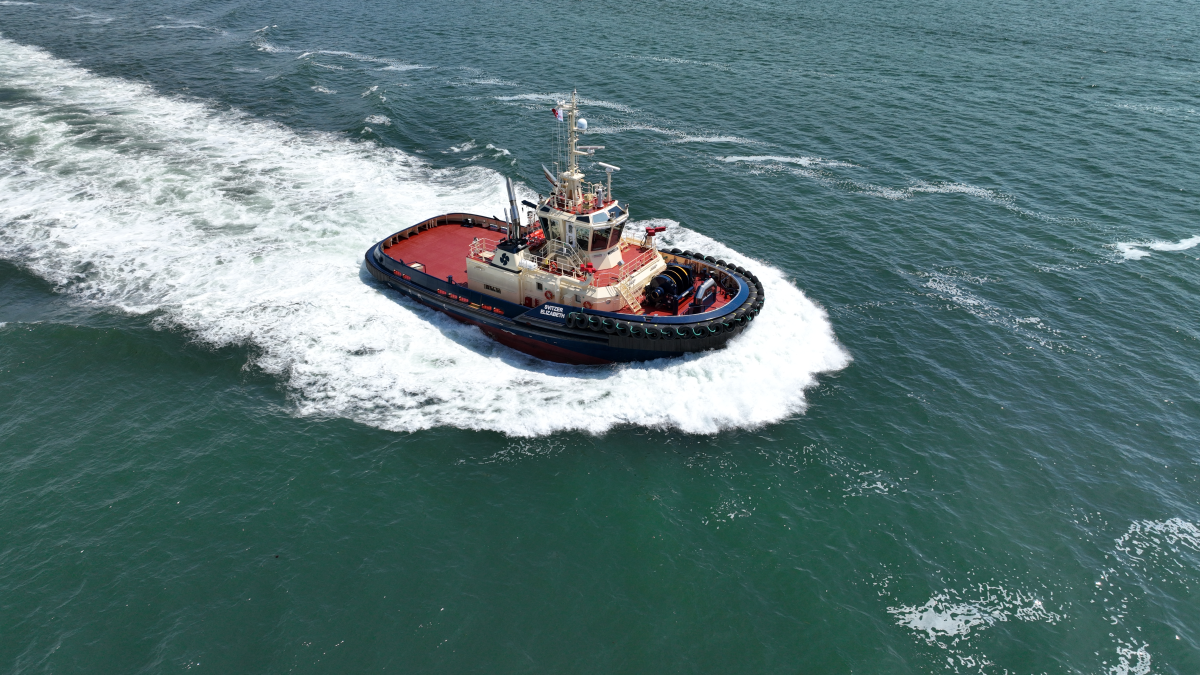
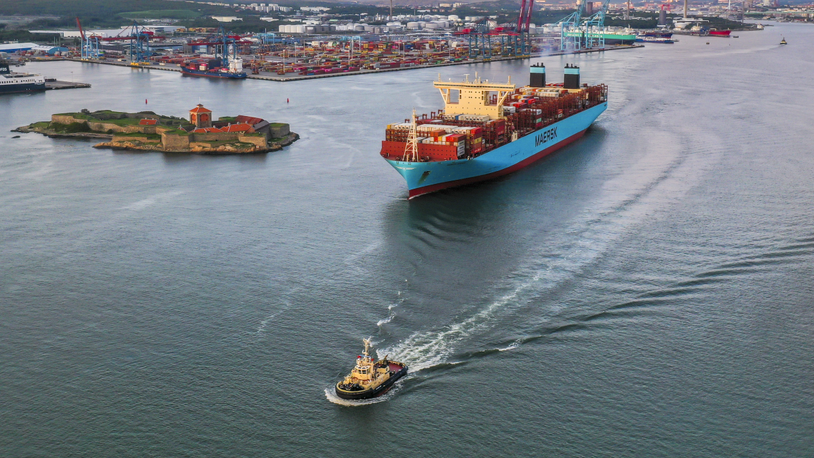
The biggest and most urgent challenge facing the shipping industry is achieving net-zero emissions. At Svitzer, we are fully committed to decarbonising our fleet and have, among other initiatives, ordered two battery-powered tugs and introduced EcoBAF [eco-friendly bunker adjustment factor] in select ports.
However, the limited availability of green fuels like e-methanol is emerging as a major roadblock to shipping’s green transition. There is insufficient e-methanol on the market, so shippers are turning to LNG. However, LNG, while an improvement, is still a fossil fuel, and not a truly green solution.
Additionally, if tugs are to be powered by electricity in the future, ports will need shore-side charging infrastructure. Ensuring that the entire fuel infrastructure and supply chain is in place in time remains one of the industry’s most significant challenges.
“Access to shore-side charging stations is essential if we want to electrify our fleet”
How is Svitzer addressing these challenges?
We see a strong appetite for green fuels among our customers, especially in Europe, where we have introduced EcoBAF in Amsterdam and Esbjerg. We will continue engaging with our customers on decarbonised solutions to drive actions toward a more sustainable future.
What new technologies are coming to the towage industry?
As mentioned, we have strong confidence in e-tugs. Our tugs typically operate in small, confined port areas, where battery-powered tugs are often an excellent solution for our tasks. However, access to shore-side charging stations is essential if we want to electrify our fleet.
Where do you see yourself in 2030?
Given the current geopolitical and macroeconomic situation, I prefer not to speculate. That said, I still see important work ahead at Svitzer, particularly in driving our journey towards net zero and playing a growing role in the energy transition.
We are also enhancing our service delivery for customers, where we believe our unique value proposition lies in our high reliability, flexibility, availability, and decarbonisation solutions. These solutions will become an even stronger differentiator as the pressure to achieve net zero intensifies. Additionally, I currently serve as a non-executive board member of Scanbio Marine Group and could easily see myself taking on similar roles where I can contribute my expertise.
What would be your advice to young people considering a career in the maritime or offshore sectors?
Go for it! It is a fantastic industry with immense development opportunities, and our work is highly significant, both socially and globally.
CV in brief:
Lise Demant has been managing director of Svitzer’s business in Europe since 2020, and is part of Svitzer’s executive leadership team. She has also been a non-executive board member of Scanbio Marine Group since June 2024.
2017-2020: Svitzer, global chief commercial officer
2015-2017: Svitzer Asia, chief operating officer
2013-2015: Svitzer Asia, managing director
2010-2012: Maersk Tankers, director and head of offshoring
2006-2009: Maersk Tankers, head of chartering
2003-2006: Maersk Tankers USA, chartering manager
2002-2003: Maersk Tankers, assistant manager
1999-2001: AP Moller-Maersk, shipping trainee
Events

Maritime Regulations Webinar Week
 16 Dec 2025
 GMT - ONLINE
Floating energy: successfully unlocking stranded gas using FLNGs and FSRUs
24 Feb 2026GMT - ONLINE
© 2026 Riviera Maritime Media Ltd.


