


Business Sectors
Business Sectors
Events
Contents
Register to read more articles.
Ports invest in digitalisation to improve ship-call planning
Ports in Europe are introducing digitalisation to plan ship calls, tug capacity and services more efficiently


Digitalisation and artificial intelligence (AI) are revolutionising port activity planning and making towage and pilotage more efficient.
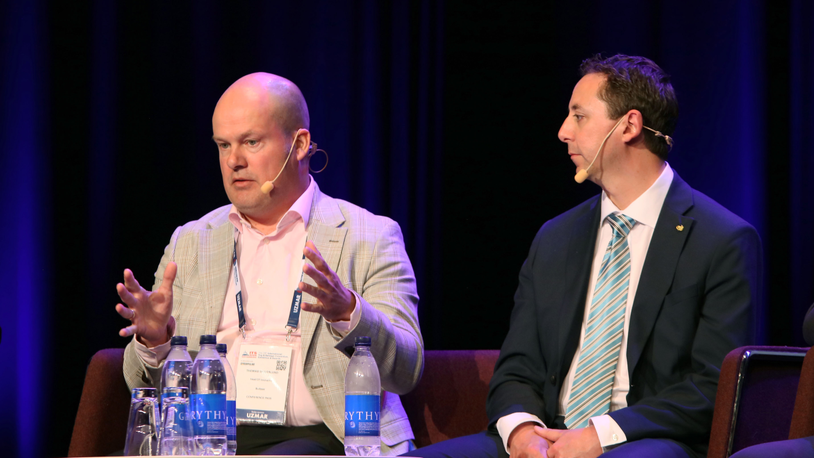
Port of Antwerp-Bruges and Port of Rotterdam highlighted key developments during a ports and harbours roundtable discussion at Riviera’s TUGTECHNOLOGY ’25 Conference in Antwerp, Belgium, on 21 May.
Port of Antwerp-Bruges nautical operations manager Peter Degroote described how AI and digitalisation are opening smart-port operations and managing more aspects of towage, pilotage and ship services.
“We are implementing new ways of working in the future,” he said. “Getting a balance between supply and demand in daily operations, planning and forecasting what is coming.”
Its AI-driven APICA planning system will be a virtual assistant to the authority, port users and service providers and support ships while they are in port.
Port of Antwerp-Bruges is using data from sensors and cameras around the port areas to manage traffic and identify incidents and accident risks.
“With digitalisation we can optimise processes,” said Mr Degroote. “Having data flows enables a tug AI planner and support services, and shows people there are improvements and changes for the future.”
Port of Antwerp-Bruges chief operations officer Rob Smeets said the APICA ecosystem will include digital twins and a virtual assistant, and can be used to manage bridges and locks, monitor renewable energy production and distribution, and support vessel bunkering and recharging.
“Using cameras, drones and sensors, we can identify issues and alert management if there is an incident. AI can detect congestion and incidents before they occur.”
Port of Rotterdam’s maritime safety and programme manager for port call optimisation in the harbour-master division, Milou Aerts, explained how digitalisation is improving shiphandling in the harbours and terminals.
She said planning marine and port services, such as pilotage, escorting and towage, begins when a ship approaching Rotterdam passes a geofence digital line, around 40 nautical miles out. When a container ship passes this point, a notification is sent to port service providers, including the harbour master’s planning team, agents, pilots and tug operators.
“They can start planning for efficient port calls,” said Ms Aerts. Terminals in Rotterdam were connected in October 2024 “so ship agencies can plan port calls.”
She added real-time data enables more transparent planning for service providers to manage all ship port calls. “This is obvious, but not that easy” in a busy port such as Rotterdam, she added.
Insights from data analytics and AI enable service providers to co-ordinate to reduce wasting time and energy. For example, knowing tugboat requirements per ship before the marine pilot boards improves planning for ship escort and towage. “We would know the minimum number of tugs required before the pilot gets on the ship,” said Ms Aerts.
Another benefit of digitalisation is optimising tugs at quaysides where there are frequent ship calls, enabling tugboats to support one ship unberthing and then supporting another docking with minimal transit times.
“There are a number of steps to support ships at same time,” said Ms Aerts. “Our port will have standby berths for tugs for shorter transits to reduce fuel consumption and emissions.”
The 28th International Tug & Salvage Convention, Exhibition & Awards will be held in Gothenburg, Sweden, 19-21 May 2026. Use this link for more details of this industry event and the associated social and networking opportunities
Sign up for Riviera’s series of technical and operational webinars and conferences:
- Register to attend by visiting our events page.
- Watch recordings from all of our webinars in the webinar library.
Related to this Story
Events

Maritime Regulations Webinar Week
 16 Dec 2025
 GMT - ONLINE
Floating energy: successfully unlocking stranded gas using FLNGs and FSRUs
24 Feb 2026GMT - ONLINE
© 2026 Riviera Maritime Media Ltd.


