


Business Sectors
Business Sectors
Events
Contents
Register to read more articles.
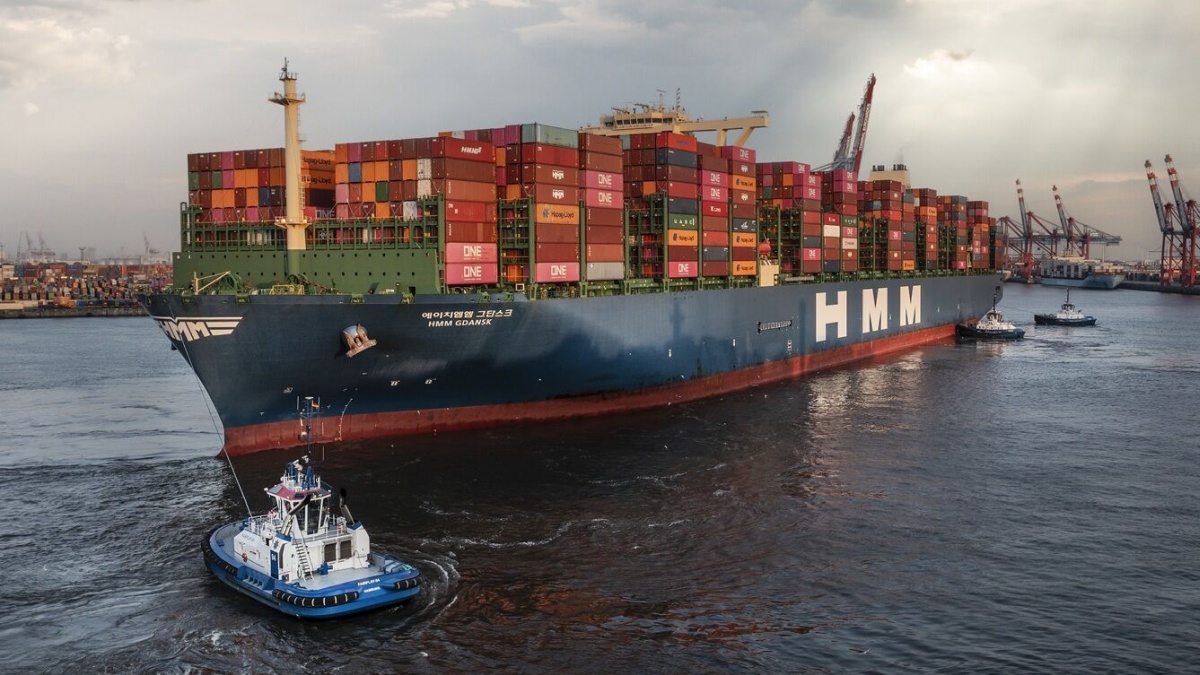
Port of Hamburg adopts quantum computing to enhance tug scheduling
A European tug owner has teamed up with a research institute to use algorithms to improve tugboat scheduling in a busy German port


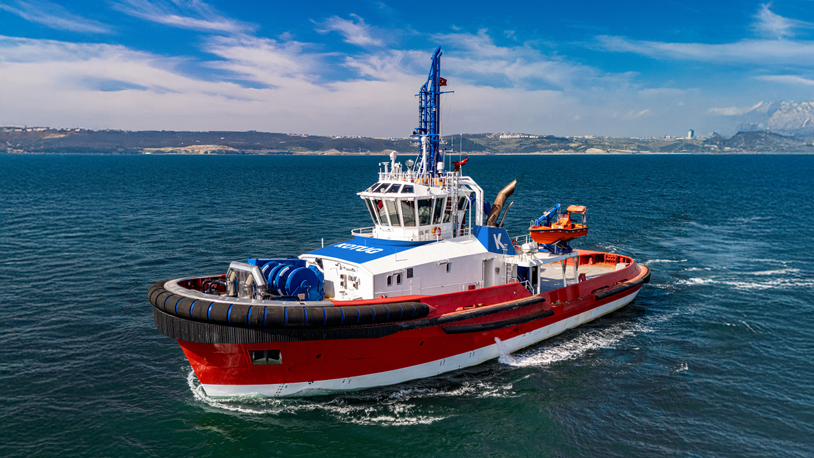
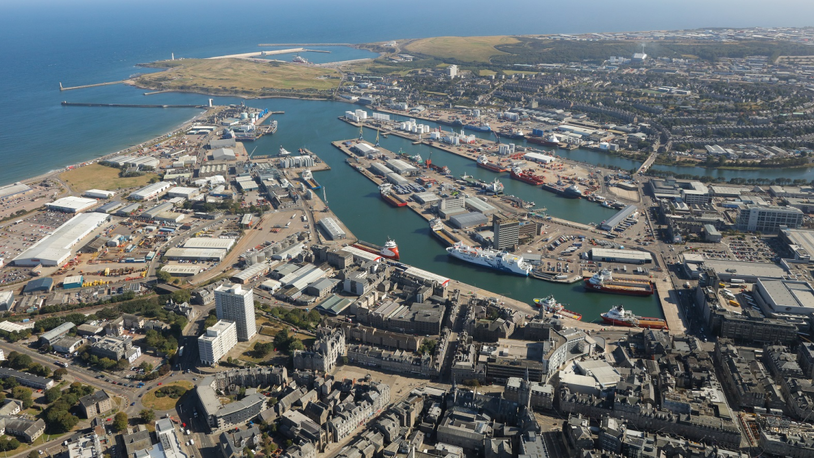
German owner Fairplay Towage is working with Fraunhofer’s Center for Maritime Logistics and Services (CML) to use quantum computing to improve tugboat scheduling to better support ships visiting the Port of Hamburg, by improving efficiency, reliability and reducing fuel consumption.
Fairplay has joined Soft Park and Fraunhofer CML in the Quantum Tug Scheduling project, which is funded by Investitions and Forderank (IFB) Hamburg. The key aims of this project are “to improve planning accuracy and speed through realistic modelling and the integration of innovative quantum computing algorithms,” said Fraunhofer.
“This is intended to reduce fuel consumption and delays of the tugboats, but still ensure reliable provision of the tugboats.”
Tug dispatch in a busy port is complex and is influenced by components including the location of tugboats and arriving ships, weather and sea conditions, other harbour activities and ship turnaround at terminals.
“Therefore, a hybrid solution methodology using decomposition algorithms is used,” said Fraunhofer.
It plans to divide key problems that occur into sub-problems, some of which are solved with classical algorithms and others with quantum-computing algorithms.
“By integrating the quantum computing solutions into existing software environments, a user-friendly application will be created for end-users, facilitating access to advanced technologies in the maritime sector.”
Fairplay said this project will bring together “state-of-the-art technology to real-world port logistics.”
Fraunhofer CML was founded in November 2010 to research and develop technology to improve maritime logistics and services in Europe, including developing solutions for autonomous operations, navigation and uncrewed vessels.
As part of this, CML is involved in the SeaClear 1.0 and 2.0 projects using its SeaDragon unmanned surface vessel (USV) along the coastline and in ports in southern France. In Q4 2025, this programme will focus on refining the complex autonomous interaction between surface and underwater drones, aerial vehicles and an underwater grapple to identify and collect underwater waste along a stretch of the Mediterranean coastline.
USV SeaDragon will be equipped with a marine waste bay with a payload of 350 kg, which will be filled by another watercraft and a suite of underwater sensors and the underwater grapple. To do this, SeaDragon needs to autonomously dock stern-to-stern onto the collecting vessel. The equipment was loaded and tested in Hamburg in September before SeaDragon was mobilised to Marseille, France.
In addition, CML has produced recommendations for developing and testing partially autonomous push convoys to increase the transport capacities of the Elbe-Lübeck Canal; it is running the Sim-Twist project to design concepts for automated terminals by using simulators and new technologies such as automated twist-lock handling; and is developing an innovative solution for the implementation of optical and acoustic information, which uses smart glasses to convert images and speech into precise maintenance reports using artificial intelligence.
The 28th International Tug & Salvage Convention, Exhibition & Awards will be held in Gothenburg, Sweden, in association with Caterpillar, 19-21 May 2026. Use this link for more details of this industry event and the associated social and networking opportunities.
Related to this Story
Events

Maritime Regulations Webinar Week
 16 Dec 2025
 GMT - ONLINE
Floating energy: successfully unlocking stranded gas using FLNGs and FSRUs
24 Feb 2026GMT - ONLINE
© 2026 Riviera Maritime Media Ltd.


