


Business Sectors
Events
Contents
Register to read more articles.
Record licensing round speaks volumes about Norwegian offshore oil and gas
Equinor awarded 35 of 57 new production licences, and plans to drill 20-30 exploration and appraisal wells annually over the next 10 years


When it comes to North Sea oil and gas development, Norway and the UK are sailing in different directions. While UK government energy policy has scuttled prospects for offshore drilling in the North Sea, Norway, led by state-owned Equinor, is going full steam ahead.
Last year, Norway’s Ministry of Energy conducted a record round of licensing, awarding 57 new production licences during the Awards in Predefined Areas (APA) 2025 round. Of those licences, 35 were awarded to the Norwegian oil and gas major. Overall, 19 companies won APA licences covering acreage on the Norwegian continental shelf (NCS), North Sea, Norwegian Sea, and Barents Sea. When it comes to oil and gas activity, Norway is open for business.
By contrast, no exploratory wells were drilled in the UK North Sea in 2025, and the UK’s North Sea Future plan, issued in November, maintains a ban on new licences for exploration of offshore oil and gas fields. It does create new Transitional Energy Certificates, which would allow oil developers to tie back oil and gas production to existing fields or licensed fields.
Maintaining production
To maintain high production levels, support European energy security and fill the coffers of its sovereign wealth fund, Norway needs to keep drilling for oil and gas. State-run Equinor plans to drill between 20-30 exploration and appraisal wells annually in the North Sea to keep oil and gas production levels in 2035 the same as in 2020. This would correspond with a production level of 1.2M barrels per day from the NCS in 2035.
“We are the largest producer of oil and gas for Europe, the only significant net-exporter,” Minister of Energy Terje Aasland told delegates at the Autumn Conference 2025 in Oslo in November. “Norwegian gas alone covers around 30% of the combined needs of the EU and the UK.”
While petroleum revenues provide a major share of the state’s budget and “helped build the world’s largest sovereign wealth fund”, Mr Aasland said Norway shoulders responsibility for Europe’s energy security, and decisions made now will impact how large a supplier of oil and gas it will be to the continent in the years ahead.
“We must keep investing in exploration, development, and increased recovery to avoid a sharp drop in production and secure long-term value creation,” he said, adding, “The annual licensing rounds – the APA rounds – are a cornerstone of our policy.”
Concluded Mr Aasland, “The government’s petroleum policy is clear: we will develop the petroleum sector, not dismantle it.”
Equinor vice president, subsurface, NCS, Jez Averty, said the licences awarded to the company would help continue a high level of exploration activity. He said 2025 was “a strong year” for the company, which made 14 discoveries in 2025, seven of them Equinor-operated. “This amounts to approximately 125M barrels of new recoverable oil equivalent, with a potential for even more,” said Mr Averty.
About 80% of the Norwegian oil major’s offshore drilling campaigns will explore near existing fields, including subsea tiebacks, with the remainder focused on new territories. Equinor must discover and mature new oil and gas resources, with plans for 75 subsea developments by 2035.
Equinor president and chief executive, Anders Opedal, shared his view on the challenge for his company in the years ahead in meeting its production goals.
“Sometimes I hear people talk about oil and gas as a sunset industry, that the Norwegian continental shelf (NCS) is waning. I don’t recognize that” wrote Mr Opedal in a social media post.
“We have a plan of maintaining 2020 production and increasing value creation on the NCS until 2035. That will call for drilling around 250 exploration wells, 600 production wells and developing around 75 subsea fields. We will invest significantly on the NCS to reach this goal – as exemplified with the framework agreements we awarded Norwegian suppliers last week for up to 100 bn NOK,” said Mr Opedal.
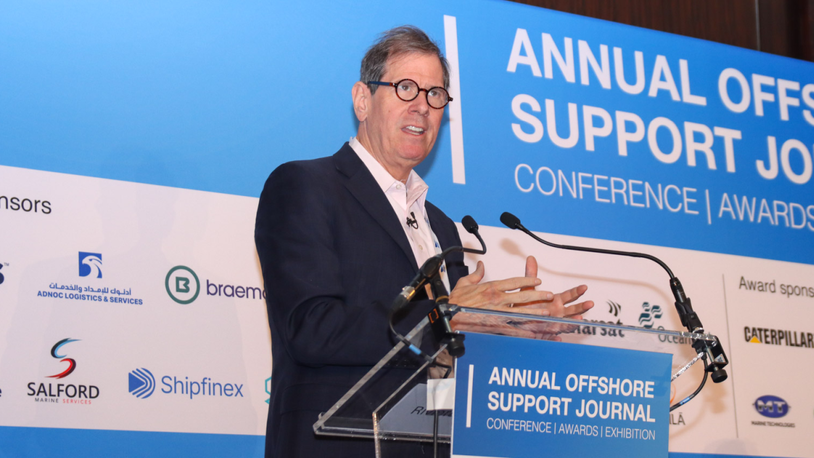
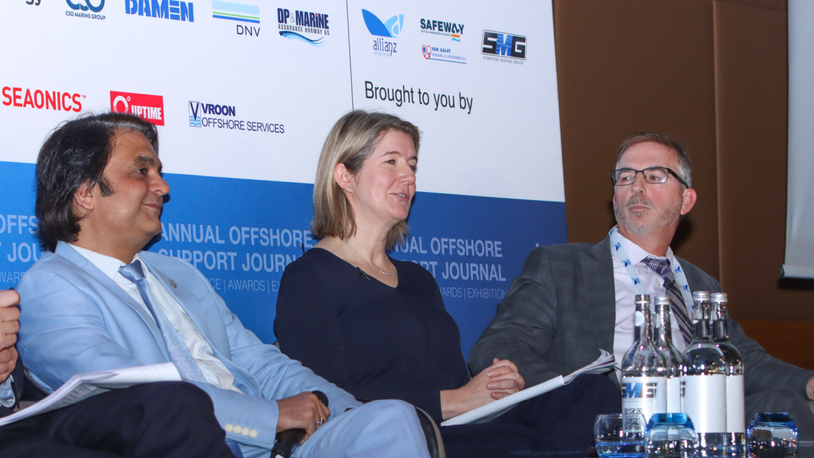
Riviera’s Annual Offshore Support Journal Conference, Awards & Exhibition 2026 will be held in London on 3-4 February 2026. Use this link for more information and to register for the event.
Related to this Story
Events

Maritime Regulations Webinar Week
 16 Dec 2025
 GMT - ONLINE
Floating energy: successfully unlocking stranded gas using FLNGs and FSRUs
24 Feb 2026GMT - ONLINE
© 2024 Riviera Maritime Media Ltd.


