


Business Sectors
Business Sectors
Events
Contents
Register to read more articles.
Riding a carpet of air to lower emissions
Shipowners look to air-lubrication technologies, including one system that does not require the use of compressors, as one of the levers to lower fuel consumption and emissions


Concerns about fuel costs, emissions reductions, and energy efficiency are shaping decisions in shipping boardrooms as owners look to lower opex, reduce potential carbon taxes and alleviate regulatory headaches.
Top of mind for every shipowner is complying with the Energy Efficiency Existing Ship Index (EEXI) and collecting data to report their annual operational Carbon Intensity Indicator (CII) and CII ratings. To improve energy efficiency, they are investing in a mix of energy-saving devices. About 32.7% of global fleet by tonnage — some 8,478 ships — have been fitted with propeller ducts, rudder bulbs, Flettner rotors, wind kites, air-lubrication systems (ALS) and other devices, reports Clarksons Research.
ALS creates a layer of bubbles along the ship’s bottom to reduce friction between the hull and water surface. This lowers the propulsion power required to move the vessel through the water, resulting in fuel and greenhouse gas (GHG) emissions savings. Riding on this carpet of air can yield significant energy savings. Depending on ship type, draft, speed and operation, fuel and emissions savings can be between 5-10%, reports leading ALS developer Silverstream Technologies.
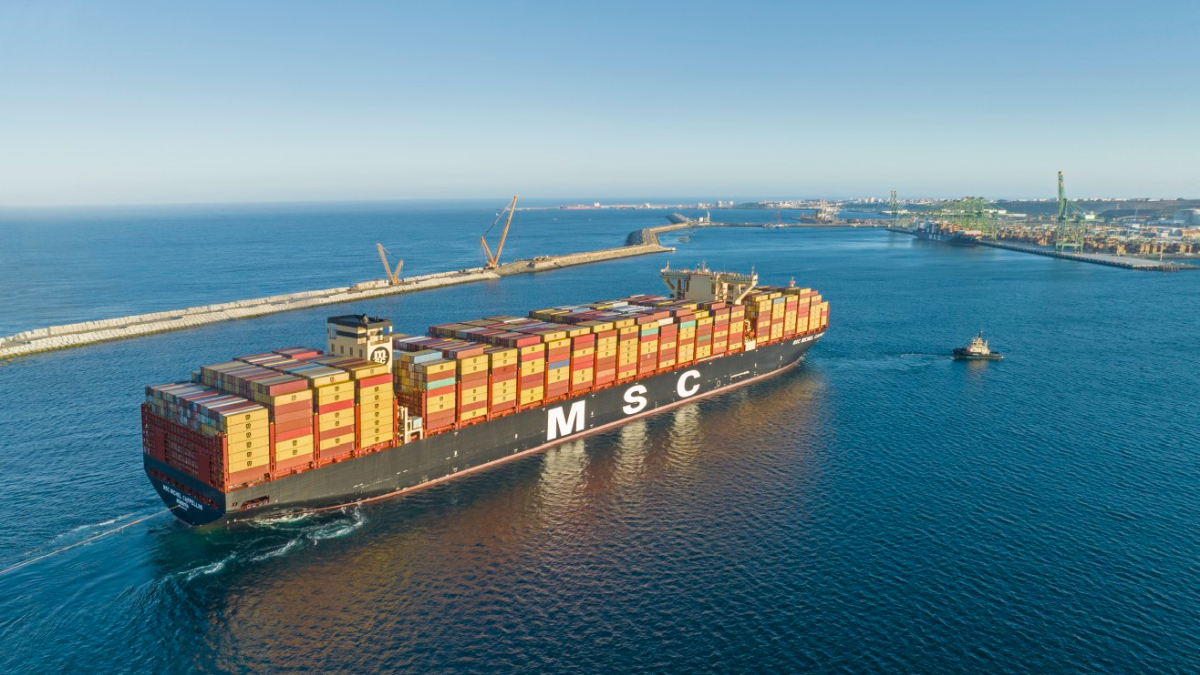
As of mid-June, a live feed on its website shows 77 vessels, covering cruise ships, container ships, LNG carriers, bulkers, ropax vessels and roro cargo ships, fitted with its microbubble technology. Boxship giant MSC alone has more than 30 of its ships using the company’s air-lubrication technology, including the 24,346-TEU ultra-large container ship MSC Irina, delivered in 2023.
In the LNG market, at least six Knutsen LNG carriers are equipped with the company’s air-lubrication systems.
“Market conditions and operational factors unique to LNG carriers make them perfectly suited for this air-lubrication technology,” says the company’s founder and chief executive, Noah Silberschmidt.
In April, Seatrium completed the retrofit of a Silverstream System on a 174,000-m3 LNG carrier at Admiralty Yard in Singapore.
“Fuel and emissions savings can add up to 10%”
During Posidonia 2024 in Athens in early June, Silverstream Technologies signed a memorandum of understanding (MoU) with HD Hyundai to retrofit air-lubrication systems on ships constructed by the South Korean shipbuilder.
Effective layers of air
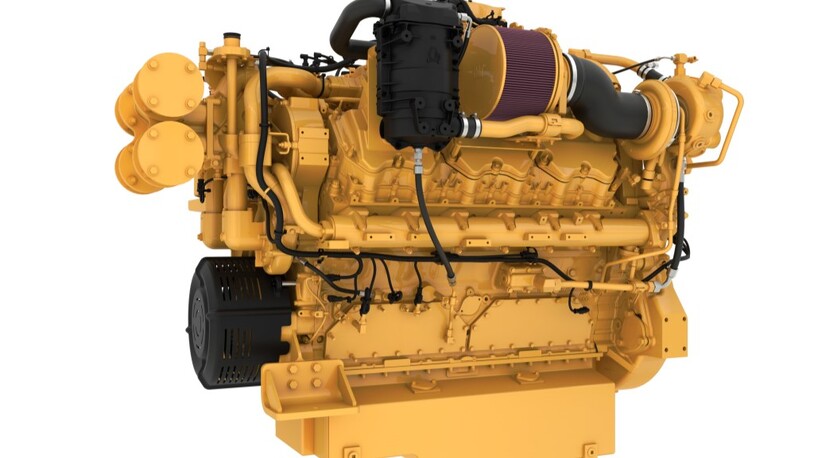
But effective air lubrication requires a reliable supply of air to be dispensed to the bottom of the ship, with a minimum amount of power. “Energy efficiency is at the core of our compressor system deliveries in order to keep both cost and emissions to air down during vessel operations,” says Hans Petter Tanum, sales and business development director for Oslo-based TMC. In March, the Norwegian marine air compressor supplier was awarded a contract by Hanwha Ocean to manufacture and supply equipment for ALSs for four 174,000-m3 LNG carriers being built by the South Korean shipyard.
Mr Tanum says the system is designed to allow the vessel crew to maintain it themselves, “which helps keep the vessel operators’ operating costs to a minimum.”
One of the world’s largest dry bulk shippers, Rio Tinto plans to refit one of its 17 owned bulk carriers with Alfa Laval’s OceanGlide ALS to assess its energy-saving potential for broader application across its fleet. OceanGlide requires the installation of wing-shaped air distribution bands on the bottom of the ship. The bands use fluidic oscillators to create a 4-5 mm thick layer of homogenous air with a limited amount of compressor power. Each of these bands can be controlled independently to optimise the air flow to reduce the friction between the hull and the water surface depending on operating conditions. By reducing the number of compressors needed, the system lowers energy and maintenance requirements.
No compressors needed
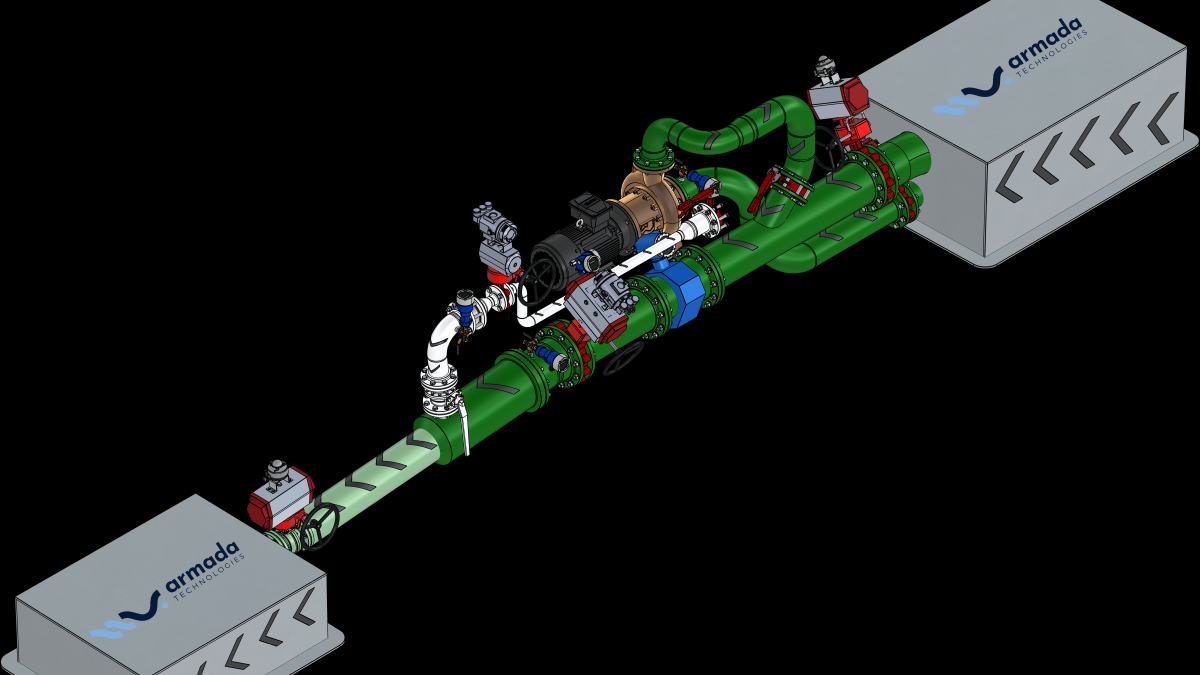
But one UK-based maritime engineering firm, founded in 2020, has gone a step further; its Passive Air Lubrication System (PALS) does not even require compressor systems. Four-year-old start-up Armada Technologies employs the forward motion of the ship to drive a precisely engineered venturi system to create a naturally aspirated water layer under the ship. By removing the need for compressor technology, Armada Technologies contends it will lower capex and operation and maintenance costs for ALS.
With ongoing investment from Ecochlor, Armada Technologies most recently raised US$3.2M during a round of seed funding, including a deal with LNG carrier pure-play CoolCo to partially back equipment installed on its ships.
With a fleet of 11 LNG carriers in operation and two others under construction, CoolCo plans to retrofit one of its ships with the new system when it enters drydock this year.
Once commissioned, CoolCo will conduct sea trials and provide documentation to Armada, following ISO or ITTC guidance, to measure the system’s performance. The system’s performance will be fine-tuned using machine-learning algorithms.
CoolCo chief executive, Richard Tyrrell, says his company “selected Armada for its system’s performance potential and its minimal impact on the crew, due to the absence of rotating equipment.”
A separate deal signed by Armada with Qatar Shipyard Technology Solutions — the former N-KOM — clears the way for PALS technology to be refitted on vessels calling at the Middle East shiprepairer.
This bulker comes with air
Ship designer Kongsberg Maritime says a newly developed ‘super-efficient’ bulker design can obtain fuel cost savings between 40-50% depending on the operational profile, compared to current Kamsarmax bulk carriers.
Kongsberg Maritime vice president of strategy and business development, Oskar Levander, contends the new Kamsarmax design would be “capable of complying with predicted CII regulations throughout its lifetime, using advanced energy-saving technologies.”
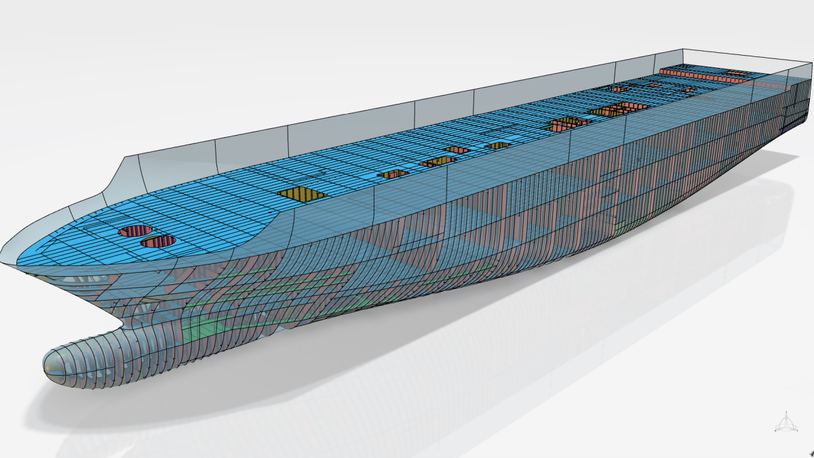
Key energy-saving devices designed into the vessel are three tiltable rotor sails and two suction wing sails, and an innovative hull form that traps bubbles from its air-lubrication system. Kongsberg Maritime says: “By trapping air bubbles beneath the hull, the system significantly reduces frictional resistance. The inclined hull, with a 1-degree slope from bow to stern, and vertically turned bilge keels create ’walls’ to keep bubbles in place, enhancing fuel savings.”
Kongsberg collaborated with Deltamarin on the design, which integrates a hybrid shaft generator with frequency control, optimising electrical power usage and reducing emissions. This system supports the increased electric load from wind-propulsion devices and air-lubrication compressors, enhancing overall efficiency.

Related to this Story


Events

Maritime Regulations Webinar Week
 16 Dec 2025
 GMT - ONLINE
Floating energy: successfully unlocking stranded gas using FLNGs and FSRUs
24 Feb 2026GMT - ONLINE
© 2026 Riviera Maritime Media Ltd.


