


Business Sectors
Business Sectors
Events
Contents
Register to read more articles.
Singapore’s second-generation zero-emissions vessels take shape at Marinteknik Shipbuilders
Singaporean shipyard has orders for two all-electric light cargo transfer vessels, and is looking to the future with hydrogen fuel-cell power


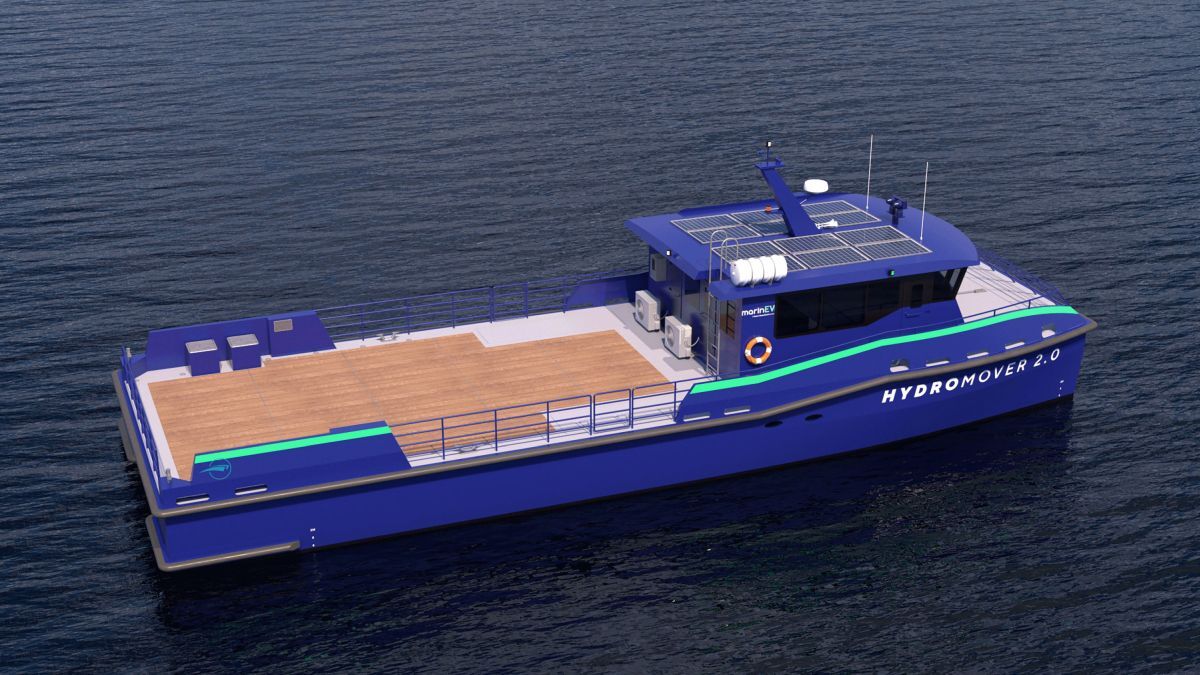
Construction of Hydromover 2.0, the next generation of Singapore’s fully electric, zero-emissions light cargo transfer vessel, has begun at Marinteknik Shipbuilders (S) Pte Ltd.
“Building upon the success of its predecessor, Hydromover 1.0, this vessel offers several notable improvements,” says shipyard general manager Alex Wong, observing this second-generation vessel will have a larger cargo deck area of 65 m2, and increased payload of 25 tonnes.
“We are currently building two out of five electric catamaran cargo transfer vessels, Hydromover 2.0. Additionally, we are in the designing and developing stage of building vessels that will be using alternative energy sources such as hydrogen fuel cells,” says Mr Wong.
Along with the two 24-m electric light cargo transfer vessels, the shipyard is constructing a 43-m aluminium fast ferry with a capacity of 350 passengers.
Marinteknik Shipbuilders is well experienced in aluminium construction, with some four decades building fast ferries. Mr Wong says the yard specialises in constructing passenger ferries up to 65 m, ropax vessels, fast crewboats, and crew transfer vessels. “Beyond newbuilds, we also offer repair, maintenance, modification and alterations for a wide range of vessel types,” he says.
In Singapore, Marinteknik Shipbuilders employs 60 workers, and Mr Wong anticipates growing the workforce to around 100 over the next year. Marinteknik Shipbuilders has another shipyard in Batam, Indonesia with a much larger workforce.
Mr Wong says recent deliveries from the shipyard include a 43-m catamaran passenger ferry, a 40-m monohull passenger ferry, and three 25-m OPL supply vessels. “Additionally, we carried out significant modifications to the wheelhouse and systems of Rawabi 136, a newly constructed vessel built by a different shipyard,” says Mr Wong. Once the modifications and sea trials completed, the 48-m standby service vessel was named in June 2024, and delivered to Rawabi Vallianz Offshore Services.
While being a first mover presents opportunities, it also brings its challenges. Mr Wong says the shipyard is seeing “increasing costs of materials and manpower, as well as the industry’s slow acceptance of electrification in harbour craft, given its early stage of development and the high cost of ownership.”
To reduce production costs and increase efficiency, Marinteknik is looking at some strategic investments. “We are actively exploring automation such as robotic welding to boost productivity, collaborating with our international partners to bring these technologies into our shipyard. This will help reduce time and costs, enabling us to enhance overall productivity and throughput without the need for constant increases in our workforce,” he says.
The project is a linchpin in Singapore’s transformation of its coastal waters and port logistics supply chain from one dominated by 1,600 diesel-powered harbour craft to one served by a fleet of efficient, zero-emissions light cargo and passenger vessels. From 2030, all new harbour craft operating in the Port of Singapore will have to be fully electric, be able to operate on 100% biodiesel (B100) or compatible with net-zero fuels such as hydrogen. MPA wants to reduce greenhouse gas emissions from harbour craft by 15% by 2030, and 50% by 2050.
Critical to accelerating the uptake of all-electric harbour craft is building on initial lessons from homegrown, first-generation prototypes like Hydromover 1.0. Naval architectural firm Incat Crowther was tasked with designing Hydromover 2.0 by marinEV, a unit of Yinson Greentech (YGT). This zero-emissions light cargo transfer vessel will carry stores, food and maintenance items to vessels anchored in the Singapore Strait that are waiting to call at the Port of Singapore.
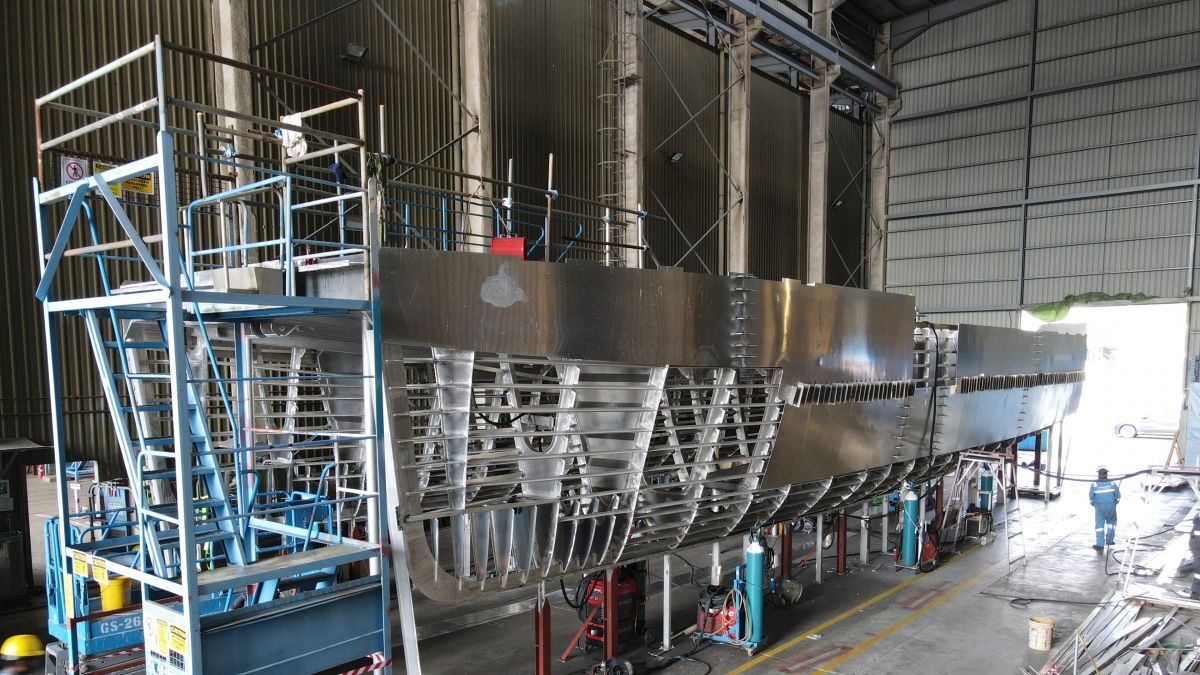
Marinteknik Shipbuilders is working with a globally recognised leader in the design of light, fast, multi-hull vessels for passenger, offshore energy and the workboat sectors.
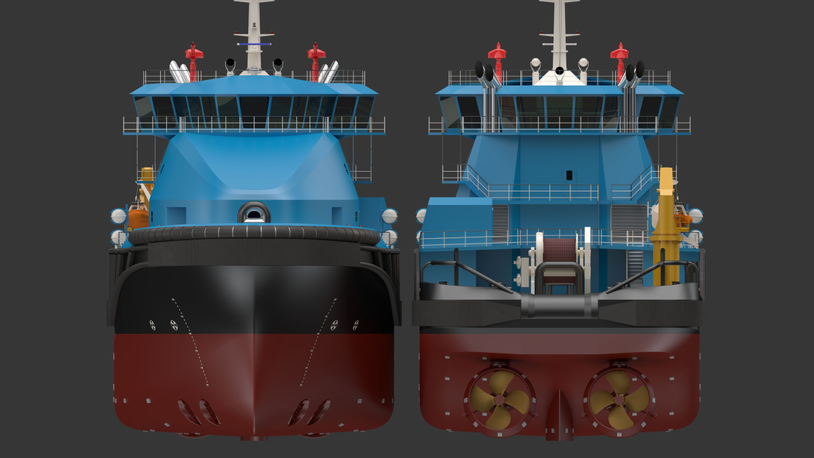
Australia-based Incat Crowther has crafted an efficient, aluminium catamaran hull for Hydromover 2.0. It will have an overall length of 23.4 m, beam of 7.6 m, full load draught of 1.4 m, and depth of 3.2 m, with the capacity to carry 12 passengers and four crew and have a service speed of 10 knots and maximum speed of 14 knots. Propulsion will be supplied by two electric motors and two azimuth thrusters, with power supplied by a lithium-ion battery system. Hydromover 2.0 will be classed by Bureau Veritas with the Battery System notation. Incat Crowther’s project scope also covers design assessment for the battery system functionality and safety features, including fire protection and system certification.
First-generation success
By comparison, the first generation, fully electric Hydromover 1.0 developed by the Goal Zero Consortium has an overall length of 18.5 m, beam of 8.0 m, full load draught of 1.6 m, with the capacity to carry 25 tonnes of cargo and deck area of 60 m2.
This is not to lessen the importance of Hydromover 1.0 – far from it. Hydromover 1.0 is operating commercially and has served as a ‘living lab’ for YGT and Goal Zero’s R&D partners including the Singapore Institute of Technology and the Technology Centre for Offshore and Marine, Singapore, which will use data to facilitate research on the combined effects of variables such as vessel hydrodynamics, propulsion, motor dynamics and battery performance, affording ship designers and operators the chance to enhance operational efficiency.
Designed by SeaTech Solutions International and built by Lita Ocean to class survey and compliance with RINA Rules for battery-powered vessels, Hydromover 1.0 is fitted with swappable lithium-ion battery systems, with a service speed of 8 knots and maximum speed of 12 knots.
Now operating commercially, Hydromover 1.0 completed its first cargo transfer to an Eastern Pacific Shipping (EPS) vessel in June 2024. Under an agreement with marine, Idan Ofer-owned EPS will prioritise the use of electric vessels for port services when its vessels call at the Port of Singapore.
“By adopting electric vessels for port services, we are significantly reducing greenhouse gas emissions, enhancing operational efficiency, and contributing to cleaner and quieter port operations,” says EPS in a social media post.
Connect with industry leaders across the Asian and Middle Eastern maritime sectors through Riviera’s premium events. Located conveniently in Singapore, we provide unparalleled access to the heart of the Asian maritime market.
Related to this Story
Events

Maritime Regulations Webinar Week
 16 Dec 2025
 GMT - ONLINE
Floating energy: successfully unlocking stranded gas using FLNGs and FSRUs
24 Feb 2026GMT - ONLINE
© 2026 Riviera Maritime Media Ltd.


