


Business Sectors
Business Sectors
Events
Contents
Register to read more articles.
SIRE 2.0 forces deep rethink for ship crews
As the shipping industry continues to grapple with SIRE 2.0, crews and managers alike confront shifting inspection dynamics, behavioural scrutiny and digital demands


Nine months after its rollout, the SIRE 2.0 inspection framework continues to test the adaptability of ship operators, crews, and inspectors. Conceived to strengthen safety culture through behavioural assessments, real-time crew evaluation and risk-based targeting, SIRE 2.0 has altered not just the structure of inspections but their substance.
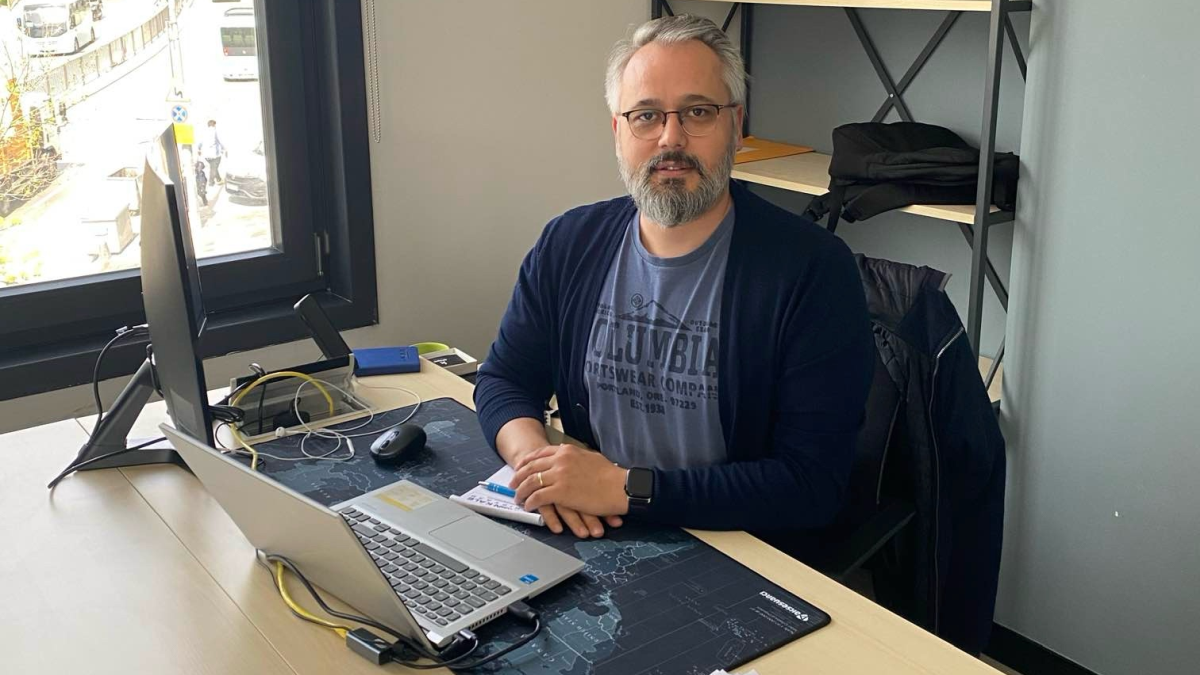
For LNG carriers, oil tankers, and chemical vessels alike, this shift has been particularly marked in the way human factors are brought to the fore. As Sarisa Shipping deck superintendent, Yasin Arici, observes: “The transition to SIRE 2.0 has required significant adaptation from both onboard crew and shore-based teams.” He adds that “the increased emphasis on human factors has brought crew behaviour and competence to the forefront, making inspection preparation more comprehensive.”
The updated regime is not merely an administrative change. Its variable inspection templates, scenario-driven questions, and behaviour-led scoring mark a step change in how ships are screened and assessed. According to Mr Arici, the new questionnaire format demands “deeper analysis, which has added workload and resource demands.” For shipping companies accustomed to inspections built around static checklists, this change has required updated systems, more detailed internal audits, and expanded training schemes.
“Traditional safety and compliance questions are now accompanied by scenario-based queries”
Companies have responded by reinforcing Safety Management System (SMS) manuals, embedding SIRE 2.0 principles into pre-vetting routines, and reworking crew drills to reflect behavioural expectations. Briefings now go beyond procedural content, with a growing emphasis on communication, leadership and situational awareness.
From the deck to the shore office, the additional workload is noticeable. “SIRE 2.0 has significantly increased workloads for both onboard crew and shore-based teams,” says Mr Arici. “Preparation time, documentation, and simulation-based readiness have expanded.” In response, operators are reallocating personnel, hiring or reassigning vetting co-ordinators, and introducing digital learning platforms to manage the heightened compliance demands.

Yet the transition has not been without complications. One of the most pressing issues is crew familiarity with the human factor line of questioning. Traditional safety and compliance questions are now accompanied by scenario-based queries, where crew members must not only know procedures but demonstrate how they would apply them under pressure. Mr Arici notes that “language barriers and inconsistent inspector interpretations also create uncertainty,” an observation echoed by others in the sector.
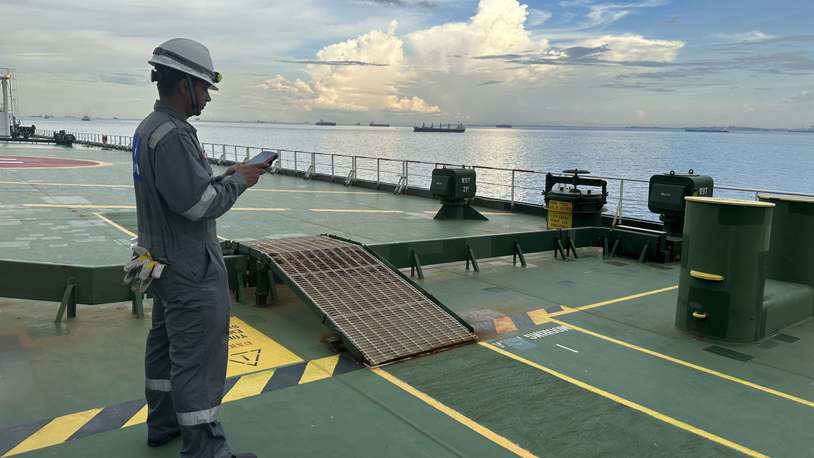
Inspection durations have grown, and onboard digital reporting systems face limitations when connectivity is weak. Tablet-based inspection interfaces — central to the SIRE 2.0 delivery model — depend on both robust infrastructure and well-trained users. While digitalisation has in many ways improved data transparency and reduced paperwork, the shift to real-time electronic entry has increased pressure on crews unfamiliar with the interface.
Sarisa Shipping has addressed this through additional training and systems integration. “Our company has supported the transition with additional training programmes and system integrations,” says Mr Arici. The aim is not just compliance, but practical fluency in the expectations that SIRE 2.0 brings. “Effective use of these tools necessitates enhanced internal training and updated procedures,” he adds.
Nevertheless, unintended consequences have emerged. The sheer volume of preparatory work risks producing administrative fatigue, particularly for ships trading at high frequency. In some cases, the time taken to consolidate and respond to SIRE observations has lengthened, slowing down vetting decisions.
This, in turn, affects how vessels are screened. Whereas under the previous SIRE framework a strong document set and clean physical condition might have sufficed, vetting teams are now weighing cultural and behavioural indicators alongside traditional safety metrics. “Vetting decisions are now more holistic,” says Mr Arici, “incorporating human behaviour assessments and onboard culture.”
Oil majors are implementing SIRE 2.0 at differing speeds and with varying interpretations. While some have fully adopted the human factors model, others are still adjusting internal scoring systems. This has led to inconsistencies in how reports are interpreted across the chartering community, creating an uneven experience for operators.
Still, there is broad acceptance of the system’s intent. “Overall, SIRE 2.0 is a step in the right direction toward strengthening the safety culture,” Mr Arici says. The emphasis on real-time performance, as opposed to purely documented readiness, is welcomed by many operators — particularly those who had already invested in leadership and communication training before the new system launched.
Looking ahead, there is appetite for refinement. “There remains a need for simplification and further standardisation in certain aspects of the implementation,” Mr Arici suggests. This includes greater alignment among inspectors, clearer guidance on applying human factor criteria, and improved inspector calibration across vetting regimes.
Industry bodies such as OCIMF are facilitating this dialogue through forums and structured feedback sessions. Regular updates to the Vessel Inspection Questionnaire (VIQ), guidance note revisions, and the development of inspector training programmes are expected to smooth over some of the early rough edges.
In the longer term, developments such as AI-assisted analytics may help ship operators benchmark performance and inspection outcomes across fleets. For now, the sector remains in a period of transition: grappling with a demanding new regime that challenges long-standing practices, yet offers the potential for a more safety-conscious, behaviourally aware inspection culture.
The experience of ship operators like Sarisa Shipping makes clear that SIRE 2.0 is more than a procedural upgrade. It is a structural shift in how competence, safety and performance are understood and assessed. And for the crews on the receiving end, it requires not only technical know-how — but the ability to demonstrate it, consistently, under scrutiny.
Related to this Story
Events

Maritime Regulations Webinar Week
 16 Dec 2025
 GMT - ONLINE
Floating energy: successfully unlocking stranded gas using FLNGs and FSRUs
24 Feb 2026GMT - ONLINE
© 2026 Riviera Maritime Media Ltd.


