


Business Sectors
Events

Floating energy: successfully unlocking stranded gas using FLNGs and FSRUs
 24 Feb 2026
 GMT - ONLINE
Contents
Smart containers help reduce onboard fire risks
Several ship fires in 2023 and 2024 could have been detected and extinguished quickly before damaging cargo, vessels and putting seafarers’ lives at risk


Container ship fires continue to take a heavy toll on vessels, cargo and crew, with several blazes in 2024. Now, technology has been developed to detect container fires earlier and help reduce total losses and seafarer fatalities.
Emerging internet-of-things (IoT) technologies can play a vital role in detecting and preventing incidents if there is an industry drive to adopt it. The maritime industry has a responsibility to act to prevent further tragedies, says Orbcomm chief commercial officer, Christian Allred.
“Attention must be focused on proactive measures to help mitigate the peril,” he explains to Riviera. “And this is where recent advances in sensors that can be integrated into telematics devices and combined with the IoT systems offer a promising solution.”
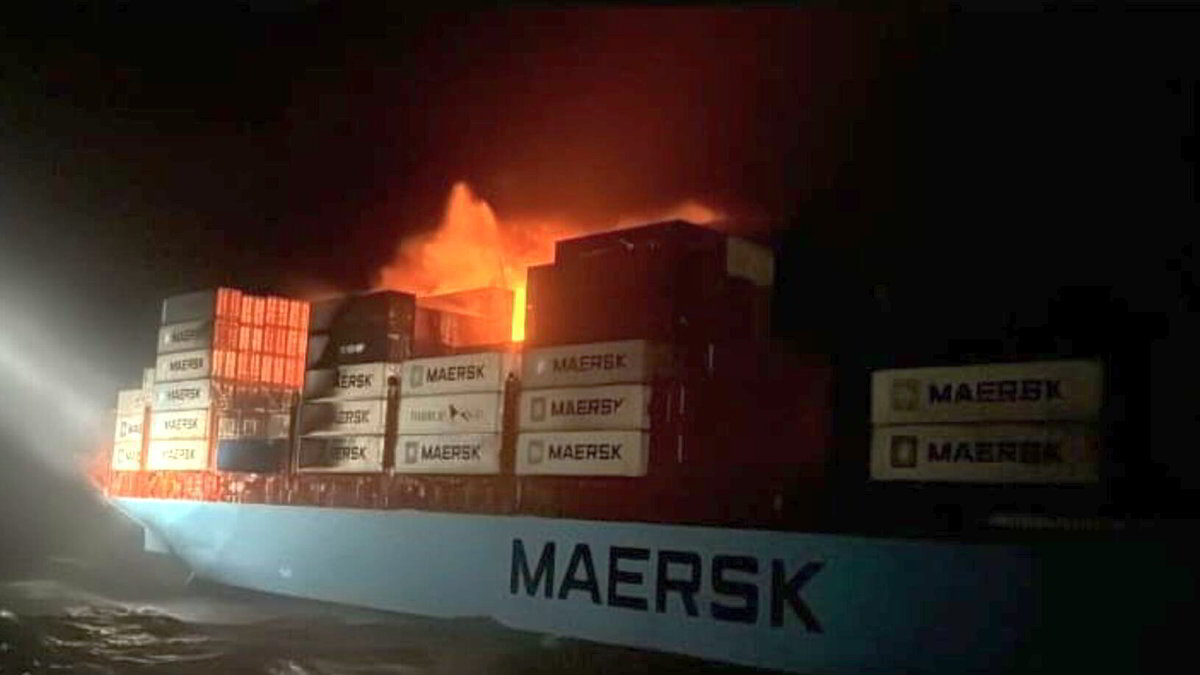
These could have prevented some of the 200 fires reported on vessels of over 100 gt in 2023 and 211 incidents in 2022, plus blazes on container and roro ships in 2024, which include one that broke out on Maersk Frankfurt off Goa, India, in July 2024.
“Considering the challenges associated with evacuating large vessels in an emergency, enhanced fire prevention and response systems are imperative,” says Mr Allred.
“Beyond the immediate threat to life, the financial implications of container ship fires are considerable. They can result in catastrophic damage to vessels worth hundreds of millions of dollars, destruction of valuable cargo, and significant disruption to global shipping routes, severely affecting international supply chains.”
One of the main challenges is early detection. If a fire breaks out deep within a container stack, it can remain undetected for hours.
With some ships carrying more than 20,000 containers, the chances of a fire starting from one of them rises significantly. “But with only 20 to 30 crew members on board, spotting and tackling a fire at sea becomes an incredibly tough challenge,” says Mr Allred.
“By the point the fire is detected, the situation may already be beyond the crew’s ability to manage safely. Depending on the nature of the cargo, these fires can be extremely difficult to extinguish, sometimes taking weeks, with a noteworthy increased risk for those involved in the firefighting efforts.”
Furthermore, the environmental damage derived from burning cargo and fuel oil can be severe and long-lasting. “Financial losses are also staggering. Fire is one of the biggest causes of general average claims on container vessels. The ripple effects on global supply chains can be felt for months, disrupting businesses and economies worldwide.”
Superior risk detection
While the maritime industry continues working on several fronts to prevent container fires, some actions can be taken immediately.
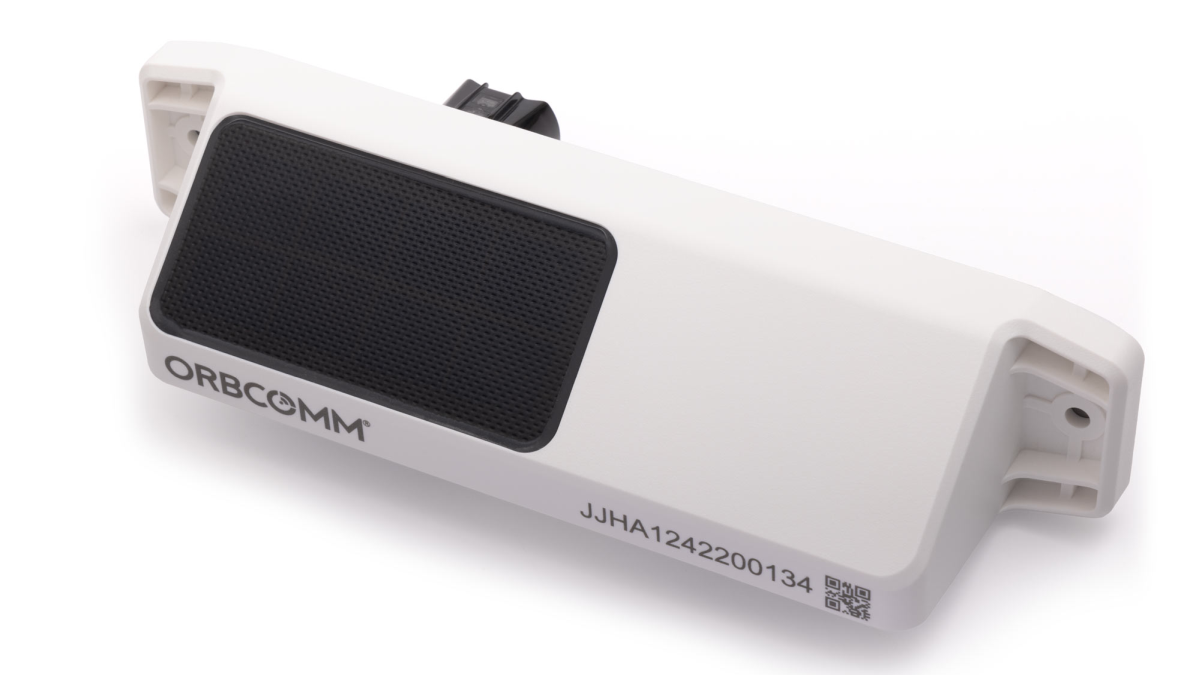
“The integration of advanced telematics with infrared sensors and IoT solutions, together with innovative firefighting tools, can be a game changer,” says Mr Allred.
Unlike traditional smoke or heat detectors, infrared (IR) sensors can detect ambient temperature changes before a fire becomes apparent.
“This is incredibly valuable considering the impact it can have on detecting possible fires inside containers,” Mr Allred adds. “These sensors emit and measure IR radiation, enabling them to calculate the temperature of objects within their field of view without physical contact. IR sensors have superior accuracy compared with traditional detectors, being less susceptible to false alarms triggered by environmental factors such as dust or humidity.”
If a fire occurs, alerts can be forwarded to crew on board and to ship managers ashore. “This is a much more sophisticated system than crews being relied upon to spot smoke billowing out of container stacks — a point at which a fire will likely have grown and spread to multiple containers,” Mr Allred continues.
“At that stage, it is much harder to fight or control, and it is incredibly dangerous for the crew.”
Technology can pinpoint and detect fires and alert crew in real-time over an onboard cellular or local-area network that covers the entire ship, including container holds.
"Recent advancements have made these systems more affordable and easier to implement than ever before"
Alerts can be delivered from the sensors in the container to a local server. Data can be taken from container monitoring devices deployed by different vendors.
“Utilising the ship’s satellite internet uplink connection, the data can then be sent to multiple destinations such as shipboard applications and shoreside servers,” says Mr Allred.
“This ensures this vital information reaches the crew and is sent to onshore personnel as well.”
Data can also alert technologies for autonomously extinguishing container fires. While IR sensors provide early detection of temperature anomalies, potentially identifying a fire in its incipient stages, these firefighting solutions offer a powerful means of intervention once a fire is confirmed.
“While the benefits of integrating telematic devices with IR sensors and onboard cellular networks and crew alert systems are clear, some shipping companies may hesitate due to concerns about initial procurement and installation costs,” says Mr Allred.
“However, recent advancements have made these systems more affordable and easier to implement than ever before. Modern telematics devices are designed for low maintenance, featuring solar-powered operation with long-life backup batteries, ensuring a high return on investment.”
Shipping companies, insurers and cargo owners all stand to benefit from the enhanced safety and reduced risk these technologies provide. The potential for saving lives, protecting assets, and maintaining the integrity of global supply chains cannot be overstated.
“The time has come for the maritime industry to fully embrace these technological advancements,” says Mr Allred. “While regulations and industry standards continue to evolve, forward-thinking companies have the opportunity to lead the way in adopting these life-saving innovations. By investing in the latest IoT-enabled telematics systems, we can create a safer, more resilient shipping industry.”
Sign up for Riviera’s series of technical and operational webinars and conferences in 2025, including those covering ship communications, container shipping and cyber security:
- Register to attend by visiting our events page.
- Watch recordings from all of our webinars in the webinar library.
Related to this Story


Events

Maritime Regulations Webinar Week
16 Dec 2025GMT - ONLINEFloating energy: successfully unlocking stranded gas using FLNGs and FSRUs
24 Feb 2026GMT - ONLINE
© 2024 Riviera Maritime Media Ltd.


