


Business Sectors
Business Sectors
Events
Contents
Register to read more articles.
Technologies advance tug handling, sailing and positioning
Integrated bridge system and developments in dynamic positionin are being eclipsed by advances in AI-driven autonomous navigation


Tugs are being built with integrated bridge systems (IBS) and dynamic positioning (DP) for greater control, better station-keeping for various operations in ports and coastal environments and for offshore and salvage activities.
Automation and control technology is becoming more advanced with enhanced human-machine interfaces to reduce tug masters’ workloads and improve situational awareness.
In June 2025, Sanmar Shipyards delivered 24-m tugboat Boss to Buksér og Berging to handle ships in the port of Stavanger on the west coast of Norway.
At the time, Sanmar said it was the first tug built with an IBS supplied and integrated by Marine Technologies, a subsidiary of US vessel owner Edison Chouest.
It was built as a Bogacay-series tug to Robert Allan Ltd’s RAmparts 2400SX-MKII design with a beam of 12 m, a least moulded depth of 4.5 m, a navigational draught of 5.5 m, a bollard pull of 75 tonnes, a free-running speed of 12 knots and accommodation for six crew.
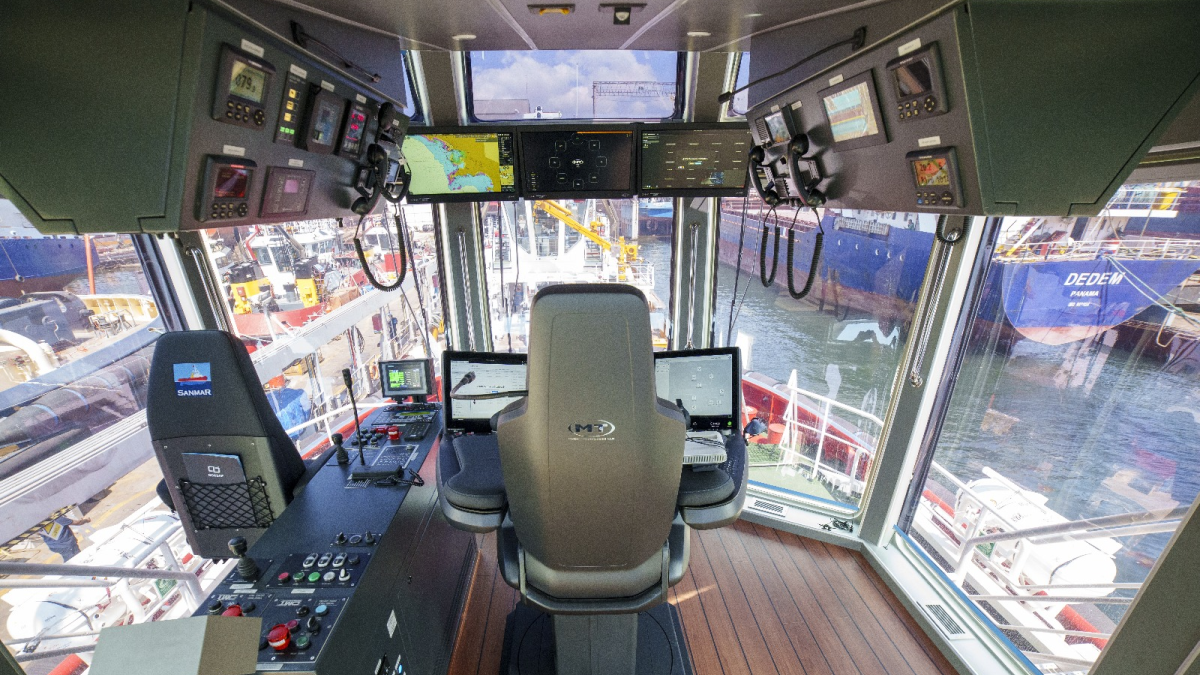
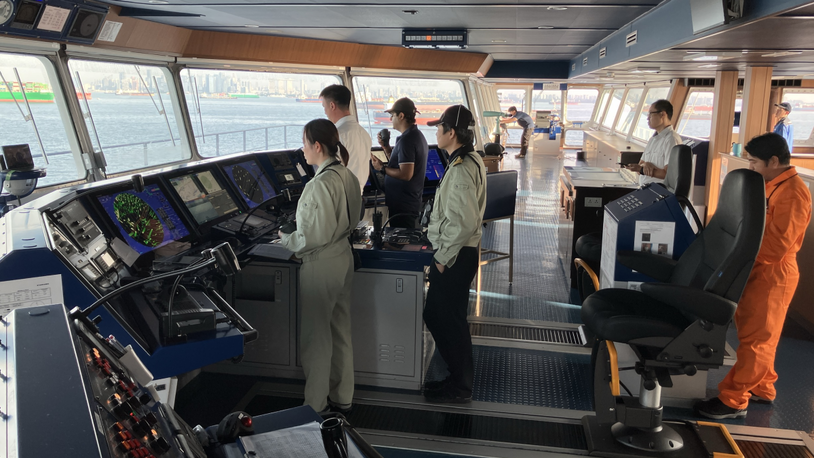
The IBS has an operator console and workstations with several screens for displaying ECDIS, radar and engineering data, plus speedlog, radios and thruster controls.
“This cutting-edge architecture consolidates all navigation, communications and control systems into a unified, streamlined interface, providing captains and chief engineers with enhanced situational awareness and unparalleled operational command,” said Sanmar when describing the IBS.
“The system is engineered to set new standards for safety, efficiency and sustainability in modern tug operations. Boss is fitted with additional bridge features designed to enhance operational performance, including a 180-degree rotating operator chair, optimising visibility and control during both ahead and astern manoeuvres.”
Boss has two Caterpillar-manufactured Cat 3512E main engines, which comply with IMO Tier III emissions standards, and two azimuth Z-drives on the stern. It is also equipped with towing and tugger winches, tow pins, a stern roller and a deck crane for efficient and secure towing operations across a wide range of demanding tasks.

Marine Technologies vice president for sales and marketing, Frederik Thanem, said as IBS and automation advances further, vessel propulsion and onboard machinery would be controlled through systems that are becoming more autonomous and require less interaction by seafarers.
“We are going from manual processes to data-driven decisions with more advanced IBS, DP and thruster controls,” he said. “The pace is accelerating, and technology is becoming a strategic enabler of the growing operational complexity.”
Mr Thanem said that while there are rising demands on smaller crews operating vessels, digital technologies such as internet of things, data analytics, connectivity, and artificial intelligence (AI) are enabling them to deliver more without compromising safety.
“With seamless integration, automation systems are supporting people and reducing cognitive loads on operators through decision support,” he said, adding that these technologies are providing operational assurance and predictive execution to vessel owners.
Real-time data supports DP operator decisions, verifies system readiness, continuous condition and performance monitoring, and operational workflows. It enables owners to identify trends in fleets of workboats and tugs and raise fleet uptime.
“As long as digital foundations are in place, new capabilities can be put into place faster to support operators using operational data and analytics,” said Mr Thanem.
DP transit integration
ABB Marine and Ports has developed its vessel command system to integrate DP and transit operations in one module, with modes and functionality for manual and autonomous control, and emergency response.
It works with bridge electronics such as radar and chart systems, and has intuitive user interfaces, including touchscreens and joystick controls for azimuth thrusters and propellers, enabling operators to switch between modes.
ABB Marine and Ports global product manager Alina Colling said its Marine Pilot Control has been redesigned and developed using feedback from operators to become easier to use and interact with.
“We have taken a systematic approach to ensure we enhance safety,” said Ms Colling.
Development focused on an operator-centric design to enhance safety and reduce human error.
“We spent a lot of time creating an operator-centric design to ensure that the system ends up being an extension of the operator, and not the operator having to learn and understand the system,” she said.
“The system is engineered to set new standards for safety, efficiency and sustainability in modern tug operations”
ABB’s system can command the vessel at all speeds and eliminates the need for switching between different control modes. “Marine Pilot Control unifies all vessel controls. It is not just for DP operations, but for all stages of vessel operations,” said Ms Colling.
It can be used in port, during transits and then coastal and offshore operations, with operators commanding a vessel’s propulsion and steering using the joystick and switching to DP when at the mission destination.
Marine Pilot Control incorporates hydrodynamic forces and hull-thruster interactions to predict vessel motion and improve operational efficiency. “It can predict motions ahead of time, which ensures a more efficient way of operation in terms of both operational speed in transit and DP operations at low speeds,” said Ms Colling.
“We have gone beyond DP. There is no need to switch between different control systems. Our command transfer is a lot clearer. It is a bumpless command transfer between the joystick and the DP mode.”
ABB developed functionality to support various operational needs, and it can conduct automated emergency stops when there are system faults.
“We have enabled more predictive, efficient and safer operations,” said Ms Colling. “We have opened the door to new levels of performance with a control system that can be used for the entire phase of all operations.”
AI-assisted navigation
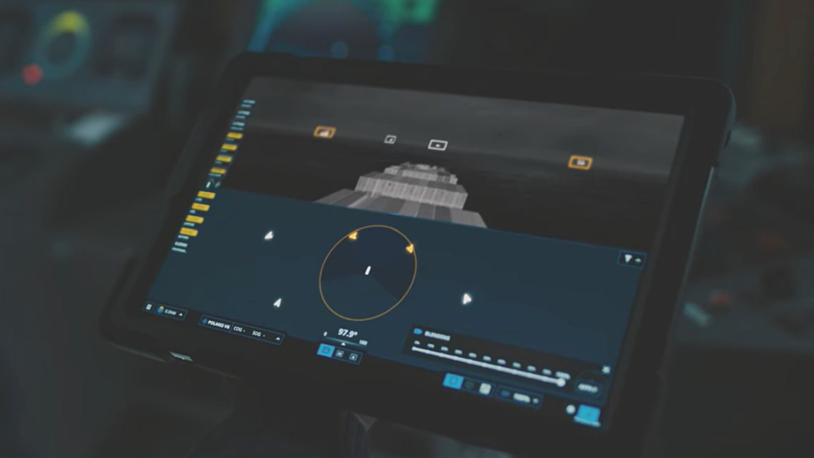
New applications will enable AI to assist in vessel navigation during transits and support tug masters towing ships. Autonomous navigation systems use data from sensors and bridge electronics to provide an augmented reality display and hazard alert to bridge teams.
OrcaUboat has developed an advanced pilot assistance system (APAS) that combines AI-driven automation with real-time decision-making to support semi-autonomous sailing for workboats, tugs and unmanned surface vessels.
According to OrcaUboat global marketing manager Janet Gao, it uses sensors, algorithms and machine learning to provide precise environmental perception and autonomous navigation.
“It is the only shipping autonomous driving system in China with four categories of certification from the China Classification Society,” she said. These were secured in January 2026.
Orca APAS has been trialled on over 1,000 unmanned vessels, accumulating more than 750,000 km of autonomous driving mileage, “which guarantees consistent performance in diverse environments,” said Ms Gao.
“The system’s high versatility allows it to be used on different types of vessels, regardless of propulsion system, making it adaptable to various maritime operations.”
Orca APAS can optimise routes and reduce fuel consumption and emissions while improving navigational safety. “Automation streamlines operations, reduces labour costs, and optimises fuel usage, benefiting commercial operators,” said Ms Gao.
Riviera’s 28th International Tug & Salvage Convention, Exhibition & Awards will be held in Gothenburg, Sweden, in association with Caterpillar, 19-21 May 2026. Use this link for more details of this industry event and the associated social and networking opportunities.
Related to this Story

Events

Maritime Regulations Webinar Week
 16 Dec 2025
 GMT - ONLINE
Floating energy: successfully unlocking stranded gas using FLNGs and FSRUs
24 Feb 2026GMT - ONLINE
© 2026 Riviera Maritime Media Ltd.


