


Business Sectors
Business Sectors
Events
Contents
Register to read more articles.
Tidewater chief: seek partnerships, not newbuildings
Offshore vessel owners must be cautious when deciding whether to order newbuilds to prevent oversupplying the market


Costs for ordering newbuild offshore support vessels (OSVs) are rising, as shipyard capacity tightens and prices increase.
Demand for vessels remains buoyant, and global markets are strong and balanced, but there are limited incentives for owners to invest in their ageing fleets.
While new OSVs are needed to replenish fleets, costs are climbing, and the time required to recoup costs is lengthening, making these investments less attractive.
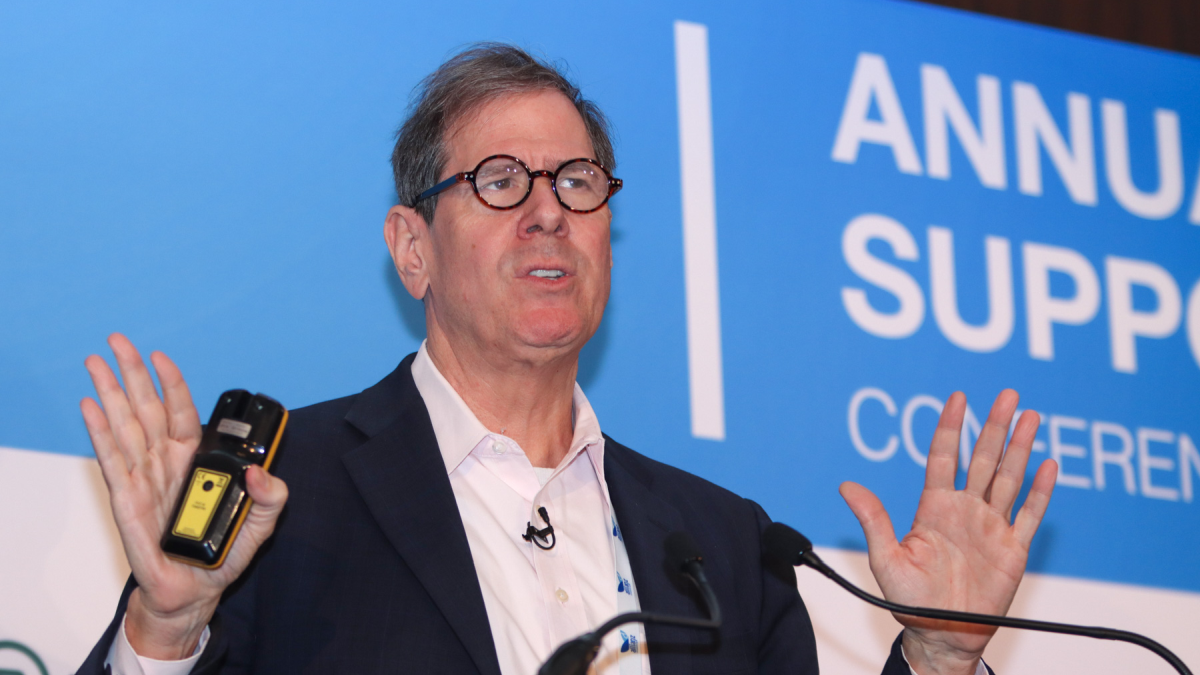
Tidewater president and chief executive Quintin Kneen suggests OSV owners remain disciplined in their investment strategies and seek partnerships to increase their market power to support rising charter rates.
“While demand has returned, and owners are making money, it is not enough to invest in more newbuild boats,” he said during his keynote address at Riviera’s Annual Offshore Support Journal Conference in London, UK, on 4 February 2026.
“While I am excited about the industry, we need to keep our heads. Newbuilding is appropriate at times, but it is getting a little high,” he explained.
"We do not want excessive newbuilding. We need to protect profitability, avoid financial distress and make it viable for the next generation.”
Mr Kneen suggested OSV owners could manoeuvre around the commercial and technical challenges they face from ageing fleets, charterer pressure on rates, growing pressure to lower emissions, while maintaining high levels of safety, training, crew competence and rising maintenance costs.
“Charterers do not have long-term views, and too many charterers go for the last nickel,” said Mr Kneen. “When times are good for us, they want to partner, but they do not want to start discussions when it is not profitable.”
When owners requested financial support from energy companies, through sustainable rates and term charters, in the long market downturn between 2015 and 2022, these requests were usually turned down.
Profitability is important to OSV owners to ensure their assets and people are able to support energy companies effectively in their offshore operations worldwide.
"We believe what is best is having a well-trained crew, high safety and well-maintained vessels, but we need cash flow to do this,” said Mr Kneen. “We would need to get the right return on capital to fund training, retaining the best people, investing in safety programmes and focusing on vessel maintenance. OSVs are 25-year assets, so ordering a newbuild is making a 25-year bet.”
Mr Kneen said strategies to maintain value, cash flow, profitability and people could include partnering through alliances, mergers or fleet acquisitions to raise OSV owners’ market power.
“We need an industry that is sustainable for the next generation of mariners"
Owners should consider “teaming up by mergers and acquisitions, sharing fleets of vessels, relocating vessels to different regions, and working together in the next few years,” said Mr Kneen.
“We need an industry that is sustainable for the next generation of mariners and offshore supply people,” he continued. “We need to keep investing in maintenance, people, training and safety, and to manage supply selectively, to remain disciplined and team up through mergers.”
Tidewater has participated in industry mergers and acquisitions to strengthen its position in key global markets.
Since 2018, it has swallowed up GulfMark, Swire Pacific and several vessels from the Solstad Offshore fleet.
Mr Kneen had hoped for more deals and suggested that others were in the works, but indicated Tidewater has little appetite for expanding its fleets through newbuilding orders.
Riviera’s Offshore Support Journal Conference, Asia will be held in Singapore on 8-9 September 2026. Use this link for more information and to register for the event.


Related to this Story


Events

Maritime Regulations Webinar Week
 16 Dec 2025
 GMT - ONLINE
Floating energy: successfully unlocking stranded gas using FLNGs and FSRUs
24 Feb 2026GMT - ONLINE
© 2026 Riviera Maritime Media Ltd.


