


Business Sectors
Business Sectors
Events
Contents

Register to read more articles.
'Uncharted waters': cash-awash owners fuel newbuilding supercycle
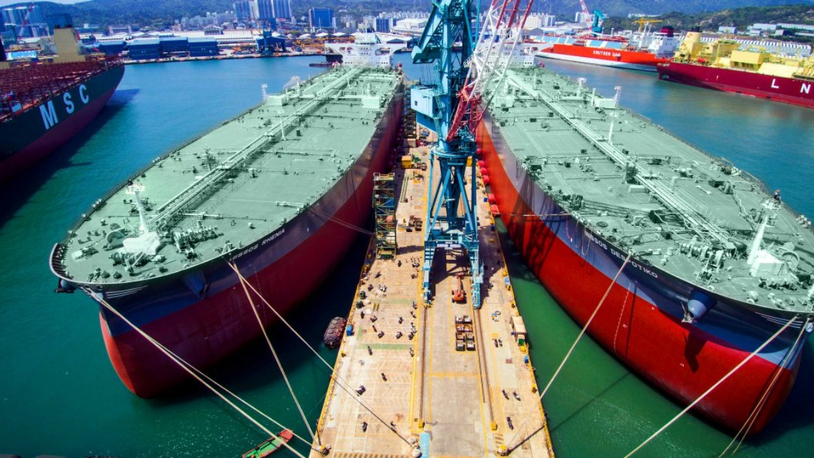
Cash-rich shipowners have returned emphatically to shipyards this year, confirming what increasingly looks like a newbuilding supercycle with considerable staying power


While tankers have been the hottest asset class this year, orders continue to pour in for container ships, bulk carriers, LNG and LPG carriers, with virtually every major shipping segment seeing substantial newbuilding activity.
“There are many factors that can drive a specific decision to order a newbuilding, including fleet renewal, charter-backed employment, or belief in the prospects for a particular ship type and size. On top of this, advances in technology, regulatory pressures, and future-proofing can be layered,” Maritime Strategies International (MSI) director Stuart Nicoll told Riviera.
“All of these have definitely played into ordering decisions in recent years, but trumping them all and, almost certainly, the reason for the sheer volume of ordering has been surplus profits,” he said.
As Mr Nicoll explained, booming freight markets have historically correlated with surges in shipbuilding. With many owners “awash with cash in recent years”, the pattern has repeated itself.
“Not all sectors have boomed at the same time, but disruptions from pandemics, wars, and even low water levels at the Panama Canal have conspired to create massive inefficiencies in fleet deployment, driving up vessel demand and earnings,” Mr Nicoll said, adding that “the resulting cash surplus underpins the scale of investment we have seen.”
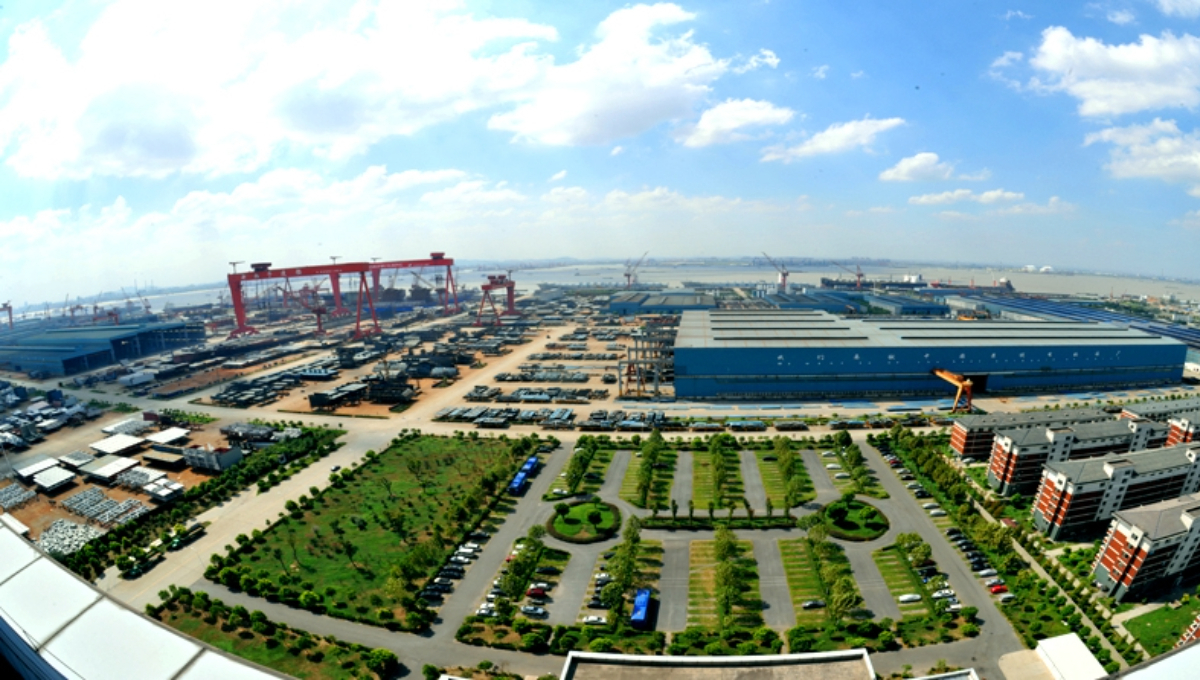
At the same time, the Chinese shipbuilding industry, which remains the dominant force in the global newbuilding market and is receiving the majority of new contracts, has demonstrated an ability to rapidly expand capacity. This has allowed the global orderbook to reach levels that seemed improbable only five years ago, Mr Nicoll noted.
Environmental agenda delay fuels ordering
Shipbroking and market sources speaking to Riviera also placed considerable emphasis on environmental regulation and the need for fleet renewal.
Analysts pointed to record-high fleet ages across the mainstream tanker and bulk carrier markets.
Xclusiv Shipbrokers data as of late July shows that the average age of the bulk carrier fleet is 13 years, while the tanker fleet is just over 14 years old.
This has triggered a new wave of ordering as owners seek to renew ageing fleets.
But the key factor, market sources highlighted, has been the delay in decisions over the future environmental regulatory landscape.
The International Maritime Organization (IMO) has failed to make significant progress on a global emissions framework, while the broader geopolitical turmoil has pushed environmental pressures further down owners’ agendas.
This has translated into a massive boost to the orderbook, with owners largely opting for conventionally fuelled ships as the alternative-fuel debate appears increasingly distant.
“For so long buyers held back due to the uncertainty related to the new fuels,” shipbrokers said.
A lengthy supercycle
This is also proving to be a lengthy supercycle. Market participants noted that the current cycle began five to six years ago with mass ordering in the container ship and LNG carrier segments.
“This is not something that we have seen before in the market. We are entering uncharted waters,” analysts said.
But are these ordering levels sustainable?
Mr Nicoll said that “it would appear that the orderbook for container ships and LNG carriers is sufficient for fleet renewal and projected demand growth, while for tankers and bulkers there is some headroom for further orders on the same basis.”
Overall, MSI’s view is that recent ordering volumes are unlikely to be sustained.
However, with few signs of the geopolitical environment stabilising and further discussions on the IMO’s decarbonisation rules ahead, another boost to ordering could emerge, Mr Nicoll concluded.
Spectacular numbers
This year’s ordering figures offer a glimpse of the staggering levels discussed above.
Starting with crude oil tankers, Affinity Shipping data shows that orders totalled 246 vessels in the first half of 2026, the highest first-half total on record, pushing the orderbook-to-fleet ratio to 28%.
VLCCs have undoubtedly stolen the show, with a record 162 contracts in the corresponding period. The previous high was recorded in the first half of 1972.
While VLCCs under construction represent around 33% of the active fleet, 21% of the existing fleet is more than 20 years old, with the average vessel age standing at 13.5 years.
While at a slower pace, product tankers have also registered strong growth, with 135 vessels contracted in the first half of 2026, compared with 50 in the same period last year. The orderbook-to-fleet ratio stands at just below 20%. Following the orders amassed in previous years, product tanker deliveries are on track to reach a record high in 2026.
Turning to bulk carriers, a total of 202 vessels totalling 20.5M dwt were contracted between January and June 2026, compared with 192 vessels of 15.6M dwt in the same period of 2025, according to Affinity Shipping. Higher deliveries and weaker contracting in previous years have kept the orderbook-to-fleet ratio at 13.4%.
The Supramax/Ultramax segment dominates the orderbook, accounting for 35%, followed by Kamsarmax and Capesize vessels, with shares of 25% and 20% respectively.
The container ship segment is the only major sector to record a decline in ordering this year, according to Affinity Shipping data. Orders totalled 220 vessels, compared with 273 in the first half of 2025. Tonnage under construction now corresponds to 37% of the trading fleet.
The orderbook appears elevated partly because of weaker deliveries this year, analysts said. Intermediate and feedermax vessels have attracted the most significant interest over the past quarter.
In the LNG carrier market, Affinity counts 69 vessels contracted this year, compared with 51 during the whole of 2025. The orderbook now represents just below 38% of the active fleet.
Vessels in the 150,000-200,000 m³ range account for around 76% of the orderbook.
Interest has remained strong in the LPG carrier market, with 71 vessels contracted in the first half of 2026, again surpassing the 50 vessels ordered during the whole of 2025. The orderbook-to-fleet ratio rose to more than 31% at the end of June.
Very large gas carriers (VLGCs) continue to dominate the LPG orderbook, accounting for 46%, followed by medium gas carriers (MGCs) with a 20% share.




Related to this Story

Events

Maritime Regulations Webinar Week
 16 Dec 2025
 GMT - ONLINE

Floating energy: successfully unlocking stranded gas using FLNGs and FSRUs
24 Feb 2026GMT - ONLINE
© 2026 Riviera Maritime Media Ltd.


