


Business Sectors
Events

Floating energy: successfully unlocking stranded gas using FLNGs and FSRUs
 24 Feb 2026
 GMT - ONLINE
Contents
Register to read more articles.
Uncrewed vessels, digitalisation improve vessel efficiency
Future OSV fleets will include uncrewed ships that are remotely commanded and monitored from shore bases


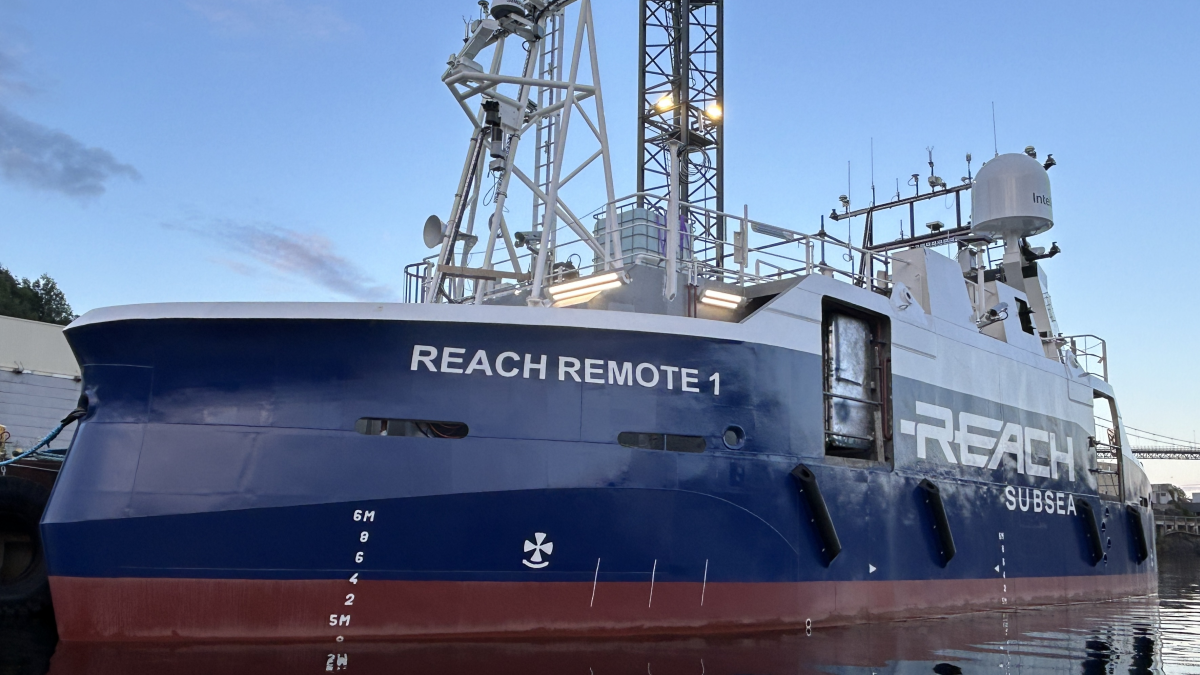
Reach Subsea has two remotely controlled vessels, with two more under construction as it expands its fleet to provide subsea inspection and light intervention work.
If its concept of uncrewed remotely operated vehicle (ROV) deployment vessels takes off, the company expects to add more vessels, said Reach Subsea managing director for the UK, Alastair McKie.
Its first Reach Remote vessel is operating in Norway, providing ROV services to Equinor, and its second is supporting Woodside Energy’s deepwater subsea projects offshore Australia.
"Reach Remote 2 is in Australia where it has just been operating 26 days at sea, of which it deployed an ROV for 22 days in 5-m wave heights," Mr McKie said.
He added that the next two uncrewed vessels are likely to be deployed in northern Europe when they are completed in the next two or three years.
"We have ambition plans to grow our fleet. We are developing our fleet and technology at pace with Reach, with three and four under construction, and we are in design talks for five and six," said Mr McKie.
Remote monitoring and digitalisation are providing vessel owners and propulsion manufacturers with vast levels of data, providing insight into the condition and performance of thrusters and propellers.
Steerprop has introduced condition monitoring for its azimuth thrusters installed on OSVs, icebreakers, tugs and workboats.
Information from sensors provides insights for managing maintenance, drydocking schedules and performance during dynamic positioning (DP) and long vessel transits.
Steerprop offshore segment director Anu Peippo said digital packages enable wear on the shaft seal to be measured, along with the condition and performance of propellers and fine-tuning of thrusters.
She said owners could "increase drydocking intervals, customise nozzles, monitor seals, review thruster dynamics and improve DP station-keeping" using digitalisation.
"For DP, vessels need quick, responsive thrusters, designed for specific vessel operations," said Ms Peippo.
Data is also important when planning and designing subsea support vessels, whether they are built from new or converted for subsea operations.
Ulstein International chief designer Øyvind Gjerde Kamsvåg said subsea support vessels are built for specific requirements, but have the flexibility to operate in several markets.
When repurposing or retrofitting vessels, automation and control systems need to "interface with existing vessel systems", he said. Conversion projects need an "integrated system approach with the hull, propulsion, automation, operations and energy generation all considered".
Data enables naval architects to optimise vessel designs, improving hull and propulsion efficiency and enabling "energy buffering and peak shaving".
"Around 10% to 30% energy reductions are possible without needing to change fuels," said Mr Kamsvåg.
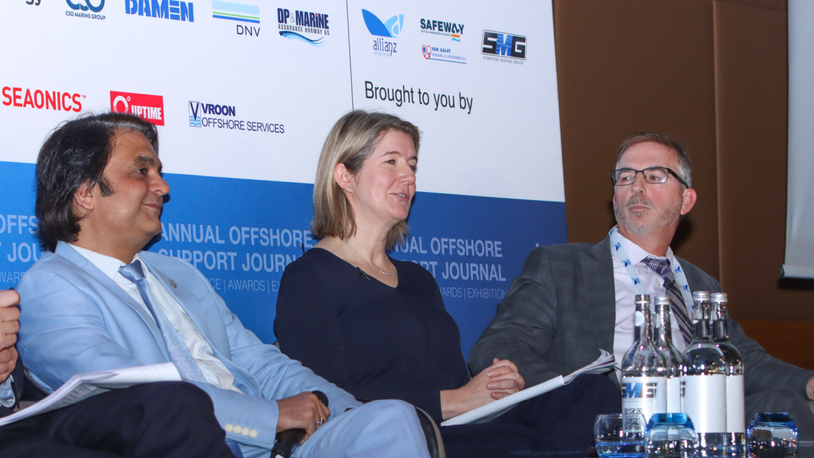
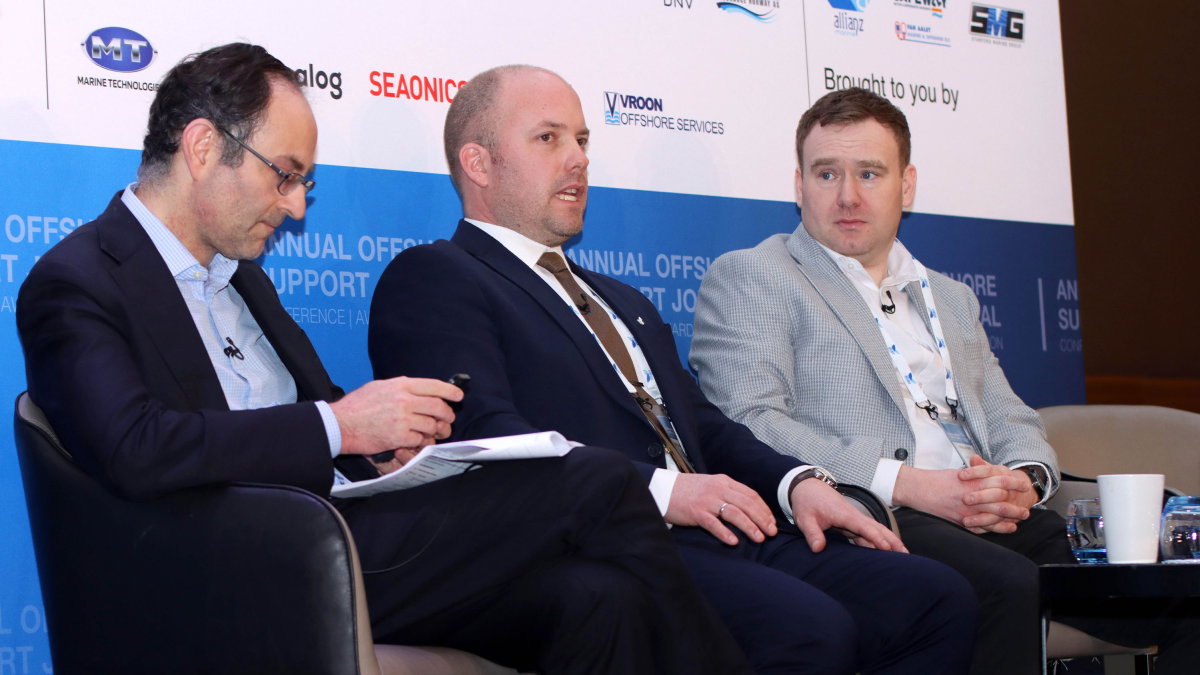
Alastair McKie, Anu Peippo and Øyvind Gjerde Kamsvåg were speaking at Riviera’s Offshore Support Journal Subsea Conference 2026 in London, UK, 2 February 2026.

Related to this Story
Events

Maritime Regulations Webinar Week
16 Dec 2025GMT - ONLINEFloating energy: successfully unlocking stranded gas using FLNGs and FSRUs
24 Feb 2026GMT - ONLINE
© 2024 Riviera Maritime Media Ltd.


