


Business Sectors
Events

Floating energy: successfully unlocking stranded gas using FLNGs and FSRUs
 24 Feb 2026
 GMT - ONLINE
Contents
Efficiency and risk, more than cost, top concerns in charterers' vessel decisions
Charterers say they are prepared to pay more for the ’right’ offshore support vessels as availability tightens across offshore markets


With regulatory uncertainty, an industry fuel transition and long-term investments continuing to bear down on charterers’ vessel strategies, these market pressures and a related adversity to risk are rising to the fore in contracting vessels, ahead of cost.
Major offshore charterers Equinor and Harbour Energy underlined that day rates are not the only, or even the first, consideration when selecting a vessel.
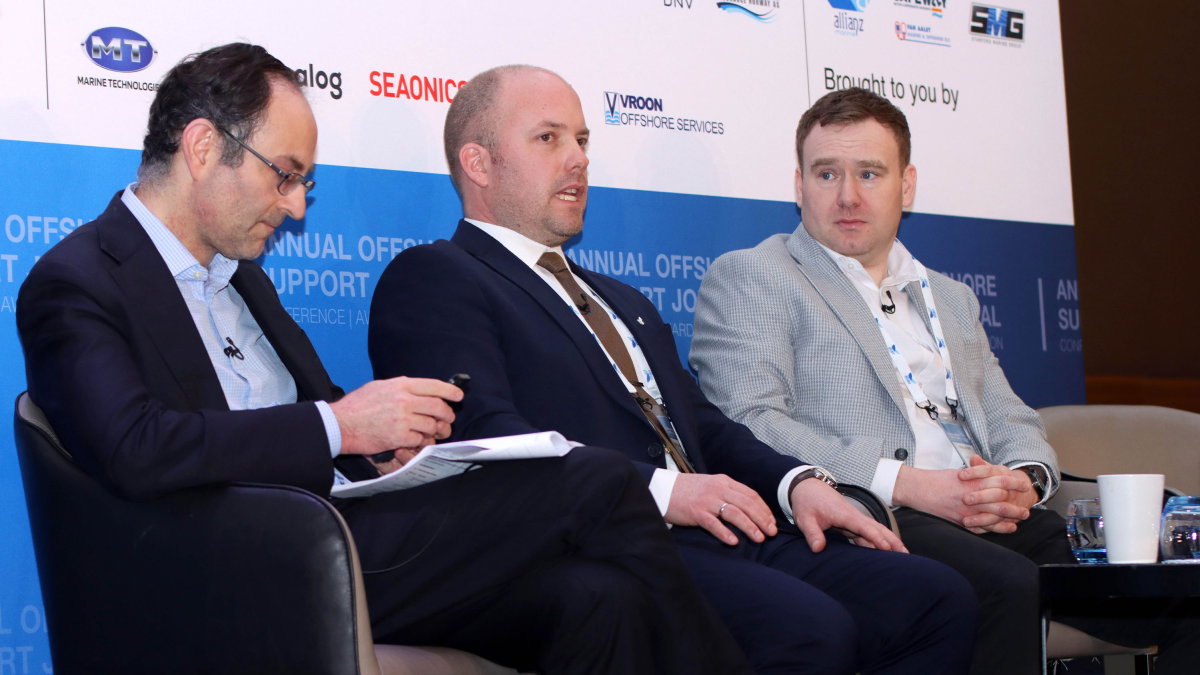
“When we talk with shipowners about value, it’s very often perceived to be: ’day rates; give us more money’, as was said earlier today. We are thinking beyond that. We need to have the vessels that are capable of supporting efficient logistics. It’s not only about day rates," Equinor category manager marine Henrik Danielsen said, at Riviera’s Annual Offshore Support Journal Conference 2026 in London.
Fuel efficiency and vessel specifications that match the operational profile for the work to be undertaken are paramount, according to Mr Danielsen, who acknowledged Equinor’s role in historically over-specifying vessel requirements.
"I would rather pay more for an efficient vessel than have the cheapest possible vessel that we can get hold of. It’s [also] more about having the right vessels than having the most fancy and advanced vessels. In that discussion, we are just as much pointing back to ourselves, because I know that Equinor has a history of requiring way, way over capacity from what we need,” he said.
Asked during the question and answer session whether charterers are willing to pay premiums for newer, higher-specification vessels, the two energy company representatives downplayed age as a major factor in decision-making. UK-based Harbour Energy logistics manager Nicholas Pririe pointed to uptime as the determining factor and questioned the financial calculus for newbuilds, given that no major technological leaps have arisen to significantly change vessel uptime over recent vessel generations.
"Are [we] willing to pay for a new or higher spec? In some instances, yes, but we would need to see that that’s going to be a vessel that is going to have a higher performance capability, which, from my own knowledge of that, there doesn’t seem to be anything on the market that would deliver that uptime to justify, one, the capital investment, and, two, the higher day rate that ultimately will come on for that long-term charter," he said.
Mr Danielsen broadly agreed, positioning Equinor as a company that is "less focused on age than many other operators".
“We’re not too concerned about age itself,” he said, noting that the hardware and vessel capabilities are more important. "What is actually on board the vessel? What is it capable of doing? How can it support us in the most efficient way?"
In terms of fuel efficiency and the energy transition’s impacts on chartering in the offshore sector, Mr Pririe underlined that, while ESG considerations are now embedded in chartering strategies, practical constraints – particularly fuel infrastructure – are slowing the pace of change. A lack of infrastructure for fuels other than conventional marine gas oil (MGO) is a practical constraint for charterers, he pointed out.
“All the vessels that we have in the UK are running on marine gas oil. And it’ll come as no surprise that, in the UK, we do not have the infrastructure to appropriately change [fuels] away from MGO, particularly in the northeast of Scotland,” Mr Pirie said.
Mr Danielsen also pointed to geopolitical uncertainty, uncertainty around the direction of developing regulations, and long-term economic viability as factors that are making commitments to new fuel solutions difficult for Norway-headquartered Equinor, particularly for longer contracts. The company notably sent out a call for tenders for an ammonia-powered platform supply vessel and has left the tender unfilled, for now.
“A year ago, there was an election in the US, a change of president, and we saw tolls, tariffs, taxes... a lot more uncertainty in the landscape that we have to navigate than we have seen before. And given that, for the [ammonia] newbuild tender, we were looking at 10-years plus, we needed to make sure it would be a robust solution 10 years later,” he said.
Ultimately, despite the various regulatory and technology constraints and market pressures, both panellists repeatedly returned to safety and the human factor as the most critical metrics for chartering operations.
“If we do it safely and do the right things in the right way, the future still looks very bright,” according to Mr Danielsen.
Sign up for Riviera’s series of technical and operational webinars and conferences:
- Register to attend by visiting our events page.
- Watch recordings from all of our webinars in the webinar library.
Related to this Story

Events

Maritime Regulations Webinar Week
16 Dec 2025GMT - ONLINEFloating energy: successfully unlocking stranded gas using FLNGs and FSRUs
24 Feb 2026GMT - ONLINE
© 2024 Riviera Maritime Media Ltd.


