


Business Sectors
Business Sectors
Events
Contents

Register to read more articles.
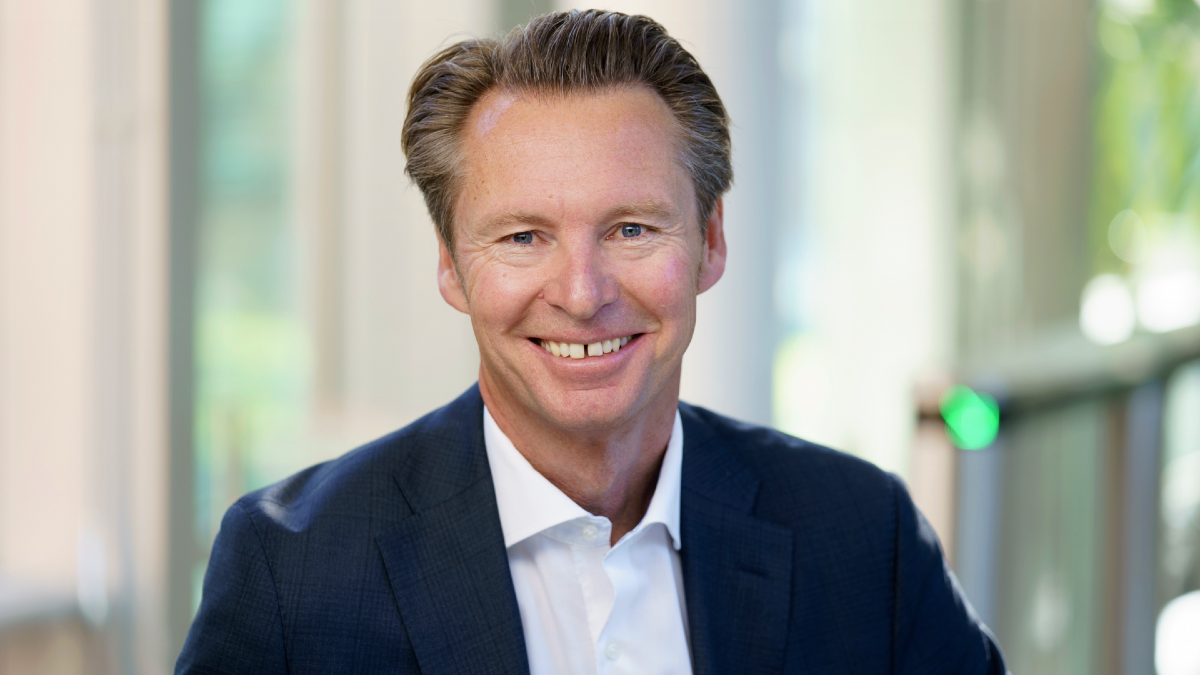
When your cargo has an opinion: cruise shipping’s drive towards net zero
As IMO member states debate pathways to net zero, DNV stresses collaboration, fuel flexibility, and accurate emissions accounting in creating a global regulatory framework


Without an international consensus on a global regulatory framework for reducing CO2 and greenhouse gas (GHG) emissions, shipowners could face a sea of patchwork regional emissions reductions regulations. To avoid that undesirable outcome, “member states need to find pragmatic solutions that will, over time, reduce emissions,” said DNV group president and CEO, Knut Ørbeck-Nilssen.
Mr Ørbeck-Nilssen, along with Craig Koehne, regional president, Americas, DNV Maritime, spoke to Riviera at Seatrade Cruise Global 2026 in Miami, sharing their views on environmental sustainability efforts in cruise shipping and some of the hurdles ahead for member states in adopting IMO’s Net-Zero Framework (NZF).
“In its current form, the NZF will face specific challenges in the US,” said Mr Ørbeck-Nilssen. “But it’s important now for member states to start negotiating and see what is possible. It’s important that all alternative fuel pathways remain open, and that we continue to develop their lifecycle analysis.”
An encouraging outcome at the 84th Session of the Marine Environment Protection Committee (MEPC 84), held 27 April to 1 May, was that a pathway for adopting a global regulatory framework to reduce GHG emissions remains open, with member states agreeing to hash out their differences on the NZF and alternative proposals at Intersessional Working Groups (ISWGs), before MEPC 85. Subject to confirmation, ISWG-GHG-22 is scheduled for 1-4 September and ISWG-23 for 23-27 November. MEPC 85 will be held from 30 November to 3 December. The resumption of the second extraordinary session of MEPC (ES.2) is set to start on 4 December.
But consensus-building will be critical to bridge the divergent views among IMO member states, some of whom want to see the NZF adopted, others who wish to see it amended, and still others who want it scrapped entirely.
“In the US, many of our stakeholders and clients still have the desire to get to net zero. But it needs to be practical, realistic, and done collaboratively,” Mr Koehne told us. “We should not be limiting fuels or punishing first movers when it comes to LNG. We need to make all fuel pathways possible.”
Cruise shipping steers towards zero
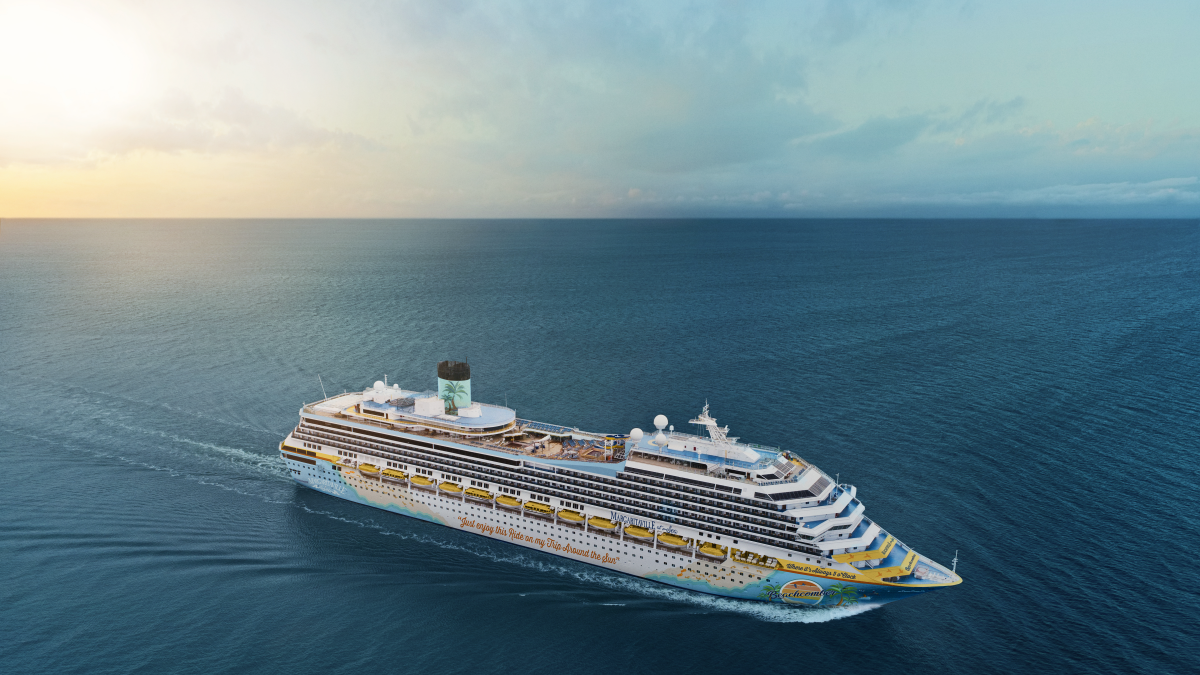
While the clouds of regulatory uncertainty hang over international shipping, cruise shipping is sailing towards a net-zero future by 2050.
And both men see the potential for cruise shipping to play an outsized role in maritime decarbonisation.
“Cruise shipping has always been at the forefront and one of the most innovative sectors that we support,” said Mr Koehne.
“It sends a strong signal to other segments that you can try out new technologies on a relatively smaller scale and see what works and how you can drive new technology forward. Cruise shipping’s spirit of innovation is important not just for the industry but also for the greater good of shipping,” said Mr Ørbeck-Nilssen.
Cruise passengers and the public also have a role to play, he explained. “The cargo has opinions. It’s a key driver. Cruise shipping has an expanding customer base, attracting a younger generation and families that are more concerned about the environment. They want to leave behind a better world for their grandchildren. In that sense, the cruise industry not only has its own interests in reducing emissions, but also those of its customers,” said Mr Ørbeck-Nilssen.

Cruise ships and LNG
Cruise shipping lines have landed on LNG as the alternative fuel of choice. CLIA, the leading association for the cruise ship sector, noted that its members have 30 LNG-fuelled cruise ships in operation and another 31 on order. A total of 83 cruise ships in the global fleet (in operation and on order) are alternative-fuel capable, including 67 of which have LNG dual-fuel propulsion, according to DNV’s Alternative Fuels Insight platform.
LNG does offer a credible pathway to lowering GHG emissions, with fossil LNG laying the groundwork for liquefied biomethane and later e-LNG or synthetic LNG, according to SEA-LNG. The not-for-profit organisation commissioned Chicago-based consulting firm Sphera to perform two lifecycle GHG emissions studies on the use of LNG as a marine fuel to validate the methane pathway. Their research suggests LNG can reduce GHG emissions by 23% compared to burning traditional oil-based marine fuels. Furthermore, e-methane use can achieve net-zero GHG emissions on a well-to-wake basis, with exact reductions depending on the equipment and engine technology used. Operators can achieve a 95% reduction of nitrogen oxides (NOx) and virtually eliminate sulphur oxides (SOx) and particulate matter (PM) emissions.
SEA-LNG, whose members are drawn from across the LNG value chain, points to advances in the growth of the natural gas-powered fleet, engine technology, supply, and bunkering infrastructure.
“Our position remains clear: there can only be one global decarbonisation framework for maritime. Regional fragmentation, with its risk of multiple and duplicated compliance costs, serves neither shipping nor the climate. We are calling for a framework that is goal-based and technology-neutral, that protects first movers, and that incentivises solutions which are practical, scalable, and investable,” said SEA-LNG in a statement before MEPC 84.
Methane slip: actual vs default values
But critics of LNG as a marine fuel highlight methane slip. Methane, the primary component of LNG or natural gas, is a powerful GHG gas, with a global warming potential 28 times that of carbon dioxide on a 100-year timescale. Inefficient or incomplete combustion of natural gas can result in methane escaping into the atmosphere through the ship’s exhaust.
To ensure the environmental credibility of the LNG pathway, Mr Ørbeck-Nilssen and Mr Koehne emphasised the need for methane slip to be not only addressed by marine engine designers, but by the broader LNG value chain.
“Methane slip is a concern within the shipping community,” said Mr Ørbeck-Nilssen. “Engine manufacturers have made great advancements in reducing methane slip. But we must look at methane slip in the bigger context. Shipping is just a small part. The bigger part comes from the upstream sector.”
Studies performed by Sphera and Rystad Energy that were commissioned by SEA-LNG, and data from thinkstep, Wärtsilä, and WinGD indicate that steady progress has been made in reducing methane slip over the last six years. Since 2019, methane slip in four-stroke, medium-speed, low-pressure LNG dual-fuel engines has fallen from 2.5% to less than 1.4% of the consumed fuel.
A recent report from Lloyd’s Register indicates that new generation, high-pressure two-stroke dual-fuel engines from WinGD and Everllence achieve methane slips as low as 0.2g/kWh when monitored under operating conditions.
And recent measurements of actual methane emissions from two MSC Cruises LNG-fuelled vessels that were independently verified by Bureau Veritas Marine & Offshore and the flag state for the purposes of FuelEU Maritime compliance, were substantially lower than the 3.1% default value prescribed in FuelEU Maritime Annex II. According to MSC Cruises, MSC World Europa attained an actual methane slip value of 1.67%, while MSC Euribia achieved 1.48%.
DNV advises that using actual methane slip versus regulatory default values can result in substantial compliance cost savings under FuelEU Maritime and the EU Emissions Trading System.
Methane slip must also be reported under the EU MRV regulation and EU ETS. Shipping companies must surrender allowances for CO2, methane, and NOx emissions.
And while the differences between actual methane slips and default values may appear modest, the impact on compliance – and the bottom line – is substantial, contends DNV. “Over the next decade, as compliance thresholds tighten, applying actual methane slip factors could translate into annual cost savings easily exceeding €1M (US$1.2M) for a 24,000-TEU container ship, as an example – highlighting the strategic and financial value of accurate methane slip verification,” said the class society.
“We should do everything we can to reduce methane slip on the shipping side. When we move to a well-to-wake lifecycle assessment, it’s important that we establish robust and accurate emissions factors,” observed Mr Ørbeck-Nilssen.
Plugging into onshore power is an important component of cruise shipping’s pursuit of net zero. The number of cruise ships fitted with shore-power connections is projected to double from the current number to 239 by 2028. CLIA members have made a commitment that all ships calling at ports capable of providing onshore power are anticipated to be equipped to either use shoreside electricity by 2035 or to be able to use alternative low-carbon technologies, as available, to reduce emissions in port.
“For years, the major cruise lines have investigated new fuel types and looked at decarbonisation pathways, which include not only alternative fuels but also energy-efficiency technologies,” said Mr Koehne. But no one company can do it alone. “Collaboration is the way for the industry to move forward, and many of our clients don’t see decarbonisation as a competitive landscape,” concluded Mr Koehne.

Riviera’s Maritime Hybrid, Electric & Hydrogen Fuel Cells Conference & Exhibition will be held in Bergen, Norway, on 21-23 October 2026. Use this link for more information and to register for the event.




Related to this Story
Events

Maritime Regulations Webinar Week
 16 Dec 2025
 GMT - ONLINE

Floating energy: successfully unlocking stranded gas using FLNGs and FSRUs
24 Feb 2026GMT - ONLINE
© 2026 Riviera Maritime Media Ltd.


