


Business Sectors
Business Sectors
Events
Contents
Managers question systems’ reliability


Two Hong Kong-based managers are disappointed by the performance of BWMSs on their fleets
Ballast water management systems (BWMSs) are not as reliable in practice as manufacturers promise, according to two shipping company executives at a conference in China last September.
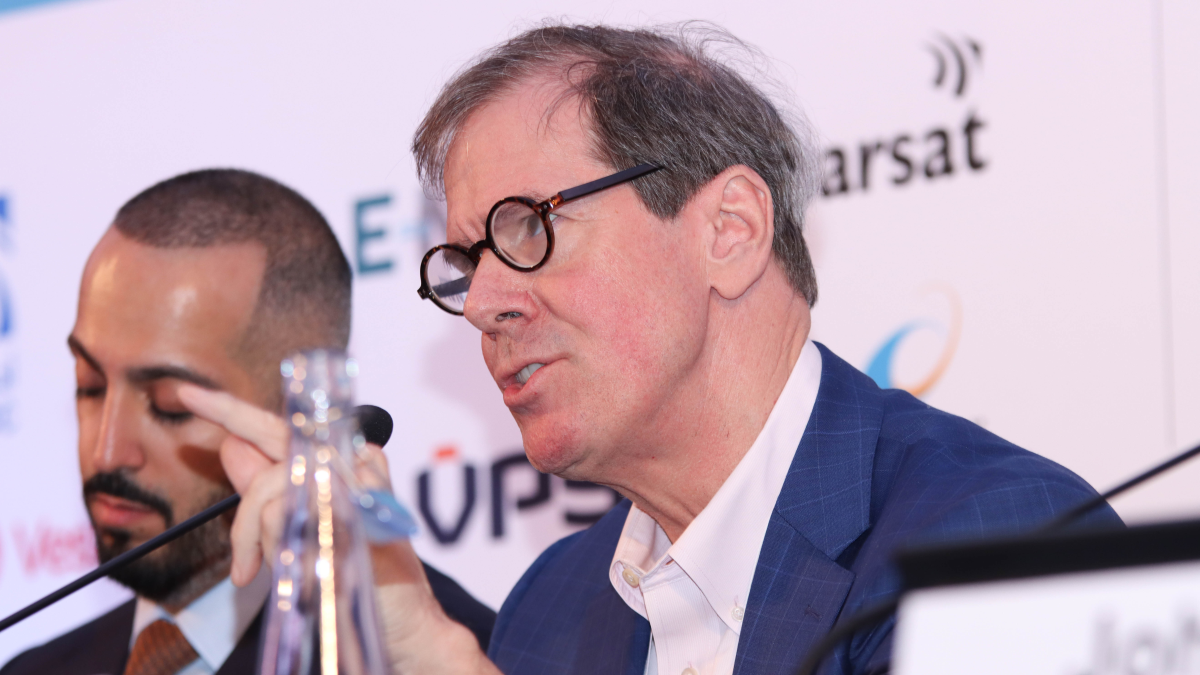
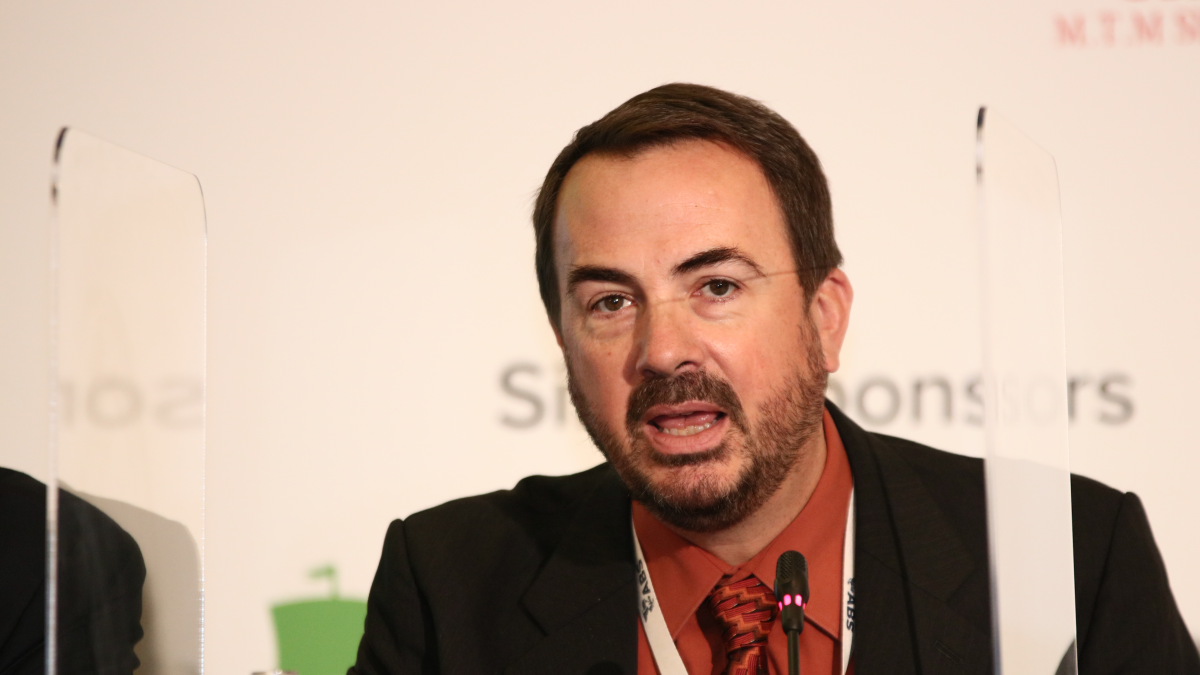
Addressing the International BWM Technology and Standardization Forum, organised by the Shipbuilding Information Center of China (SICC) and BIMCO, the chief operating officer of Hong Kong-based Wah Kwong, Zhou Jian Feng, told delegates about unsatisfactory BWMS performance based on experience with the systems fitted on 36% of the company’s fleet. At that time, Wah Kwong listed 22 ships on its website, suggesting that it had then equipped eight ships with BWMSs.
Capt Zhou listed four problem areas, with filter clogging as his first concern. He cited one newbuilding on which the filter failed when the crew first operated it and while its manufacturer’s representative was still on board.
He also mentioned total residual oxidant (TRO) sensors – saying that their readings are unstable and can seem illogical – and flow rate meters, which can indicate clearly incorrect rates, he said. As a result of the problems, “crews have lost confidence in operating the systems,” he said. They also cause delays to ship operations and “bring extra commercial risks to shipowners.”
Capt Zhou was also critical of the after-sales service available, describing it as inadequate. “Both the quantity and quality of the service engineers are below expectations,” he said. One system was inoperable for nine months awaiting repair, he added.
He recommended that companies should develop contingency plans “for all foreseeable situations” in case their systems fail, and include details in their ballast water management plans. “In the meantime, we hope that manufacturers can continuously improve [the] design and stability of their BWMSs and provide sufficient and effective after-sales service and support.”
Capt Zhou’s comments were echoed by Wallem Shipmanagement group technical director Ioannis Stefanou, who is also based in Hong Kong. He said that when he compiled a ‘snapshot’ of the situation at the end of June 2017, 46% of the systems on ships the company then managed were not fully operational .
Ships under Wallem’s management use systems from nine manufacturers across five technologies, Mr Stefanou said. “When they are sold, we are told they are very easy to operate – just press one button – but in reality it’s not like this,” he said. He listed five main areas where equipment gives problems – TRO sensors, systems valves, control units, filters and flow meters – but said that those were just a few from “a huge list.”
“It’s worrying,” Mr Stefanou said, pointing out that each of these technologies is used in other areas of industry, but “in the marine environment they don’t last as long as we would like them to.”
Unlike Capt Zhou, he paid tribute to suppliers for their “superb response and assistance” to rectify issues, but said that some “are not familiar with their own systems” because few have been installed and operated. Nonetheless, Mr Stefanou said, “manufacturers have been very helpful [in] resolving any issues,” although some are hampered by their limited service network.
Tanker operators want certainty over contingency plans
Confusion over what shipowners should do if they have problems treating ballast water has prompted the tanker owners organisation Intertanko to publish its own guide. Tanker operators need certainty over what contingency measure they can use, its environment director Tim Wilkins told BWTT.
Although IMO’s Marine Environment Protection Committee issued a circular after its 72nd meeting (MEPC 72) in July 2017 describing contingency measures, it allowed port states to set their own preferences. As a result, operators cannot be certain what options are available to them or what information port states will ask for when deciding what a ship should do if it cannot treat its ballast, Mr Wilkins said.
“If you speak to anybody who has installed systems, they will tell you that it is a struggle to ensure that they are all operating 100% correctly, 100% of the time,” he said. But because different states take different approaches, they face “a huge bureaucratic and administrative nightmare” in dealing with contingency planning. “If there were a standardised way of reporting the failure and filing an application to undertake a contingency measure, it would make life more straightforward and process-orientated,” Mr Wilkins said.
In an effort to provide guidance to its members, in March Intertanko published a 19-page guide, Ballast Water Contingency Measures for Tankers. It includes some model reporting forms that Mr Wilkins has developed from documents used by some Intertanko members.
Intertanko will submit the guide to MEPC 73 in October as an information document, and request that member states note the initiative, with no action requested. A draft was passed to the US Coast Guard for its review; it did not raise any objections with it, he said. But even the US has no consistent approach because each ‘captain of the port’ region can set its own contingency requirements, Mr Wilkins said.
Reaction to the guide had been favourable, he said, two weeks after its publication. Some flag state administrations had asked for copies and other shipping organisations had also seen it, he added. Since his interview with BWTT, it has been made publicly available on Intertanko’s website, via http://bit.ly/BWTT-IntGuide.
USCG type-approvals are vital, say shipowner bodies
US Coast Guard type-approval is a more important factor than IMO type-approval to shipowners, if feedback from two leading shipowners organisations is any guide.
BWTT contacted InterManager, which represents third-party and in-house shipmanagers worldwide, and the Hong Kong Shipowners Association (HKSOA), one of the world’s largest shipowner associations, its members owning, managing and operating about 180M dwt of ships.
Asked how important, InterManager secretary-general Kuba Szymanski said it was extremely important. “No one wants to buy a pig in a poke,” he said. “What would be the point of having ship that could not trade to US?”
HKSOA technical director Martin Cresswell agreed, but added that every system that meets the new IMO G8 standard is expected also to pass the USCG type-approval tests. There need to be as many USCG type-approved systems as possible to meet shipowners’ needs. As Mr Szymanski put it, “more systems means more choice and more competition.”
Both said the choice available and the number of type-approved systems will be helped by the delayed implementation schedule agreed at MEPC 71 in July 2017. The two-year delay in installing ballast water management systems (BWMSs) “is very positive,” Mr Cresswell said, because shipowners will be able to choose systems approved to the revised IMO G8 standard or USCG type-approved systems, “which are a lot more robust than the earlier systems,” he said.
Mr Szymanski’s response was similar, suggesting that “further delays might help shipmanagers to source better designs because manufacturers will have a better chance to make systems meeting new, more stringent requirements.” But he confessed to some difficulty in coming to a conclusion, saying that the delay “gives the US and other governments more time to decide what they really want to do,” rendering the regulation ‘politician-centric’ rather than, as it should be, ‘human-centric’ “with the end-user in mind,” he said.
He was also concerned about the amount of training that seafarers will need. “Our members are really seriously concerned about how to provide training in so many different types of systems,” and how those skills can be made transferable, he said. “Seafarers are really panicking, knowing that port state control is getting a new stick to ‘measure’ the vessel,” he added.
Mr Cresswell also had views on training, saying that there was not enough of it so far. He suggested that ECDIS operations provide a good model for what could be offered for BWMS use, with generic and specific training being provided.

Related to this Story
Events

© 2026 Riviera Maritime Media Ltd.


