


Business Sectors
Business Sectors
Events
Contents
Register to read more articles.

Marine turbochargers: still evolving after more than a century
Today’s turbocharger has been 120 years in the making


While its design, components and production materials have evolved, the basic principle of the marine turbocharger drawn up by Dr Alfred Büchi in 1905 has remained the same: using waste exhaust gas to boost efficiency and improve engine performance.
Current design is being driven by a shift from burning only fossil-based marine fuels in internal combustion engines to low- and zero-carbon fuels: LNG; methanol; ammonia; hydrogen; and biofuels. This shift is being driven by IMO, the EU Emissions Trading System, FuelEU Maritime and other regional environmental regulations, to meet reductions in CO2 and greenhouse gas (GHG) emissions.
All these fuels pose technical and design challenges for engine makers, and the suppliers of fuel supply systems, fuel injectors and turbochargers, due to their unique chemical, physical and combustion profiles.
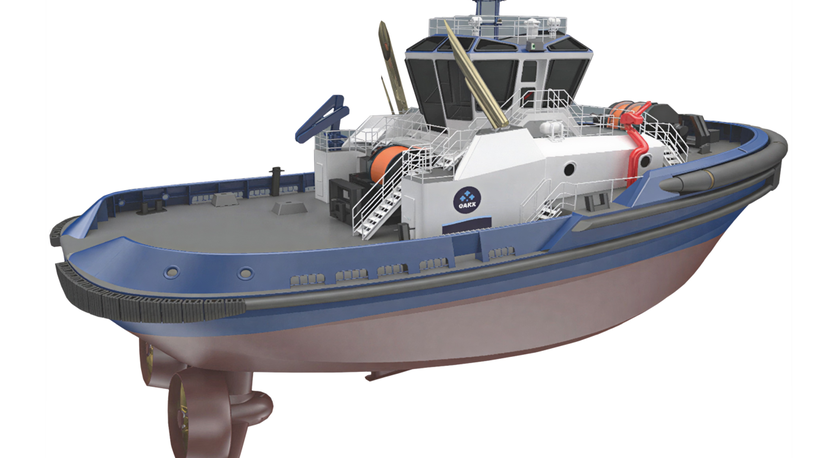
Several papers presented at CIMAC 2023 clarify the impact of alternative fuel use on turbocharger design. Alternative fuels and their consequences for exhaust gas turbocharging, presented by KBB, details the turbocharger manufacturer’s efforts in supporting the charging air requirements for two pioneering harbour tug projects for Port of Antwerp-Bruges. One of the tugs, Hydrotug 1, is powered by hydrogen dual-fuel engines, while the other, Methatug, has methanol dual-fuel prime movers. Both tugs are seen as important pilot projects to advance low- and zero-carbon fuels for coastwise vessels and ports.
In the case of the hydrogen-powered tug, the fuel is injected selectively into the cylinders of the tug’s two medium-speed engines, and each cylinder bank is turbocharged by an axial turbocharger from KBB. KBB said the turbocharger is identical to the one used in series production, except for a thermodynamic modification.
“[The] flexible propulsion engine offers the greatest autonomy regarding the availability of hydrogen”
The tug’s two 12DZD BeHydro engines can burn 100% diesel or a mix of hydrogen and diesel pilot injection. The hydrogen content can be continually increased up to 85% in terms of energy. The charging unit is designed for operation with hydrogen, while operation of the engine with diesel is the backup variant. This engine achieves an output of about 72.5% compared with the diesel-only version. As a result, this flexible propulsion engine solution offers the greatest possible autonomy regarding the current availability of hydrogen. A selective catalytic system is required to meet the stringent IMO Tier III emissions standard. A diesel particulate filter is required to meet EU Stage V regulations.
In contrast to hydrogen operation, Methatug’s methanol dual-fuel engines require larger turbine cross sections. KBB noted the fuel’s energy density is significantly lower than traditional diesel. “Within the scope of this bi-fuel application, it should be possible to replace up to 70% of diesel operation with methanol in terms of energy. Compared to the basic diesel application, only larger turbine nozzle rings will initially be used for the turbocharging group. This compromise hardly affects the efficiency of diesel-engine operation,” said KBB. But it did note that an oxidation catalyst would be necessary to cope with higher carbon monoxide content.
While there is regulatory uncertainty around the timeline for the uptake of low- and zero-carbon alternative fuels, it is clear that the development of dual-fuel engines will continue to drive turbocharger design well into the future.

Related to this Story

Events

© 2026 Riviera Maritime Media Ltd.


