


Business Sectors
Events
Contents
Brazilian mining giant Vale throws its weight behind ethanol
Agreement with Everllence paves the way for the potential use of the first large-bore ethanol dual-fuel engines in a series of VLOC newbuilds


Ethanol, widely produced in the US and Brazil as a renewable fuel used in road transport, received a major boost in the maritime sector from one of the world’s largest mining companies.
Brazilian mining giant Vale, which operates a fleet of ore carriers as part of its logistics supply chain, has struck a co-operation agreement with marine engine designer Everllence to develop ethanol as a marine fuel.
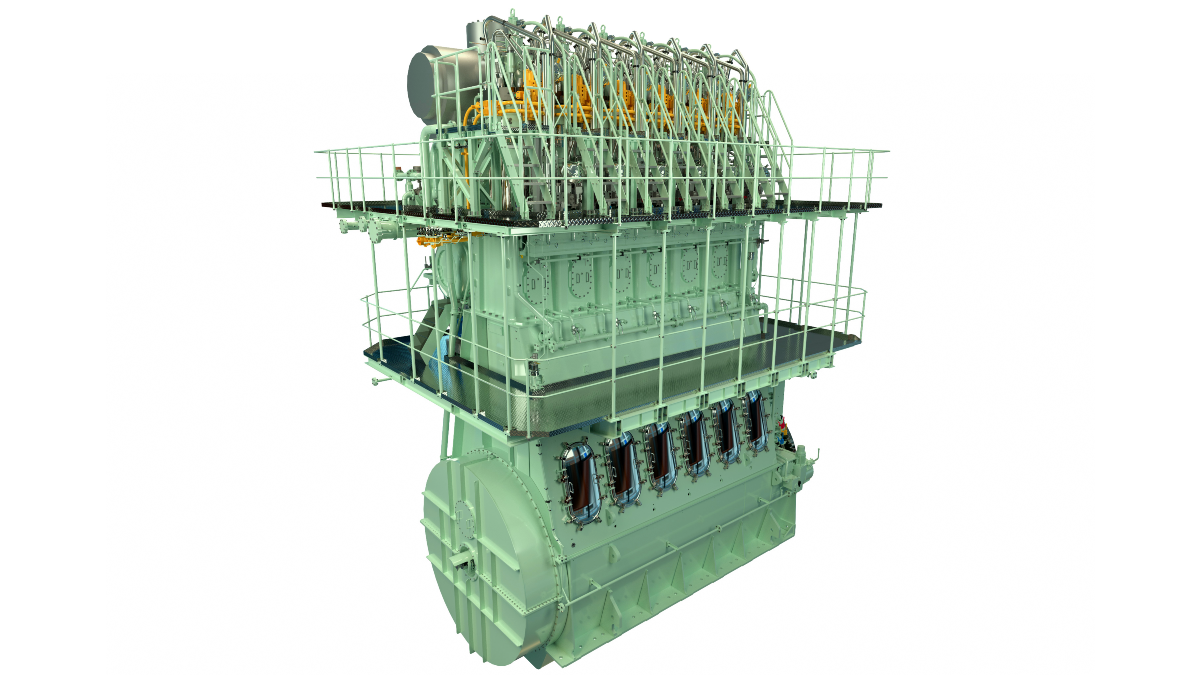
Under the terms of the deal, the parties will develop a two-stroke, slow-speed ethanol dual-fuel engine based on Everllence’s B&W ME-LGI technology.
The agreement follows progress made by Everllence in the second half of 2025 that saw the engine maker’s two-stroke and four-stroke engines run successfully on ethanol across load points. In September, its 90-bore, two-stroke ME-LGIM engine completed testing in Japan, and in December, a four-stroke 21/31 dual-fuel genset ran on the fuel at the company’s test facilities in Denmark.
Formerly known as MAN Energy Solutions, Everllence has a decade of operational experience with methanol as a marine fuel. Everllence’s ME-LGIM – LGIM stands for liquid gas injection methanol – dual-fuel engine was first used commercially with methanol in 2016 within the methanol carrier segment. Since its commercial launch in the methanol carrier sector, Everllence has expanded its methanol dual-fuel engine portfolio and has now sold more than 225 units for various types of newbuildings. There are more than 50 engines in operation, according to the engine maker.
Ethanol – the ‘other alcohol-based fuel’ – has been gaining interest among vessel owners in such markets as Brazil, one of the world’s largest producers of renewable ethanol. Brazil’s oil and gas major, Petrobras, has issued tenders for platform supply vessels that could use ethanol in dual-fuel engines in combination with batteries. Wärtsilä has reported significant progress on the development of ethanol-burning four-stroke engine technology. Besides VLOCs, two-stroke ethanol dual-fuel engine technology could potentially be used in tankers being built in Brazil.
Biodegradable and water soluble, ethanol does not contain any sulphur and is liquid at ambient temperatures and pressures, enabling standardised handling procedures during bunkering and onboard handling.
Everllence vice president, and head of global sales and promotion for two-stroke business, Christian Ludwig, called the deal with Vale, “a milestone for the decarbonisation journey of large‑scale shipping, leveraging ethanol as a commercially scalable, globally significant pathway.”
Everllence senior vice president, head of two-stroke R&D, Ole Pyndt Hansen, said two weeks of testing in Japan will provide his research team with new data on ethanol operation. “We are now expanding technical pathways to incorporate G70 and/or G80 engine platforms. Both our companies view this co-operation as a strategic step to support Vale’s newbuilding expansion with scalable, future‑proof engine technologies.”
Vale’s emissions ambitions
One of the world’s largest producers of nickel and copper, Vale plans to reduce its Scope 1 and Scope 2 emissions by 33% by 2030 and become carbon neutral by 2050. Scope 3 emissions, which include its fleet of ore carriers, would be cut by 15% by 2035.
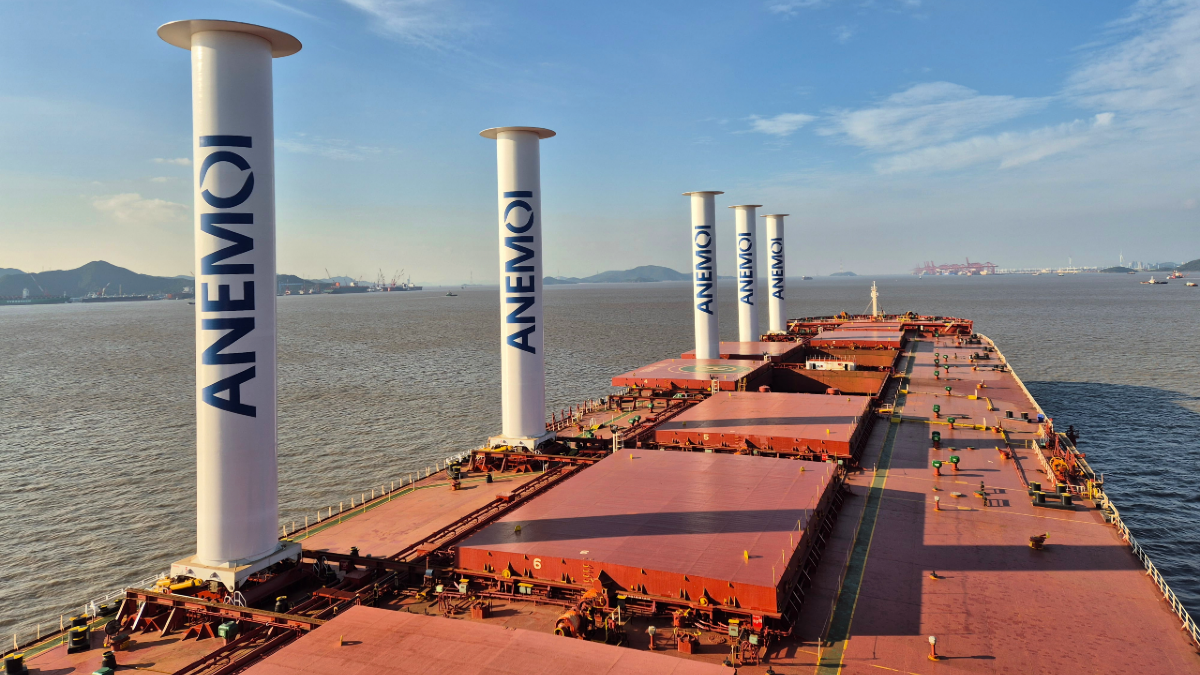
To reduce greenhouse gas (GHG) emissions and meet IMO environmental regulations, the company is moving on several fronts under its Ecoshipping programme. This includes incorporating rotorsails and multi-fuel tanks on its next generation, multi-fuel Guaibamax VLOC newbuildings, scheduled to enter service between 2027 and 2029. The massive 325,000-dwt VLOCs will operate under a 25-year charter with Shandong Shipping. It ordered 10 methanol dual-fuel VLOCs with Qingdao Beihai Shipbuilding Heavy Industry, a subsidiary of CSSC, last year.
Vale conducted research with DNV to study the applicability of Type B tanks compatible with LNG, methanol, ethanol and ammonia. The project has an estimated potential to reduce GHG emissions by 40–80%. In its sustainability report, the mining giant revealed that its new Guaibamax ships will be able to use methanol as an alternative to bunker fuel and are designed for future adaptation to ethanol, LNG or ammonia.
Ammonia is coming
Ethanol is the latest alternative fuel being tested by that Danish engine designer; it is moving on multiple fuel fronts to support shipowners’ decarbonisation pathways. Later this year, it will see its first two-stroke ammonia dual-fuel engine in operation for Eastern Pacific Shipping, which plans to use the technology to burn the zero-carbon fuel in its 93,000-m3 very large ammonia carriers. Expectations are that factory acceptance tests (FATs) will be completed on the 6G60ME-C10.5-LGIA in Q2 2026.
Among the other publicly announced first movers is Höegh Autoliner. A further four Everllence 7S60 ME-LGIA engines are destined for four of the company’s 10,800-CEU pure car and truck carriers. FAT is set for Q3 2026 and delivery in Q2 2027.
And another 7S60 is destined for a Newcastle bulk carrier in Japan.
This month, Swiss engine designer WinGD reported its own success with ammonia, completing both type-approval testing and FAT of its ammonia-fuelled two-stroke marine engine. Both test programmes were completed in January, with testing of its high-pressure X52DF-A-1.0 engine carried out at the HD Hyundai Heavy Industries’ Engine & Machinery facility in South Korea. Representatives from major class societies and shipowner Exmar were on hand.
The testing programmes took place on a 52-bore engine to be installed on a 46,000-m³ LPG/ammonia carrier newbuilding for Exmar.
WinGD reported it has an orderbook of around 30 X-DF-A engines across multiple vessel segments, including gas and bulk carriers, tankers and container vessels.
In Japan, J-ENG’s first full-scale commercial high-pressure ammonia dual-fuel engine, 7UEC50LSJA-HPSCR, is being prepared for installation in a new medium-sized gas carrier under construction at JMU Ariake Shipyard that will enter service this year.
Mitsubishi Shipbuilding, part of Mitsubishi Heavy Industries Group, reported in February that it has shipped an ammonia fuel supply system and an ammonia gas abatement system to J-ENG to support the project.
Sign up for Riviera’s series of technical and operational webinars and conferences:
- Register to attend by visiting our events page.
- Watch recordings from all of our webinars in the webinar library.
Related to this Story
Events

Maritime Regulations Webinar Week
 16 Dec 2025
 GMT - ONLINE
Floating energy: successfully unlocking stranded gas using FLNGs and FSRUs
24 Feb 2026GMT - ONLINE
© 2024 Riviera Maritime Media Ltd.


