


Business Sectors
Events
Contents
'A paradigm shift in marine technology': nuclear-ready, diesel-electric hybrid propulsion
Australian ship designer hails approval in principle (AiP) for micro modular nuclear reactor (MMR)-based propulsion, as class society says ’wider adoption’ expected in early 2030s


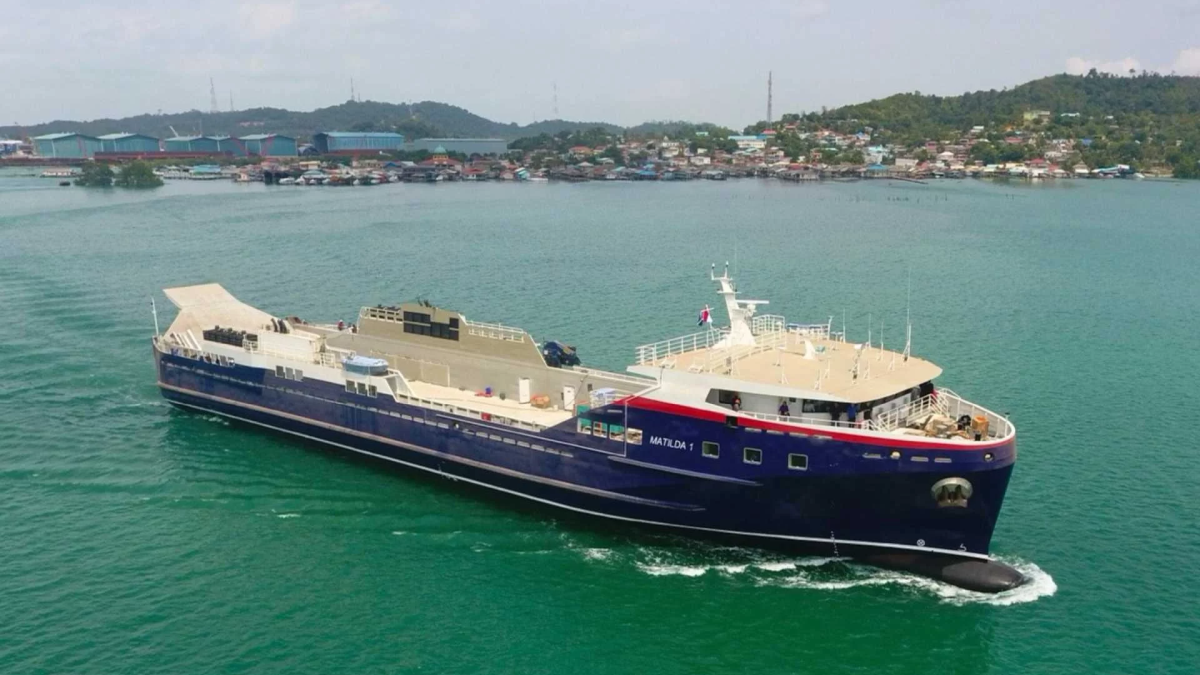
Australia-based ship design firm Seatransport has earned a classification society approval in principle for a hybrid propulsion system that it describes as ’nuclear-ready’.
The system has undergone sea trials, reportedly begun in early February off Batam, Indonesia, on board a 73-m amphibious stern landing vessel (SLV) Matilda-1.
The sea trials come ahead of a three-year charter for the vessel, agreed with the US Marine Corps. Military publications and Seatransport’s website linked the vessel, the system that propels it and the charter as an exercise by the US military in developing a landing ship medium, or platform, for expeditionary operations in the Indo-Pacific region. Operating on diesel-electric propulsion, the vessel has a 4,000-nautical-mile range.
Classification society Lloyd’s Register (LR), which awarded Seatransport the approval-in-principle for its hybrid, nuclear-ready power system, said "Sea trials of the conventionally powered SLV confirmed the design assumptions used in the MMR concept, providing strong technical assurance that the design is both practical and robust".
LR said the nuclear MMRs under consideration have a power output capacity in the range of 1.2 MW-2.6 MW and "are undergoing rigorous technical and regulatory assessment".
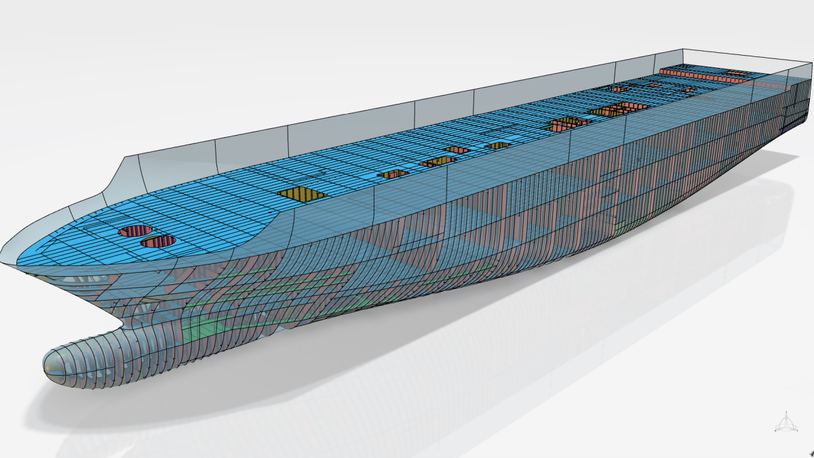
The design enables nuclear MMRs to be combined with conventional diesel-electric systems for 73-m and 90-m amphibious SLV-based designs.
Use of the systems, according to the classification society, would give vessels "effectively unlimited operational range" and "significantly reduced reliance on conventional fuels" to limit vessel emissions.
With safety a paramount concern for nuclear-powered propulsion, Lloyd’s Register said it is "working closely with national authorities to ensure that safety, compliance and operational standards are fully addressed".
"Wider adoption is anticipated in the early 2030s," LR said, calling the approval in principle "an exciting step for... the wider maritime industry”.
Seatransport chief executive Stuart Ballantyne said his company had integrated nuclear MMR capability into its SLV platform, "future-proofing it for extended endurance, operational flexibility and low-emissions performance," and predicted that the system’s approval would mark a watershed moment in the history of maritime propulsion.
"We do believe that for all shipowners, this is a paradigm shift in marine technology greater than sail to steam,” he said.
Sign up for Riviera’s series of technical and operational webinars and conferences:
- Register to attend by visiting our events page.
- Watch recordings from all of our webinars in the webinar library.
Related to this Story

Events

Maritime Regulations Webinar Week
 16 Dec 2025
 GMT - ONLINE
Floating energy: successfully unlocking stranded gas using FLNGs and FSRUs
24 Feb 2026GMT - ONLINE
© 2024 Riviera Maritime Media Ltd.


