


Business Sectors
Events
Contents
Register to read more articles.
Building a net-zero maritime workforce
Shipping’s transition to low- and zero-carbon fuels will depend on attracting, training and upskilling seafarers, writes DNV regional president and director, Southeast Asia, Pacific & India, Antony M. Dsouza


The global maritime sector is undergoing one of the most significant transitions in its history. While vessels, infrastructure and regulation dominate much of the conversation, shipping’s transition will ultimately depend on its people. A net-zero future depends on a workforce capable of operating new technologies safely, confidently and competently, and building this workforce is now a strategic priority.
People at the core
The decarbonisation of the global fleet will ultimately depend on the transition to low-carbon versions of fuels like methanol, ammonia, hydrogen, and biofuels. While the availability of these fuels is still limited, the technical transition to alternative-fuel capable vessels is already underway. According to DNV’s Alternative Fuels Insight (AFI) platform, the number of alternative-fuel capable vessels in the global fleet is expected to nearly double between 2024 and 2028. Most of these new vessels are being built with dual-fuel capability, meaning they can still burn conventional fuel oil.
As these vessels move to commercial deployment, they bring with them a range of new operational and safety implications, driving the need for a large-scale build-up in skills and capabilities. This is supported by the data. DNV’s latest Maritime Forecast report indicates that an estimated 33,000 additional seafarers will need specialised training within the next three to four years, highlighting the urgency of increasing training capacity and ensuring access to relevant competencies across the global fleet, not only within the largest operators.
This should also be supported by companies strengthening their safety management systems. Updated guidance for handling alternative fuels, including new recommendations for ammonia operations, highlights how essential it is for organisations to learn from incidents and systematically improve their practices. The future of fuel safety will depend not only on technology and compliance frameworks, but on people who are well prepared to operate in environments that are becoming more complex and demanding.
Multi-disciplinary skills
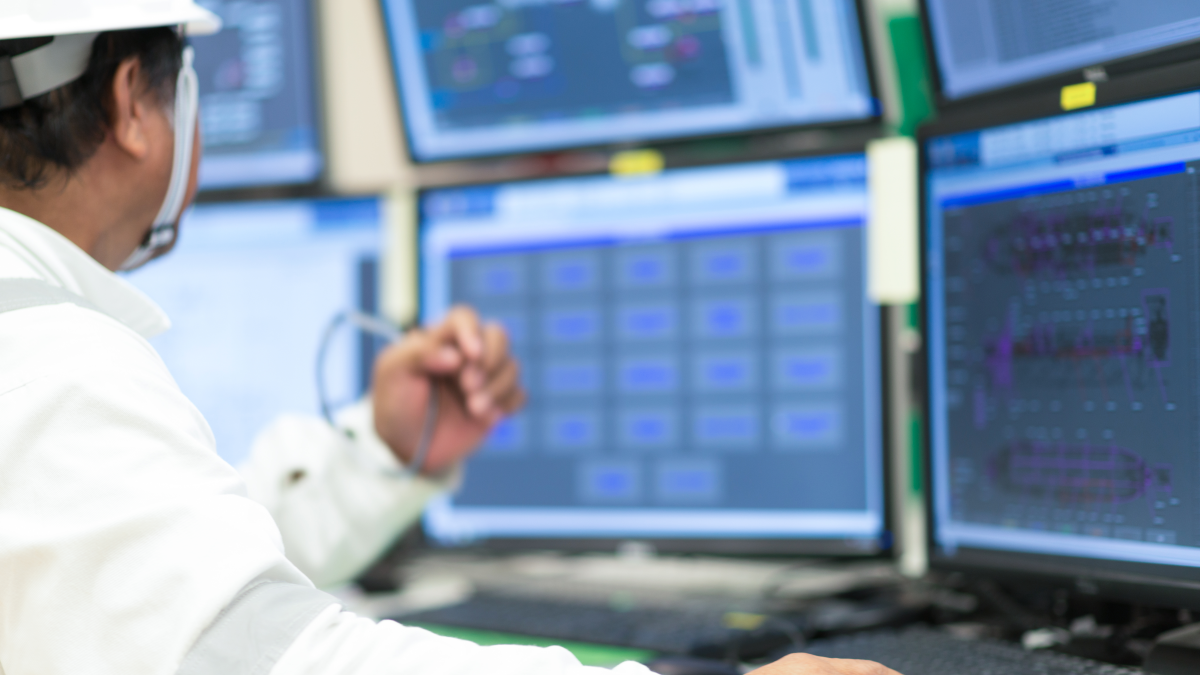
In parallel with decarbonisation, increased digitalisation is reshaping job roles across the maritime industry. As a result, skills required in maritime roles are already becoming increasingly multi-disciplinary, blending traditional operational expertise with digital fluency and sustainability awareness. With modern ships increasingly dependent on data-driven systems, advanced sensors, remote operation interfaces and integrated digital platforms, seafarers and shore personnel must understand not only the mechanics of the vessel but the information flows that influence performance, safety and emissions.
This is creating major challenges for the maritime workforce. A DNV study shows that more than 80% of seafarers anticipate needing partial or complete retraining to manage advanced technologies, from automation and smart sensors to remote operations and digital twins. At the same time, regulatory expectations are widening, further intensifying the challenge, with maritime professionals increasingly expected to have a working understanding of carbon intensity indicators, efficiency requirements and the operational impact of different fuel options, as part of their day-to-day operations.
While a widespread upskilling is inevitable, the sector must avoid creating unrealistic expectations. No individual can master every aspect of digital technology, fuel behaviour and sustainability reporting. Instead, the priority should be to identify the specific skills required for each role and tailor competency pathways accordingly. This ensures depth where it matters without overburdening crews.
Digital and data literacy
Digitalisation is now integral to maritime operations, yet many vessels are still faced with fragmented digital environments. Standalone tools, inconsistent interfaces and varying reporting requirements place unnecessary pressure on crews and can undermine both efficiency and situational awareness. To unlock the full value of digitalisation, systems must become more integrated, intuitive and shaped around real operational needs.
“80% of seafarers anticipate needing partial or complete retraining”
This makes digital and data literacy essential competencies. Maritime professionals must be able to interpret operational information, respond to system alerts, manage cybersecurity risks, and integrate digital processes into routine decision making. But building these competencies cannot fall on the workforce alone. What is needed now is a more practical and co-operative approach, where technology providers, ship operators and customers work together to ensure digital tools genuinely support people on board.
When digital solutions are developed and tested in partnership with those who use them, they become tools that support decision-making, rather than complicate work. This shift is essential if digitalisation is to strengthen safety, efficiency and day‑to‑day operations across the global fleet.
Workforce preparedness
As these technologies, fuels, and systems develop and become more prevalent, and the global maritime workforce prepares to adapt, close collaboration between regulators, industry players, and learning institutions will be more important than ever. This kind of partnership is already being observed in leading maritime hubs. For example, in Singapore, DNV works closely with public and academic partners across the maritime ecosystem to advance workforce development.
Through its co-operation with the Maritime and Port Authority of Singapore (MPA), DNV contributes expertise to joint industry initiatives that explore smart and remote vessel operations as well as scaling low-carbon fuels. These efforts reflect a shared commitment to test-bedding emerging solutions in real operational settings, ensuring that workforce competence evolves alongside technological progress.
DNV’s collaboration with the Singapore Institute of Technology (SIT) further demonstrates how industry and academia can align to shape future maritime talent. By supporting programme design, applied research, and postgraduate pathways, both partners aim to equip the next generation of professionals with the analytical, operational, and design capabilities needed for a more complex maritime environment.
“33,000 additional seafarers will need specialised training”
Together, these examples highlight an important principle for the global sector: when regulators, industry, and academia work in concert, they create stronger foundations for skills development, accelerate the adoption of new practices, and build a workforce better prepared for the demands of maritime’s transition.
Continuous learning; broader access
The maritime transition will not be linear. New fuels, technologies and regulations will continue to emerge, making continuous learning a defining feature of modern maritime careers. This requires training ecosystems that are flexible, accessible, and able to evolve alongside the industry.
Expanding access to future skills development is especially important for mid-sized and smaller operators, which may not have in-house capacity to run training programs. Shared training centres, industry-supported initiatives, and digital learning platforms can help ensure that all maritime workers have access to the skills needed for safe and sustainable operations. Raising the global baseline of competence is essential as the fleet becomes more diverse in technology and fuel profiles.
A human-centric path
The journey to net-zero shipping is ultimately a human one. Technology will continue to evolve, but people remain central to ensuring that change is safe, effective and sustainable. As new fuels, digital systems, and operating models enter service, success will depend on how well the maritime community equips its workforce to adapt with confidence. By investing in people alongside technology, shipping can ensure that its transition to net zero strengthens safety, resilience and trust for the long term.
Related to this Story
Events
Maritime Regulations Webinar Week
 16 Dec 2025
 GMT - ONLINE
Floating energy: successfully unlocking stranded gas using FLNGs and FSRUs
24 Feb 2026GMT - ONLINE
© 2024 Riviera Maritime Media Ltd.


