


Business Sectors
Events

Floating energy: successfully unlocking stranded gas using FLNGs and FSRUs
 24 Feb 2026
 GMT - ONLINE
Contents

Register to read more articles.
ABS updates DP guidance and unveils new notation
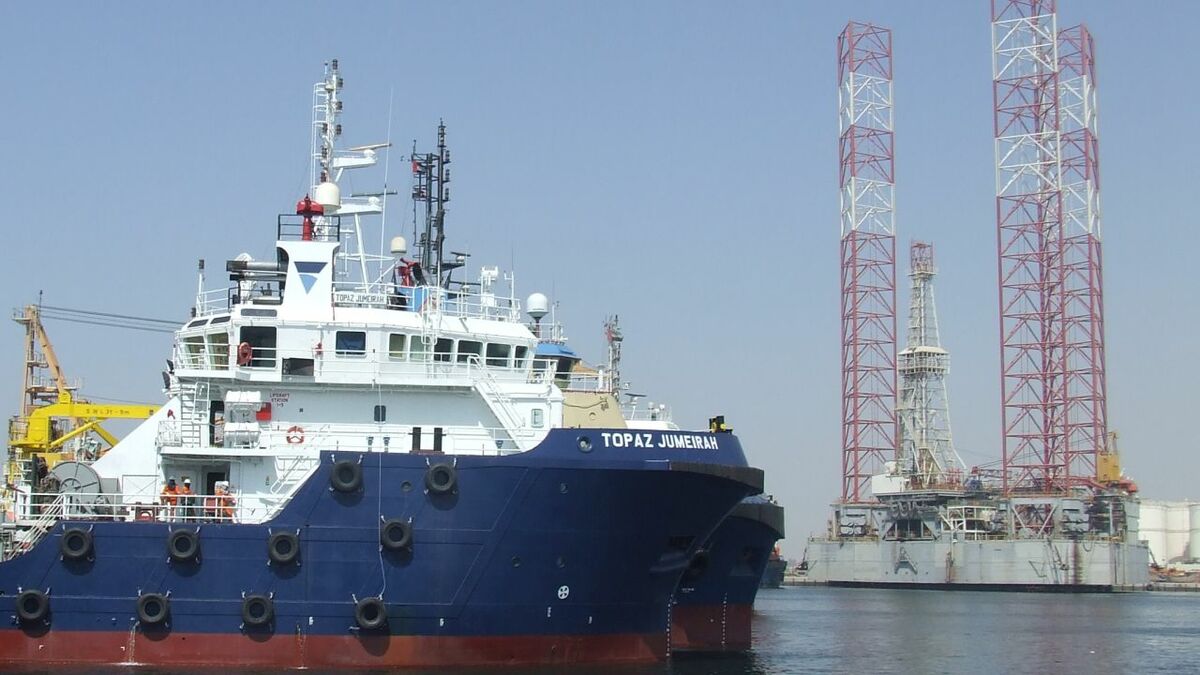
Classification society ABS has updated its guidance for dynamic positioning (DP) for offshore vessels and introduced a new notation for fuel-efficient operations


The classification society updated its Guide for Dynamic Positioning Systems to incorporate the latest IMO guidelines and guidance from the International Marine Contractors Association (IMCA) and the Marine Technology Society (MTS).
“Our updated guide includes lessons from DP trials, participation in industry standards committees and information from flag, owners, charterers and regulators,” said ABS account manager for global offshore Kendra Huhn.
This updated guidance comes as DP applications expand, not only in the number of vessels using this technology, but also in the range of applications and the advancement of DP technologies.
ABS assistant chief engineer Michael Hensley explained some of the changes within the updated guidelines including optional notations and technical specifics that reflect current industry practice and DP technologies.
“This guide covers ABS requirements for the design and testing of DP systems. It now covers enhanced system (EHS) notations, which ABS created to recognise design features beyond current DPS-series notations “to provide flexibility to owners and operators,” said Mr Hensley.
ABS’ updated guide includes ABS station keeping performance (SKP) notations to recognise DP capabilities and to encourage robust design of the DP system. There is an increased level of detail on the technical requirements to help less experienced users and details of vessel type specifics to reflect the changing application of DP in the maritime industry.
Mr Hensley said there are more details on identifying potential faults and analysing and testing the robustness of DP systems and redundant systems. Key additions include guidance on cross connections, fault ride-through, closed bus specifics and failure mode effect analysis (FMEA).
“Cross connections must be identified, as these are a leading cause of DP issues,” said Mr Hensley. This comes from MTS’ Guidelines for Cross Connections.
ABS’ updated guide also includes information from MTS’ Guidelines for Fault Ride Through Capabilities, “including live board testing,” said Mr Hensley, as he added, “ABS added frameworks on how these are performed, so operators can demonstrate DP service and control systems can continue to operate after a short circuit”.
ABS guidance on FMEA assurance incorporates information provided by Oil Companies International Marine Forum (OCIMF), which issued a paper on FMEA assurance in 2020 “to improve transparency and quality of FMEA for more predictable operations”, said Mr Hensley.
This covers information within OCIMF’s Dynamic Positioning Failure Mode Effects Analysis Assurance Framework Risk-based Guidance.
ABS’ updated Guide for DP Systems also includes the classification society’s own guidance on direct current distribution systems, using lithium batteries for energy storage and DP operational guidelines.
Mr Hensley also introduced ABS’ latest optional notation for DP vessels, EHS-E. “This is similar to EHS-P for enhanced DP electrical systems and power requirements for enhanced closed bus arrangements,” he said.
“It means vessels can operate in closed bus mode but with less fuel consumption and emissions, using advanced generator protection, power management and quick automatic blackout recovery,” said Mr Hensley.
ABS’ updated Guide for DP Systems provides information about other optional notations that may apply to DP systems such as those for integrated software quality management (ISQM) and software system verification (SSV).
ABS provides DPS-O, DPS-1, DPS-2 and DPS-3 classification notations, structured in line with the IMO Maritime Safety Committee requirements.
DP technology explainer:
Cross connections (X-Group): Common points, components or systems that are shared by more than one independent group, or redundant group, may be assigned to a common X-Group of components.
These common components or common points between the redundant or independent groups are fault propagation paths with the potential to defeat the redundancy concept.
Cross connections are common points introduced to achieve certain objectives, such as providing back up power, transferring power or data between redundant groups, or facilitating maintenance activities.
But they are fault propagation paths with the potential to defeat redundancy, leading to failures exceeding the worst-case failure design intent, if they are not adequately mitigated by appropriate compensating provisions.
(source: ABS)
Riviera Maritime Media will provide free technical and operational webinars in 2021. Sign up to attend on our events page
Riviera Maritime Media will provide free technical and operational webinars in 2021. Sign up to attend on our events page

Related to this Story


Events

Maritime Regulations Webinar Week
16 Dec 2025GMT - ONLINEFloating energy: successfully unlocking stranded gas using FLNGs and FSRUs
24 Feb 2026GMT - ONLINE
© 2024 Riviera Maritime Media Ltd.


