


Business Sectors
Business Sectors
Events
Contents
Register to read more articles.
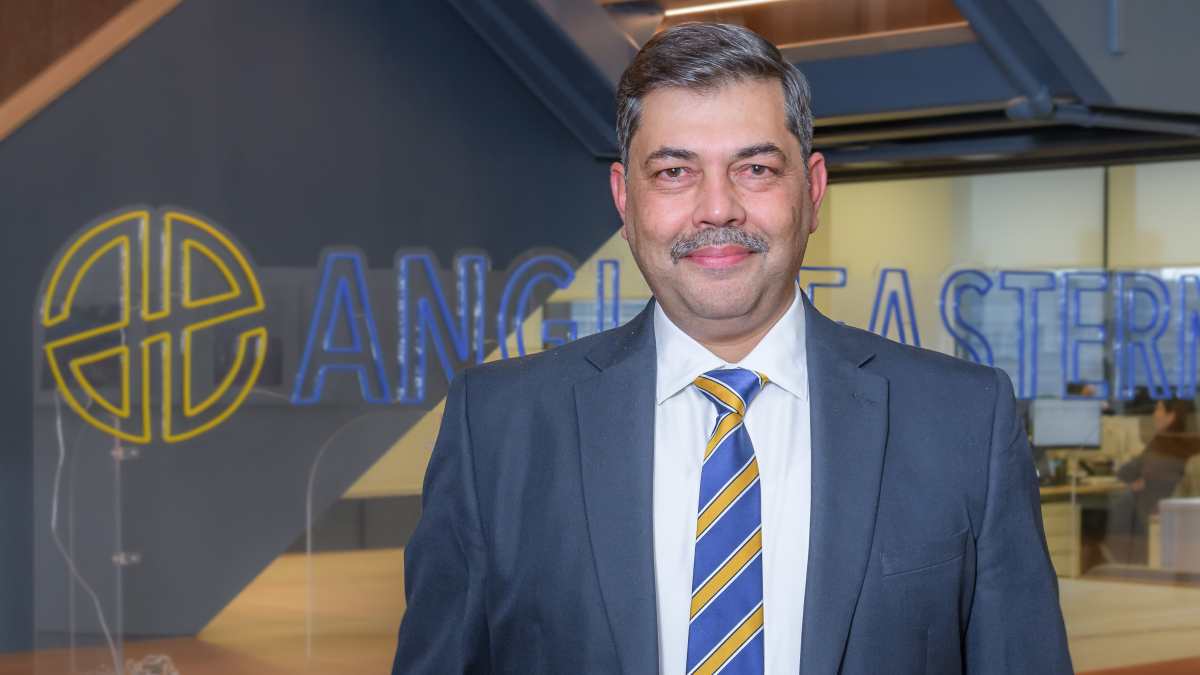
Ammonia course tests crews on under-pressure decision making
Anglo-Eastern’s Aalok Sharma explains how a pilot ammonia fuel course was designed, what was tested and the post-feedback improvements undertaken


In November 2025, Anglo-Eastern undertook a dedicated pilot course for ammonia as a marine fuel as part of a strategy to build capacity for ammonia in operational terms. Anglo-Eastern’s group director of training, Aalok Sharma, linked the course to a wider programme of dual-fuel capability building. “Our goal has always been to build the necessary capacity for training and certifying our crew to operate dual-fuel vessels effectively,” he said.
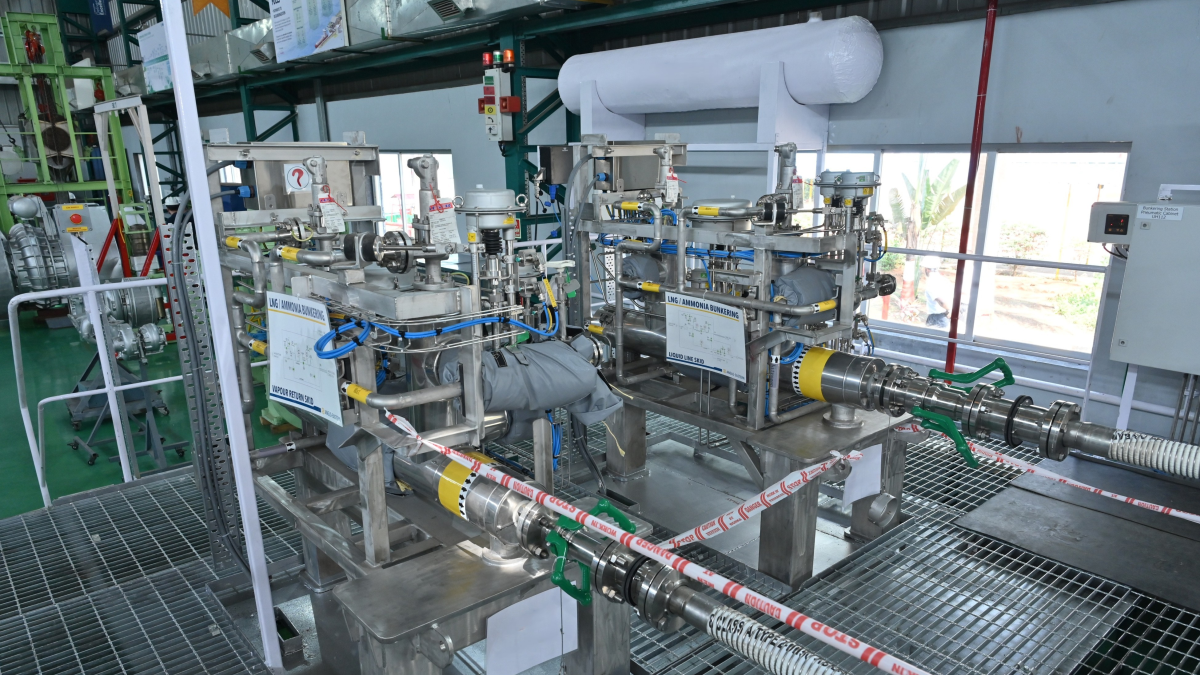
Mr Sharma said the early driver was as much timetable as technology. “The scope of the initial course was shaped by key operational trigger points: our confirmed timeline for taking over ammonia-fuelled ships, the need to address ammonia’s unique toxicity and safety profile, and growing expectations from flag states, classification societies and charterers,” he said. He added that Anglo-Eastern paired classroom work with practical sessions, describing investment in a world-first, state-of-the-art ammonia bunkering skid, enabling crews to gain hands-on, practical experience in a controlled environment.
"The transition is not primarily a seafarer training problem but an industry-wide mindset challenge"
For Mr Sharma, the central design problem was how training translated high-consequence hazards into behaviours that could be taught, practised and assessed, without confusing familiarity with readiness.
Converting risk into teachable behaviour
Asked which elements were hardest to convert into content, Mr Sharma said the challenge lay less in presenting facts and more in shaping decisions under pressure. “The most challenging aspect to translate into effective training content was not simply the technical knowledge of ammonia, but the mindset and behavioural discipline required to operate safely under its unique risk profile,” he said.
He placed procedural discipline at the centre, not as a compliance exercise but as a human-factors problem. “Ammonia does not allow for informal practices or procedural shortcuts,” he said, adding that crews needed to internalise “a heightened sense of vigilance, precision and respect for risk, while being fully aware of the design aspects which ensure a safe operation.”
Course design therefore needed to do more than cover toxicity and emergency response in abstract terms. It had to enable trainees to operate with deliberate sequencing, clear communications and explicit stop-work thresholds.
“Unlearning” and a problem beyond training
Mr Sharma did not treat the course as a stand-alone product. The team framed it as an organisational adaptation problem that touched shore teams as much as crews. “The transition is not primarily a seafarer training problem but an industry-wide mindset challenge,” he said. “A growth mindset is required across ships and shore teams, shaping how organisations interact with seafarers and respond to operational risks.”
In practical terms, he presented ‘unlearning’ as the work of resetting assumptions that were safe in other contexts but unsafe when applied to ammonia. “We found that crews often carried forward assumptions from conventional fuels or even LNG operations – such as the belief that minor leaks could be tolerated or managed informally,” he said. For ammonia, he said, tolerance for deviation had to tighten. “Ammonia requires a far lower threshold for intervention, immediate escalation and strict procedural adherence,” he said.
Mr Sharma said the course tested whether a mindset shift had occurred by using drills and scenario-based decisions rather than verbal recall. “We incorporated scenario-based assessments where trainees had to respond to realistic operational challenges and justify their decisions,” he said. He added that the course used structured debriefings that encouraged reflection on judgement, communication and risk perception, with instructors looking for evidence that trainees treated ammonia hazards as operationally decisive, rather than theoretically understood.
What stayed in the classroom and what moved to the skid
Mr Sharma described the course architecture as a deliberate separation between conceptual foundations and the mechanics of execution. “We decided quite early on that a blended learning approach supported by a robust safety management system is needed for the multi-fuel future,” he said. He described the classroom component as the place for fundamentals: ammonia properties and toxicity; regulatory context; system design philosophy; risk assessment; and the rationale behind procedures.
"Ammonia demanded a lower tolerance for deviation, tighter intervention thresholds and assessment that focused on decisions and behaviours under pressure"
He said the practical component could not be reduced to demonstration. It required repetition, sequencing and the exposure of small errors that were easy to miss in a lecture room. “Anything involving human interaction with equipment, spatial awareness, sequencing, or stress had to be practised on the bunkering skid,” he said. He noted that tasks such as donning and operating PPE, connecting and disconnecting lines, leak recognition, communication protocols, emergency shutdowns, and response drills could not be mastered through theory alone.
He said pilot delivery tested that design choice. “The pilot delivery confirmed that this balance is critical,” Mr Sharma said, describing feedback that the classroom gave the crew confidence to ask the right questions, while the bunkering skid revealed practical challenges before returning to the classroom. He added that sequencing helped anchor the theory in lived experience and improved engagement and retention.
Emergency drills and controlled pressure
Mr Sharma said emergency training forced the course team to balance realism with containment. “Running ammonia-style emergency drills in a controlled environment reinforced the need to simulate both technical complexity and human stress,” he said. Drills needed to create realistic pressure and human-factor challenges, while remaining tightly controlled, to genuinely prepare crews for real-world operations.
He said the assessment approach was refined, with greater emphasis on scenario-based decision-making rather than factual recall. He added that instructor guidance shifted to focus more strongly on human factors, communication under stress and teamwork.
LNG transfer and the risk of false confidence
Mr Sharma distinguished between transferable discipline and transferable assumptions. “Some elements of LNG-fuel operational thinking transferred well, particularly around risk-control philosophy, structured procedures and the importance of pre-transfer checks,” he said. He also pointed to familiarity with gas detection systems, emergency shutdown logic, inerting and controlled transfer operations as useful grounding.
Feedback and changes
Mr Sharma described the pilot cohort feedback as straightforward and useful. “The pilot cohort provided direct and constructive feedback,” he said, adding that participants valued the practical work because it exposed the difference between knowing procedures and executing them. “Participants consistently emphasised that the hands-on simulation was the most valuable component,” he said, because it revealed real-world complexity and team co-ordination challenges.
He said Anglo-Eastern refined the course as a result. “We adjusted the sequencing of modules, introducing practical exercises earlier to break up classroom instruction,” Mr Sharma said. He added that assessment was revised towards decisions made under realistic conditions, while instructor prompts were updated to draw out communication discipline, rather than simple task completion.
Competency frameworks
The pilot also fed into Mr Sharma’s view of industry readiness. “The pilot course highlighted that existing alternative-fuel competency frameworks are not yet fully mature or harmonised for ammonia,” he said. In his view, industry frameworks did not consistently define what competence looked like, how it should be evidenced and how it should be sustained as systems and procedures evolved.
He said one gap lay in standardisation. “There is still a need for industry-wide alignment on competency standards, assessment methodologies and certification requirements for ammonia-fuel operations,” he said. He also pointed to questions around interface work and responsibilities across stakeholders, describing uncertainty around the division of responsibilities between ship operators, equipment manufacturers and fuel suppliers. For training providers, he noted that uncertainty became a moving target, because competence criteria depended on where operational responsibility sat in practice.
“Non-negotiable” readiness
On readiness, Mr Sharma framed minimum standards as behavioural and procedural, not simply technical. He said crews had to demonstrate understanding of ammonia’s properties and associated risks, plus the ability to execute safety measures, such as the use of personal protective equipment, gas detection systems and emergency shutdown procedures. He also described hands-on practice as essential, adding that crews needed experience of bunkering operations and drills that tested response to simulated failures and exposure scenarios.
He linked readiness to teamwork, adding that readiness was measured by the crew’s ability to communicate and co-ordinate as a unified team, reflecting the shared responsibility required for safe ammonia operations. Once those elements were in place, he said crews were arranged for familiarisation during a yard visit, giving exposure to systems prior to takeover.
Mr Sharma noted that ammonia demanded a lower tolerance for deviation, tighter intervention thresholds and assessment that focused on decisions and behaviours under pressure. He said feedback from participants was critical to help refine training content, sequencing and evaluation.
Mr Sharma explained the importance of the pilot to Anglo-Eastern: “The pilot course on ammonia is a critical part of our journey towards building the alternative fuel capacity required for a safe and efficient multi-fuel future. We are energised by what lies ahead, as we continue to pursue practical and innovative training tools and methodologies that will equip our seafarers with the awareness, skills, and deep understanding needed to navigate this rapidly evolving landscape.”
Sign up for Riviera’s April 2026 International Chemical and Product Tanker Conference:
- Register to attend here: The International Chemical and Product Tanker Conference 2026, London.
- View the latest issue of Tanker Shipping & Trade here: Tanker Shipping & Trade.

Related to this Story
Events

Maritime Regulations Webinar Week
 16 Dec 2025
 GMT - ONLINE
Floating energy: successfully unlocking stranded gas using FLNGs and FSRUs
24 Feb 2026GMT - ONLINE
© 2026 Riviera Maritime Media Ltd.


