


Business Sectors
Business Sectors
Events
Contents

Register to read more articles.
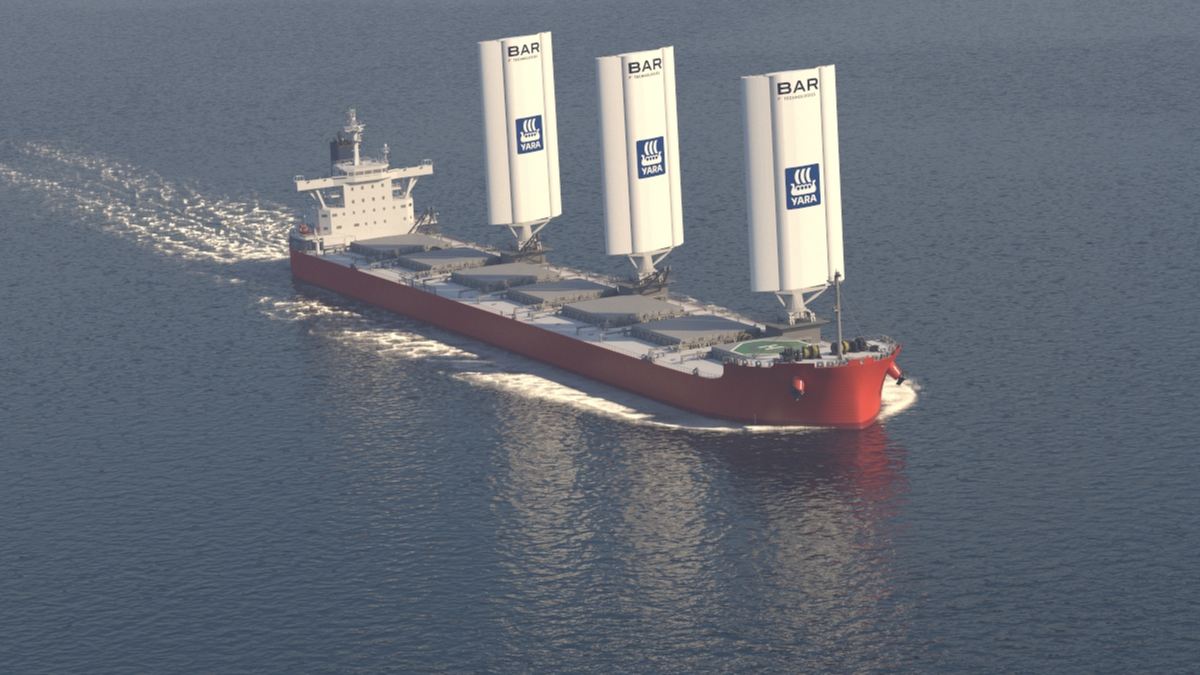
Cargill wind-assisted vessel sets off on maiden voyage
Cargill and BAR Technologies are bringing their WindWings sail to commercial shipping for the first time, with a retrofit aboard a Mitsubishi bulker


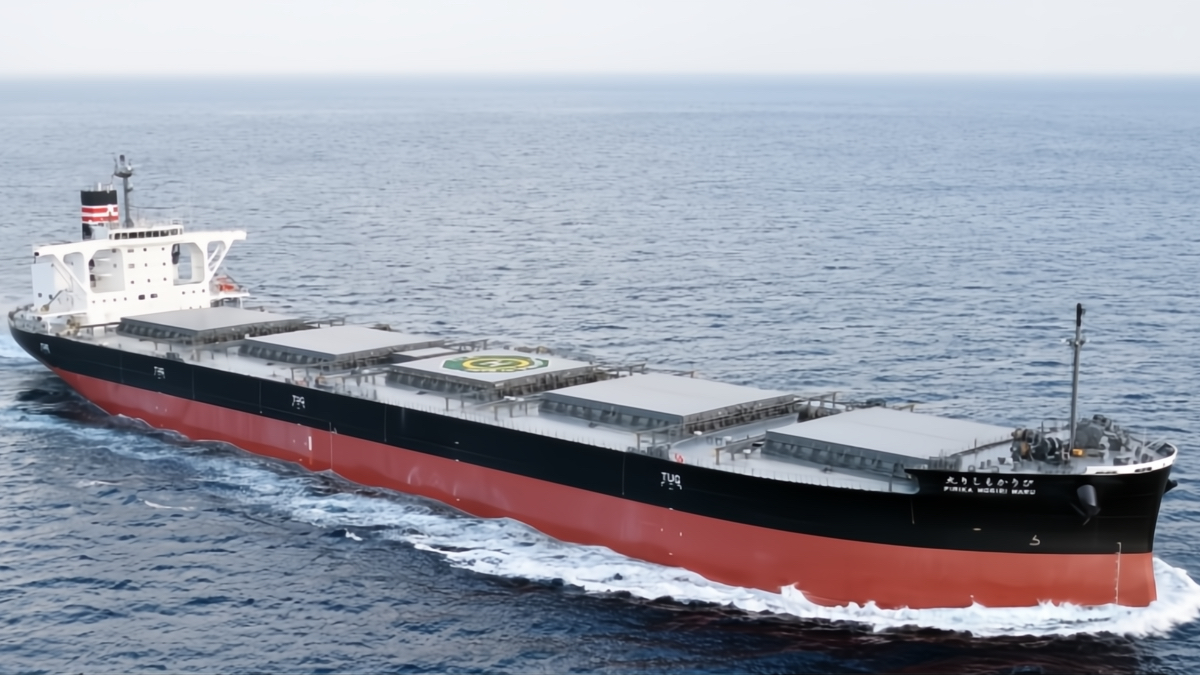
Pyxis Ocean, chartered by Cargill, is the first vessel to be retrofitted with two 45-m WindWings sails that will help harness the power of wind. The device is manufactured by industrialisation partner Yara Marine Technologies.
In practice, Cargill and BAR Technologies claim this device can generate average fuel savings “of up to 30% on newbuild vessels, which could be even higher if used in combination with alternative fuels.”
The installation of the wings took place at the COSCO shipyard in China and Pyxis Ocean is now on the water, conducting its maiden voyage.
According to Cargill, on an average global route, WindWings can save 1.5 tonnes of fuel per WindWing per day - with the possibility of saving more on transocean routes, which the company believes can “translate into vessel owners saving heavy fuel oil at about US$800 per tonne, which will become even more important when saving against future fuels which will undoubtedly cost a lot more.”
Cargill president of ocean transportation Jan Dieleman said while the WindWings project comes with risks, the company is taking it with a view towards being transparent with its learnings and to help lead the maritime transition.
The commodities giant, one of the world’s leading charterers, has previously worked with Deltamarin and BAR Technologies to trial the WindWings propulsion system aboard a Kamsarmax ship.
WindWings is backed by state aid in the form of grants from the European Union as part of the CHEK Horizon 2020 initiative.
The performance of the sails will be closely monitored over the coming months to further improve their design, operation and performance, with the aim Pyxis Ocean will be used to inform the scale-up and adoption across not just Cargill’s fleet but the whole industry.
BAR Technologies plans to build hundreds of wings over the next four years and is researching newbuilds with differing hydrodynamic forms.
The company’s chief executive John Cooper said, “If international shipping is to achieve its ambition of reducing CO2 emissions, then innovation must come to the fore. Wind is a near marginal cost-free fuel and the opportunity for reducing emissions, alongside significant efficiency gains in vessel operating costs, is substantial.
Today is the culmination of years of pioneering research, where we’ve invested in our unique wind-sail technology and sought out a skilled manufacturing partner in Yara Marine Technologies, to provide vessel owners and operators with an opportunity to realise these efficiencies.”
Riviera Maritime Media’s Marine Propulsion Webinar Week will be held 24-25 August. Use this link to register

Related to this Story

Events

Maritime Regulations Webinar Week
 16 Dec 2025
 GMT - ONLINE
Floating energy: successfully unlocking stranded gas using FLNGs and FSRUs
24 Feb 2026GMT - ONLINE
© 2026 Riviera Maritime Media Ltd.


