


Business Sectors
Business Sectors
Events
Contents
Register to read more articles.

Battery technology tugs become mainstream, methanol fuelled vessels emerge
Harbour vessels are at the heart of the marine battery revolution, with owners and shipyards betting on energy storage system technology for the future of port operations


New battery technology is enabling engineers to install more powerful, highly charged systems into tugs, supporting greater bollard pulls and more diverse operations.
These systems are going hand-in-hand with new engines and generators able to combust alternative fuels, such as methanol, biogas and hydrogen, facilitating redundancy and range extension.
These technologies will likely establish themselves as standards for the tug sector across upcoming decades, while battery-electric will eventually dominate newbuild deliveries and repower projects, as long as IMO and other international and national regulators and ports prioritise sustainable and low-emissions ship assistance.
Chemistries are advancing, with lithium-iron-phosphate (LFP) becoming more economically viable and cost effective than nickel manganese, cobalt (NMC) cell technology.
LFP provides the energy density and power required for tugboat operations and is safer than NMC chemistry, which manufacturers claim is more combustible than LFP.
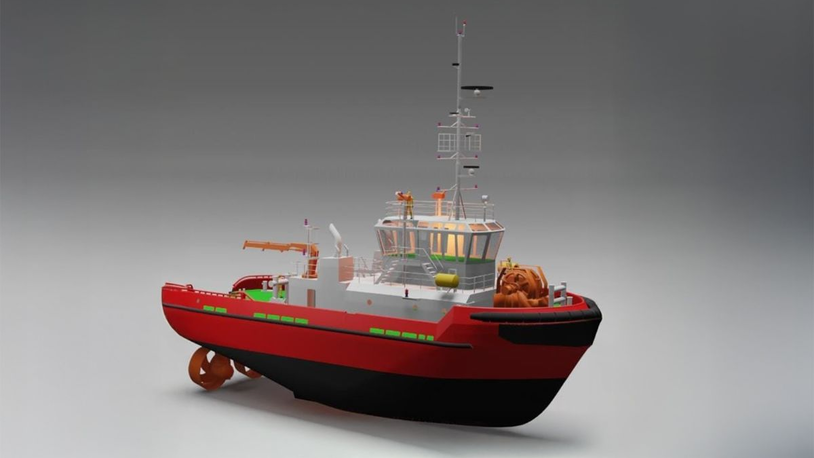
Svitzer has acknowledged the potential of LFP batteries, having installed AYK Energy’s AriesA 6 MWh ESS into its latest escort tug for northern European operations.
Uzmar-built and Robert Allan-designed Svitzer Balder is expected to arrive in the Port of Gothenburg, Sweden, in Q2 2026, where it will conduct more than 90% of its towing and docking operations with zero emissions using its battery-electric powertrain, including ship escort.
When the ESS is not sufficiently charged, this TRAnsverse tug can operate on its methanol and/or diesel generators. It is one of only three tugs so far built able to consume methanol fuel.
Furthermore, battery capacity limits have surpassed what is required for harbour tugs and are now capable of providing the power necessary for ship escort.
The next target is to reach the storage and power levels required for coastal towage over greater distances than around ports.
Tugs will also be competing with other vessel types for ESS modules and associated rare earth materials, while prices for energy storage are falling.
Surging demand for batteries across the maritime industry means manufacturers are supplying ferries, cruise ships, polar vessels, superyachts, fishing vessels, workboats and even large container vessels as part of their power mix.
Still, the importance of tugs to port operations should ensure they receive some priority in terms of orders and supplies, and electric tugboats will become a commodity.
Sanmar Shipyards and Damen Shipyards are currently the top producers of ESS electric-powered tugs and other shipyards and markets are catching up.
As the green revolution continues, it is important the industry ensures seafarers are well trained in maintaining and handling batteries and alternative fuels, and that salvors can react quickly and safely to emergencies involving ships using these technologies.
Alternative fuels and batteries come with their own challenges, whether it is toxicity, flammability, energy runaway or corrosivity. They need to be understood, risk-assessed and mitigated and the people handling them need adequate training.
These technologies and the challenges that accompany them will take centre stage at the 28th International Tug & Salvage Convention, Exhibition & Awards, held in Gothenburg on 19-21 May.
The industry will gather to discuss these and other opportunities and challenges, and no doubt we will learn much more about this exciting technology and the upcoming orders for battery-electric and alternative fuels tugs.
The 28th International Tug & Salvage Convention, Exhibition & Awards will be held in Gothenburg, Sweden, in association with Caterpillar, 19-21 May 2026. Use this link for more details of this industry event and the associated social and networking opportunities.


Related to this Story


Events
Maritime Regulations Webinar Week
 16 Dec 2025
 GMT - ONLINE
Floating energy: successfully unlocking stranded gas using FLNGs and FSRUs
24 Feb 2026GMT - ONLINE
© 2026 Riviera Maritime Media Ltd.


