


Business Sectors
Business Sectors
Events
Contents
Register to read more articles.
Blending biofuels into a ship’s decarbonisation strategy
Pilot projects using FAME, HVO, and UCOME have shown promising results, and blending these biofuels with conventional fuels can further cut emissions


For shipping, there are multiple pathways to a low-carbon future, all of which offer different commercial, operational and technical challenges. Increasingly, ship operators are looking to biofuels as an attractive option. Over the last few years, there has been an uptick in the use of biofuels at the major bunkering hubs, Rotterdam and Singapore, but the volumes are still only fractions of overall marine fuel sales. Bunkering volumes rose from a negligible amount in 2020 to a combined volume of 0.3M metric tonnes (MT) in 2021, 1M MT each in 2022 and 2023, according to the Global Centre for Maritime Decarbonization (GCMD).
“However, the sale of biofuel blends accounts for only ~1.7% of total bunker sales at these two bunkering hubs. In 2022, biofuels accounted for 0.11% of all fuels consumed by vessels 5,000 GT and above; this volume represents only 0.6% to 0.7% of the global annual biodiesel production,” says GCMD.
With similar physical properties as conventional diesel, hydrotreated vegetable oil (HVO), fatty acid methyl esters (FAME) and used cooking oil methyl ester (UCOME) are some of the most common renewable fuels being tested in shipping. FAME is a first-generation biofuel also referred to as biodiesel. HVO is a second-generation biofuel, referred to also as green diesel and renewables diesel, and produced exclusively from organic waste and residual materials.
And, as Lloyd’s Register points out, these biofuels can be used as drop-in fuels, not requiring any major modifications to the ship’s main engines or fuel tanks.
“For conventionally-fuelled ships too old and uneconomic for investment in the retrofits required to adopt fuels like LNG, methanol, and ammonia, biofuels provide an opportunity to meet their carbon reduction targets with minimal capex requirements,” notes the class society in its Fuel for Thought: Biofuels report.
LR first undertook biofuel verification and trials in 2011, working with AP Moller-Maersk measuring fuel consumption, emissions, and lube oil performance of an auxiliary engine running on blends up to B100.
“Biofuel could reduce GHG emissions by 85%”
Among the drawbacks with biofuels are that they are substantially more expensive than traditional fossil fuels and not widely available to the marine sector. At the port of Rotterdam, one of the world’s largest bunkering hubs, B30 FAME blend sold for an average of US$730.25 per tonne in August, about 35% more than 0.5% marine fuel oil, according to data from Platts global bunker fuel cost calculator.
Over the next decade, LR expects prices for FAME based on the feedstocks of fats, oils and grease or vegetable oils will fall.
Blending biofuels with traditional marine fossil fuels “can keep costs manageable while allowing shipowners to meet interim targets,” notes GCMD, and their use “can improve Carbon Intensity Indicator (CII) ratings for individual vessels and reduce emissions on a fleet basis under the EU Emissions Trading System (EU ETS),” says the Singapore-based NGO.
At the end of September, GCMD expects to complete a two-year study examining the end-to-end supply chain of biofuels. The study involved four supply chains, three ports (Singapore, Rotterdam and Vlissingen), seven vessels (container ships, tankers and gas carriers), and 21 maritime stakeholders. The study used various tracing techniques to track biofuels from their production facilities to their onboard use.
One of the key outcomes of the trial is that blends of HVO, UCOME and FAME offer significant reductions in greenhouse gas (GHG) emissions: a 24% reduction on a tank-to-wake basis and 20.3% on a well-to-wake basis compared to using conventional fossil fuels across all four trials.
One of Europe’s largest cruise operators, AIDA Cruises, has trialled biofuels on its own for the last two years. “We are focused on identifying advanced fuels and technologies we can use to reduce greenhouse gas emissions,” says AIDA Cruises president, Felix Eichhorn. “In our search for the fuel mix of the future, we have been gathering valuable experience through trials using various biofuels since 2022, and we continue to closely co-operate with experts from industry and science to develop new approaches to continuously reduce emissions,” he says.
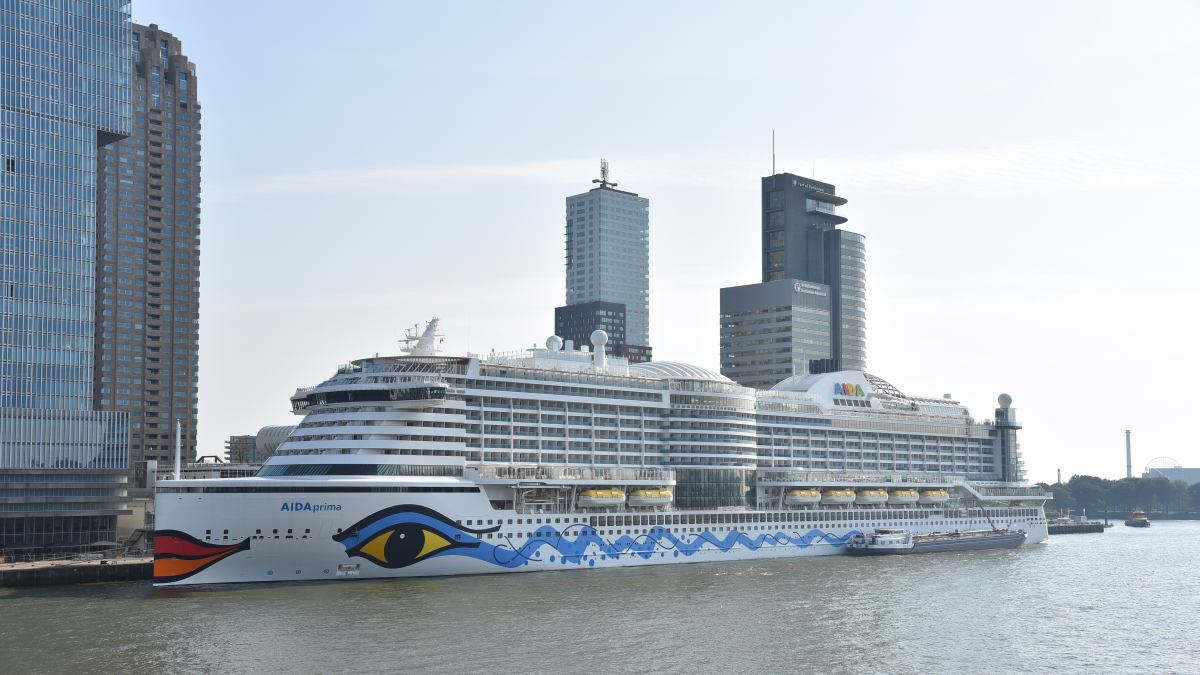
In one of its latest pilots, AIDA Cruises tested 100% renewable biofuel in its AIDAprima. At the port of Rotterdam in September, the 3,300-passenger cruise ship was bunkered for the first time using 100% renewable B100 to evaluate the fuel performance in regular ship operations for potential for future use. The blended biofuel is produced entirely from advanced feedstocks, organic waste or residue and was supplied by VARO Energy, which offers B30/B100, HVO (up to 100%) and various low FAME biofuel blends. Expectations are that using biofuel could reduce GHG emissions by 85% compared to conventional fossil fuels.
“In order to achieve a sustainable future, we need a growing supply of biofuels and other low-carbon alternative fuels – available globally at scale and at marketable prices,” Mr Eichhorn continues.
“We need a growing supply of biofuels and other low-carbon alternative fuels”
Biofuel is not the only sustainable technology on the 300-m AIDAprima. Built by Japan’s Mitsubishi Heavy Industries (MHI) in 2016, the cruise ship’s diesel-electric propulsion system incorporates three MaK 12VM43C diesel engines and one LNG dual-fuel MaK 12VM46DF engine that drive Azipod XO podded propulsion units. The Japanese shipbuilder’s Mitsubishi Air Lubrication System, which generates a microbubble carpet on the bottom of the ship’s hull to reduce drag, yield’s a potential fuel savings of 7%.
Furthermore, AIDA Cruises installed an energy storage system with a 9,944-kW Corvus Energy battery in 2020 to improve engine operational efficiency.
The European cruise ship operator plans to test B100 on the vessel during its voyages from the Port of Hamburg through the fjords of Norway. The fuel performance during these trials will help determine whether AIDA Cruises adopts the fuel more broadly across its fleet.
European Union regulations, EU ETS and FuelEU Maritime, which will require shipowners to pay for CO2 emissions and transition to alternatives fuels, will figure promptly in the uptake of biofuels in the shipping sector.
Swire tests biofuel
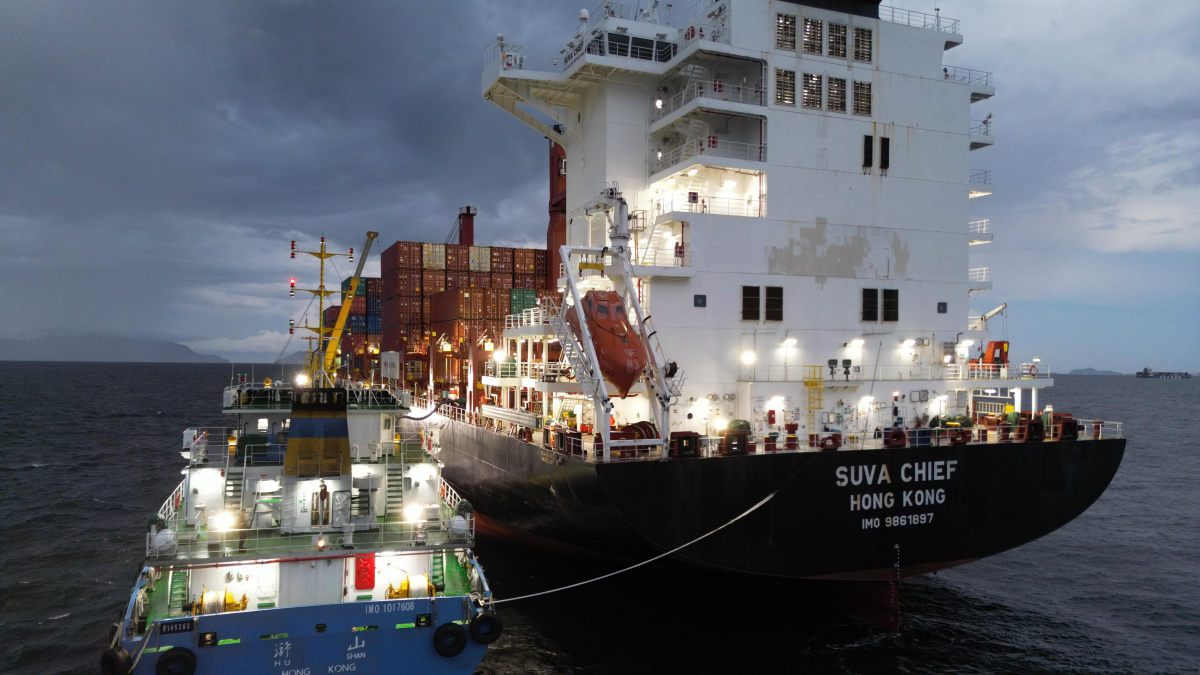
Singapore-based Swire Shipping, which offers charterers the option of carbon-neutral transport through its carbon-offsetting initiative SailGreener, recently conducted biofuel trials on the container ship Suva Chief operating between Vietnam and the US.
Swire Shipping North America president, Harry Stones, says the trials are part of the ship operator’s plans to explore sustainable shipping solutions in response to increasing demand for greener options. “The use of sustainable B24 biofuel in our Sun Chief Express Ocean service is projected to reduce well-to-wake emissions for our customers by an estimated 15%,” observes Mr Stones.
One of Swire Shipping’s Fuji-class container ships built in China in 2020-2021, Suva Chief is powered by a two-stroke, slow-speed WinGD 6X62 main diesel engine. With a length overall of 186 m and beam of 35.3 m, the Hong Kong flag container ship has a capacity of 2,750 TEU.
It was bunkered in Hong Kong with sustainable B24 biofuel, a blend of sustainable biodiesel of waste origin and conventional fuels. The trial was conducted in partnership with Hong Kong-based marine fuel supplier Chimbusco Pan Nation Petro-chemical Co and Swire Shipping’s bunkering partner, Hafnia Bunker Alliance.
Swire Shipping’s decarbonisation roadmap outlined in its latest sustainability report outlines a strategy for achieving a 50% reduction in its carbon intensity by 2030, and net-zero emissions by 2050 by using 100% of near-zero emissions fuels in its operated fleet.
BioLNG powers Equinor-chartered platform supply vessel
Island Offshore’s LNG battery-hybrid platform supply vessel (PSV) Island Crusader was recently refuelled with bioLNG as part of a collaboration between fuel supplier Gasum and Norwegian energy major Equinor.
The bunkering operation took place in the Port of Dusavik, Stavanger, where the UT 776 CDG design PSV was refuelled with ISCC-EU certified mass balanced bioLNG supplied by Gasum.
The first bioLNG delivery was successfully carried out mid-July. Gasum will continue to supply the 2012-built vessel with two to three truckloads of bioLNG on average every other week while it operates on the Norwegian continental shelf (NCS). Each truckload contains about 22 tonnes of bioLNG.
Three years ago, the 4,750-dwt Island Crusader became the first offshore support vessel to run on bioLNG on the NCS in a pilot project with Lundin Energy Norway.
Produced from waste feedstocks such as biowaste, sewage sludge, manure and industrial and agricultural side streams, biogas has the same properties as natural gas. It can be used in all the same applications as natural gas, including as a road and maritime transport fuel and as energy for industry. LNG and bioLNG are completely interchangeable and can be blended.
While the feedstock for bioLNG might not be pretty, what is attractive about the fuel itself is it can lower lifecycle greenhouse gas (GHG) emissions by 90% compared to fossil fuel.
Both Gasum and Equinor see bioLNG as a means of advancing their ambitious sustainability goals. Equinor wants to be a net-zero emissions energy company by 2050.
Gasum wants to ramp up its biogas production. It wants to offer 7 TWh of renewable gas to its customers yearly by 2027, including biomethane and e-methane. A large portion of this volume relies on establishing long-term partnerships with trusted and certified biogas producers throughout Europe.
Achieving this goal would mean a combined CO2 reduction of 1.8M tonnes per year for Gasum’s customers.

Related to this Story

Events

Maritime Regulations Webinar Week
 16 Dec 2025
 GMT - ONLINE
Floating energy: successfully unlocking stranded gas using FLNGs and FSRUs
24 Feb 2026GMT - ONLINE
© 2026 Riviera Maritime Media Ltd.


